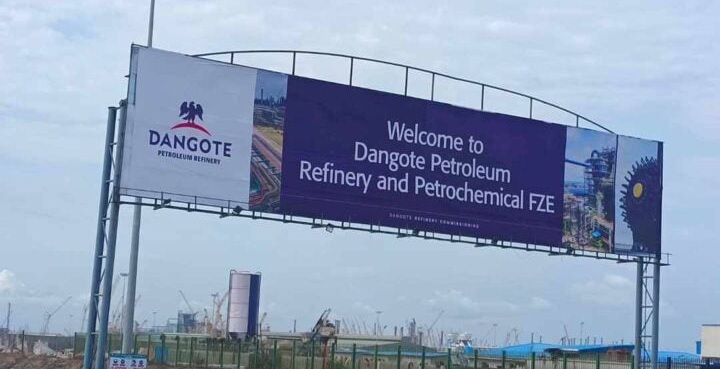
The controversy surrounding the recent sackings at the Dangote Petroleum Refinery has opened a sharp debate about workers’ rights in Nigeria, the limits of corporate power, and the relevance of the country’s labour laws.
The refinery, Africa’s largest, confirmed on Friday that it dismissed “a very small number” of staff in what it described as a reorganisation to safeguard operations from sabotage. But the Petroleum and Natural Gas Senior Staff Association of Nigeria (PENGASSAN) countered, alleging that over 800 Nigerians were unjustly terminated and replaced with thousands of foreign workers.
EDITOR’S PICKS
At the heart of this dispute is a crucial question: what legal protections, if any, exist for Nigerian workers allegedly dismissed for joining or supporting a union?
Allegations of Union Victimisation
PENGASSAN, in a strongly worded statement, accused the Dangote Refinery of anti-labour practices and discrimination. The union claimed the mass dismissal was targeted at workers who had only recently joined its ranks, describing the move as a violation of Nigerian labour laws and the constitutional right to freedom of association.
The association further alleged that management replaced the sacked Nigerians with “over 2,000 Indian workers, many of whom lack valid immigration documentation.” The union has threatened to escalate the matter, warning that it will invoke “all sections of the Nigerian Constitution and the relevant labour laws” if the refinery fails to recall the workers.
Dangote Refinery, however, insists the restructuring was in the best interest of safety and efficiency, citing repeated sabotage incidents. It noted that over 3,000 Nigerians remain employed and that new talent continues to be recruited.
What the Law Says
Nigeria’s Labour Act and Trade Unions Act provide explicit protections against victimisation of workers for union membership or activities.
- Section 9(6) of the Labour Act makes it unlawful for any contract of employment to prejudice a worker “by reason of trade union membership” or participation in lawful union activities.
- Section 40 of the 1999 Constitution guarantees freedom of association, including the right to join or form trade unions. Workers who believe their rights have been infringed can seek redress in the High Court.
- The Trade Unions Act prohibits discrimination against employees for joining or refusing to join unions and affirms that membership must be voluntary.
These protections have been upheld in several court cases. The National Industrial Court has repeatedly nullified dismissals linked to union activity, ordering reinstatement and compensation.
Legal precedents such as Mix & Bake vs NUFBTE (2004) and Dangote Industries vs NUFBTE demonstrate that Nigerian courts view victimisation of workers for trade union reasons as unlawful.
Where the Grey Areas Lie
While the law is clear on paper, enforcement often depends on proving motive. Employers are entitled to dismiss workers on grounds of redundancy, misconduct, or restructuring.
If the refinery can show the exercise was a legitimate reorganisation driven by safety concerns, courts may uphold its decision. But if PENGASSAN can establish that the sackings were aimed at weakening the union, it would be a violation of both statutory and constitutional protections.
Another complexity lies in the allegation that foreign workers are being used to replace Nigerians. Although this touches on immigration and labour market policy, it could also strengthen PENGASSAN’s case by suggesting discriminatory practices that undermine local employment.
What Next for Workers?
PENGASSAN has already convened an emergency executive council meeting to decide its next steps, which could include litigation or industrial action. The affected workers, meanwhile, retain the right to approach the National Industrial Court to challenge their termination.
FURTHER READING
Ultimately, this case may test the strength of Nigeria’s labour protections in the face of the country’s largest private-sector investment.
Philip Ibitoye is a Special Correspondent with EKO HOT BLOG. Click here to find daily analysis and critical insight on trending issues in Lagos and other parts of Nigeria.
Click here to watch the video of the week below: