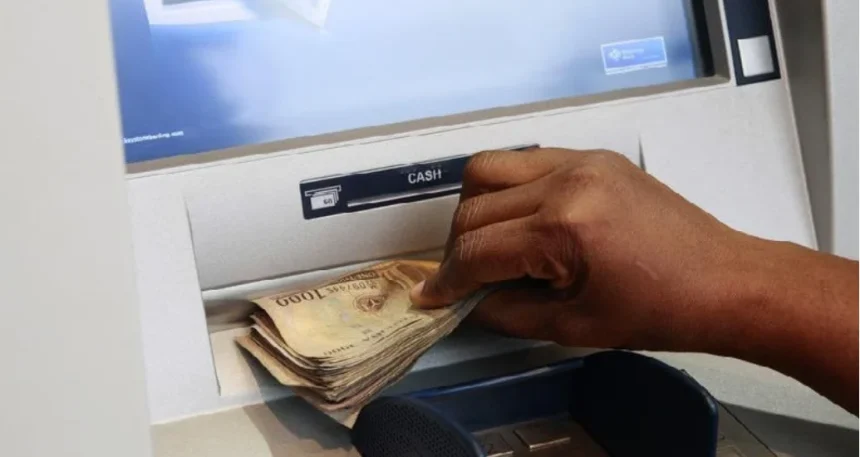
The Central Bank of Nigeria’s (CBN) decision to raise cash withdrawal limits, especially the increase of Automated Teller Machine (ATM) withdrawals to N100,000 daily and N500,000 weekly, marks a significant shift in Nigeria’s cash-management landscape, with real implications for both banks and customers.
The policy revision, announced in a circular on Tuesday, reverses much of the strict cash-control measures introduced under the previous administration. In 2022, the CBN under Godwin Emefiele had capped ATM and over-the-counter withdrawals at levels many Nigerians considered impractical: N100,000 weekly for individuals and N500,000 for corporates.
EDITOR’S PICKS
With the new rules taking effect from January 1, 2026, the CBN says it wants to “streamline the policies’ provisions to reflect present-day realities” and address challenges that have emerged over time.
For everyday Nigerians, one of the most immediate impacts will be the reduction of congestion in banking halls. Under the old cash regime, customers who needed more than N20,000 or N40,000—typical ATM dispensing limits—were effectively forced into banking halls to withdraw larger sums. That pressure intensified queues, crowded small branches, and weakened service efficiency.
The new limit now allows individuals to withdraw up to N100,000 daily from ATMs, meaning customers can rely more on machines and less on over-the-counter transactions, easing the persistent strain on banking spaces. Many banks have, in recent years, struggled with surging foot traffic caused primarily by low ATM dispensing caps.
Beyond physical convenience, the CBN says the liberalisation of cash access is part of a broader move to balance the need for financial security with operational efficiency. The circular notes that policies introduced over the years aimed to “moderate the rising cost of cash management, address security concerns, and reduce the potential for money laundering associated with the economy’s heavy reliance on cash.”

Still, the apex bank maintains some controls. Weekly cash withdrawals remain capped at N500,000 for individuals and N5 million for corporates, with excess amounts attracting 3 percent and 5 percent fees respectively. These fees, according to the circular, “shall be shared 40 percent to the CBN and 60 percent to the bank or financial institution.”
The removal of the cumulative deposit limit—another major change—means customers can now deposit any amount without paying fees for exceeding thresholds. The CBN states plainly: “The cumulative deposit limit is hereby removed and the fee for excess deposit shall no longer apply.”
Taken together, the adjustments reflect a more flexible posture by the central bank as it seeks to align regulations with current economic realities. By easing ATM withdrawal limits, the CBN is not only expanding convenience for millions of Nigerians but also taking pressure off banking halls, where unnecessary congestion had become a daily hurdle for both staff and customers.
FURTHER READING
As January 2026 approaches, banks will likely adjust their cash-loading strategies, while customers—especially small traders, cash-dependent households, and rural dwellers—may experience a smoother, less stressful interaction with the financial system.
Philip Ibitoye is a Special Correspondent with EKO HOT BLOG. Click here to find daily analysis and critical insight on trending issues in Lagos and other parts of Nigeria.
Click here to watch the video of the week below: