The African Democratic Congress (ADC) is once again at the center of Nigeria’s opposition politics, positioning itself as the rallying point for political heavyweights frustrated with the dominance of the All Progressives Congress (APC) and the Peoples Democratic Party (PDP).
But as recent events show, EKO HOT BLOG gathered that the coalition is struggling to convince its biggest names to commit fully, exposing both the promise and the peril of trying to build a main opposition platform ahead of the 2027 general elections.
EDITOR’S PICKS
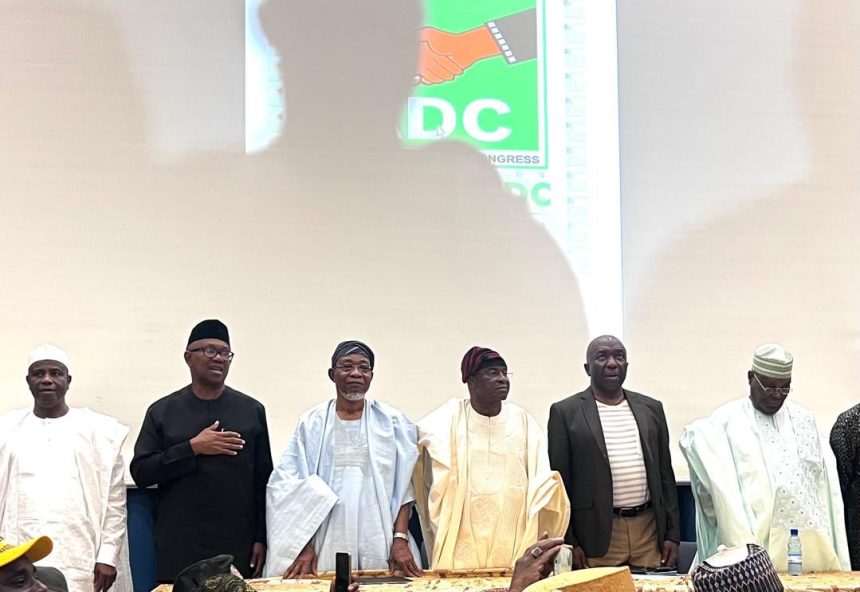
When the ADC-led coalition was adopted in July, it looked like a breakthrough moment. Former Vice President Atiku Abubakar, 2023 Labour Party presidential candidate Peter Obi, ex-Kaduna governor Nasir el-Rufai, former ministers Isa Pantami, Rotimi Amaechi, and Rauf Aregbesola, and even former Senate President David Mark all signaled interest in using the platform as a vehicle for change.
The party’s stance as a credible alternative seemed to fit the mood of many voters who are disillusioned with both APC and PDP. For a time, the coalition gave the impression of momentum, a rare show of unity among Nigeria’s fractious opposition figures.
But unity has limits. The ADC is now facing its first real stress test: persuading its diverse members to give up their existing party loyalties and formally embrace the coalition.
Obi’s Balancing Act
The Obidient Movement, led by Peter Obi’s loyal base, has been particularly cautious. In a sharp response to the ADC directive that all coalition members must resign from their former parties, the group insisted that Obi’s alignment with the coalition was already clear. Yunusa Tanko, the movement’s national coordinator, stressed that Obi remains committed to the coalition’s vision but emphasized that such decisions cannot be rushed.
“His Excellency Peter Obi, as a leader with a broad constituency, has always taken time to consult widely before making major political decisions; he did so before joining the coalition, and he must also do so before responding to any ultimatum,” Tanko said.
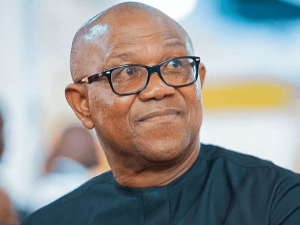
The hesitation sheds light on a deeper issue: Obi still carries the Labour Party brand, which powered his strong 2023 presidential bid. Crossing over to the ADC risks alienating some supporters while not guaranteeing a more viable platform. For Obi, the ADC represents opportunity but also uncertainty.
Atiku’s Calculated Presence
Atiku Abubakar, meanwhile, has gone public with his support for the coalition. His attendance at the Abuja meeting of ADC leaders — alongside el-Rufai, Pantami, Tambuwal, and others — was a symbolic boost. On his social media pages, Atiku cast the gathering as a struggle “against the oligarchs who promote poverty and insecurity in the land.”
I am currently at the stakeholders meeting of the Coalition African Democratic Congress (ADC) in Abuja. It’s a meeting of the Nigerian people against the oligarchs who promote poverty and insecurity in the land. -AA pic.twitter.com/cKM2x1AaHK
— Atiku Abubakar (@atiku) September 25, 2025
Yet Atiku, too, has not formally joined the ADC even though he has severed ties with the PDP. It is still not clear while the former vice president has yet to officially join the opposition coalition platform.
A Familiar Struggle
Nigeria’s political history is littered with ambitious coalitions that collapsed under the weight of personal ambition and structural mistrust. The ADC coalition is different in one respect: it has managed to attract an unusually broad set of opposition heavyweights. But unless those heavyweights formally commit, the coalition risks being seen as a glorified talk shop rather than a genuine alternative to the APC and PDP.
FURTHER READING
The coming months will be decisive. For now, the ADC has assembled the talent. What it lacks is the glue to hold it together.
Philip Ibitoye is a Special Correspondent with EKO HOT BLOG. Click here to find daily analysis and critical insight on trending issues in Lagos and other parts of Nigeria.
Click here to watch the video of the week below: