- He noted that beneficiaries will be selected strictly on merit through aptitude tests administered by the JAMB
- Alausa concluded by reaffirming that the initiative represents one of the most comprehensive education interventions in Nigeria’s history
- The Nigerian Education Loan Fund (NELFUND) will handle disbursement through its already digitised platform
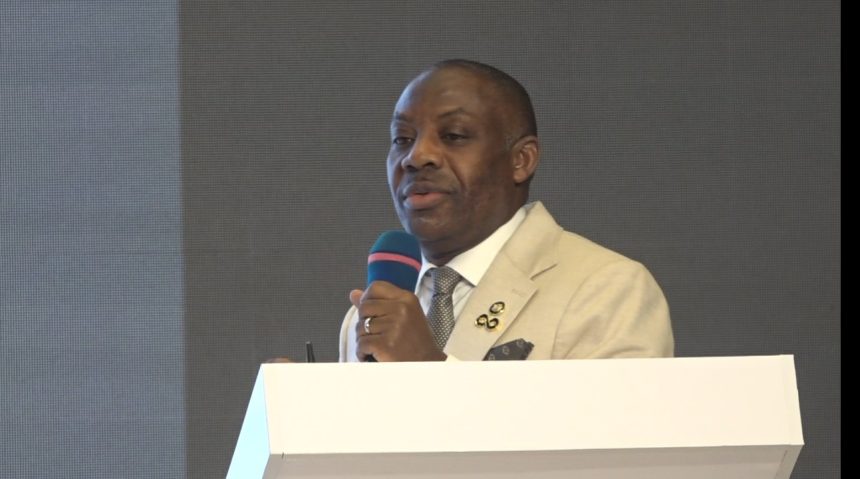
Nigeria’s Education Minister, Dr Tunji Alausa, has outlined the government’s renewed education priorities while breaking down the structure and long-term impact of the newly launched Aliko Dangote Foundation Education Support Programme.
Eko Hot Blog reports that the minister, speaking at the unveiling ceremony, said the initiative aligns strongly with the Federal Government’s Education Sector Renewal Plan, which focuses on equitable access, improved learning outcomes and strengthened governance driven by data and digital systems.
EDITOR’S PICK
- ‘Tax ID Will Be Mandatory for Bank Accounts from January’ – FG
- Reps Deny Bill to Rename Nigeria as ‘United States of Nigeria’
- Police Shut Down Illegal Drug Factory in Lagos
Alausa explained that the new scholarship scheme directly supports three core national priorities: STEM and medical sciences, technical and vocational training (TVET), and girl-child education, all of which are central to Nigeria’s shift toward a skills-based, knowledge-driven economy.

He noted that beneficiaries will be selected strictly on merit through aptitude tests administered by the Joint Admissions and Matriculation Board (JAMB), ensuring equal opportunity for students across the 774 local government areas.
According to him, the programme also incorporates strong inclusivity measures, with 5 per cent of slots reserved for students living with disabilities.
The package covers full school fees, instructional materials, uniforms, feeding, monthly stipends and hygiene supplies for girls, ensuring that financial barriers do not interrupt education. “Once you are admitted, the support carries you through your entire educational journey,” he said.
Speaking on projected impact, the minister disclosed that the secondary school component for girls alone is designed to admit 10,000 new beneficiaries annually, eventually resulting in over 170,000 girls completing secondary school within a decade.
He described this as a transformative investment capable of breaking intergenerational poverty and strengthening Nigeria’s human capital base.
Alausa also highlighted the programme’s strong focus on technical skills needed to advance Nigeria’s industrial and economic ambitions, listing engineering, robotics, AI, applied mathematics, agriculture, medicine, nursing, pharmacy and renewable energy as priority fields. He said this aligns with President Bola Ahmed Tinubu’s goal of building a $1 trillion economy within five years.
To guarantee sustainability and transparency, Alausa confirmed that the scheme will operate through existing government systems.
The Nigerian Education Loan Fund (NELFUND) will handle disbursement through its already digitised platform, which manages school payments using biometric verification. JAMB will conduct standardised tests, while the National Identity Management Commission will ensure proper identification for every applicant.

The minister added that the Federal Scholarship Board will provide technical guidance throughout the rollout, ensuring the programme remains consistent with national policy standards.
He praised the Aliko Dangote Foundation for involving the Ministry from the design stage, noting that long-term success depends on strong public–private collaboration.
Alausa concluded by reaffirming that the initiative represents one of the most comprehensive education interventions in Nigeria’s history.
He commended the Foundation’s commitment to supporting 1.3 million learners over the next ten years, describing it as a model for sustainable human capital development.
FURTHER READING