- Renewable Energy Law in Focus as Fashola Writes Foreword to New Nigerian Text
- Fashola described the 12-chapter publication as a timely
- He noted that the book provides a comprehensive overview of Nigeria’s renewable energy sector
Former Minister of Power, Works and Housing, Babatunde Raji Fashola, SAN, CON, has written the foreword to a new book examining Nigeria’s renewable energy legal and policy framework, Eko Hot Blog reports.
The book, titled Renewable Energy: Law and Policy in Nigeria – A Crosscutting Perspective, is authored by legal scholar Dr Bitrus Joseph Bulama and is published by Bar and Bench Publishers, Abuja. It is scheduled for public presentation on February 11, 2026.
EDITOR’S PICK
- Details Of Jonathan Meeting With PDP Leaders Emerge
- PDP Heavyweights Set To Dump Party For ADC As Faction Meets With Jonathan
- AFCON 2025: Quarter-Finals Fixtures, Dates (FULL LIST)
In the foreword dated May 1, 2025, Fashola described the 12-chapter publication as a timely and seminal contribution to the evolving discourse on renewable energy governance in Nigeria. He noted that while global momentum for renewable energy dates back to the 1987 Montreal Protocol, Nigeria’s engagement with the sector only began to gain meaningful traction years later.
Tracing the evolution of Nigeria’s power sector, Fashola referenced the 1999 Constitution and the Electric Power Sector Reform Act of 2005, which ended the government’s monopoly over electricity generation and distribution and ushered in deregulation.
Reflecting on his appointment as minister in November 2015 under President Muhammadu Buhari, Fashola said the Ministry of Power was undergoing a major transition following the 2013 privatisation of generation and distribution assets by the Goodluck Jonathan administration. He explained that the ministry transferred those assets, along with more than 5,000 staff, to private operators, leaving it with fewer than 1,000 personnel and a mandate focused primarily on policy formulation.
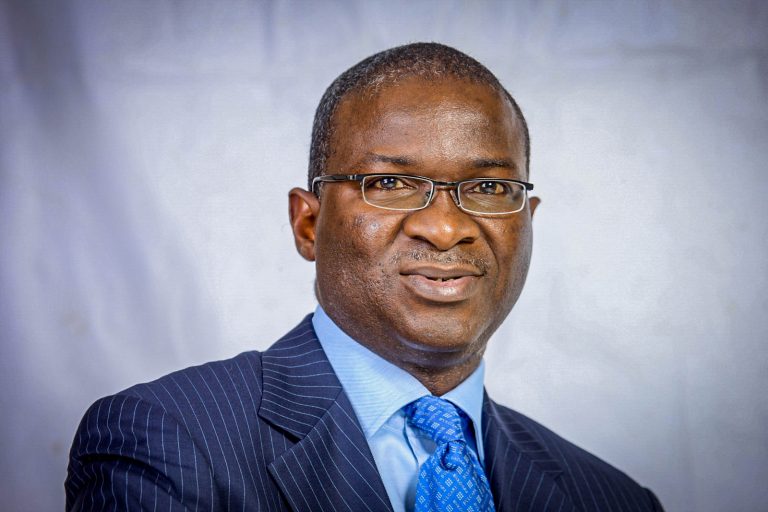
According to Fashola, this shift transformed the ministry from a direct provider of electricity into a policy enabler, making strategic frameworks and regulatory instruments the main tools for improving power supply.
He highlighted the development of what he described as Nigeria’s first published Energy Mix Document, which committed the country to achieving 30 per cent renewable energy within a projected 30-gigawatt power capacity by 2030. This was followed by key policy initiatives, including the Renewable Energy and Energy Efficiency Policy in 2015, Mini-Grid Regulations in 2016, and the Building Energy Efficiency Code in 2017.
Fashola said this policy background informed his decision to accept Dr Bulama’s invitation to write the book’s foreword.
He noted that the book provides a comprehensive overview of Nigeria’s renewable energy sector, beginning with a historical account dating back to 1896, when the country’s first power station was built in Lagos with an installed capacity of 60 kilowatts.
Fashola singled out Chapter Four for its detailed analysis of the legal, policy and institutional frameworks governing renewable energy in Nigeria, while identifying Chapter Five as the core of the book due to its examination of the challenges facing renewable energy development.
Drawing on his ministerial experience, he said many of those challenges were familiar and that some were addressed through the Power Sector Recovery Programme implemented during his tenure.
The foreword also cited the establishment of key public institutions including the Rural Electrification Agency, Nigerian Bulk Electricity Trading Plc, the Transmission Company of Nigeria, the Energy Commission of Nigeria and the National Council on Climate Change — as evidence of political commitment to energy reform. Fashola further referenced a 2025 budgetary allocation for solar installations at the Presidency as a symbolic demonstration of government leadership on renewable energy.
In his assessment, Fashola suggested that extensive but largely undocumented investments in renewable energy by households and businesses may mean renewables already account for more than 30 per cent of Nigeria’s total energy consumption.
He noted that Chapter Six explores the role of law in attracting renewable energy investment, while Chapter Seven examines the relationship between legal frameworks, development and access to electricity. He commended the author for presenting complex industry issues in clear and accessible language.
Fashola described the book as an essential resource for policymakers, legal practitioners, regulators, energy professionals, researchers, investors and environmental advocates seeking to understand the intersection of law, policy and energy in Nigeria.
Dr Bulama is an Assistant Professor of Law at the American University Nigeria, Yola, and a specialist in energy, natural resources and environmental law. He holds a PhD in Law, a master’s degree in Petroleum Law and Policy from the University of Dundee, UK, and a law degree from the University of Jos. He was called to the Nigerian Bar in 2003 and is the convener of the Initiative for Climate Action and Advocacy, a non-profit organisation focused on environmental and climate justice.
FURTHER READING
- Fire Guts BRT Bus on Third Mainland Bridge
- APC Boasts of Total Dominance in Plateau, Eyes 1 Million Votes for Tinubu
- Trump Administration Denies Occupation, Nation-Building Plans in Venezuela
Click here to watch video of the week