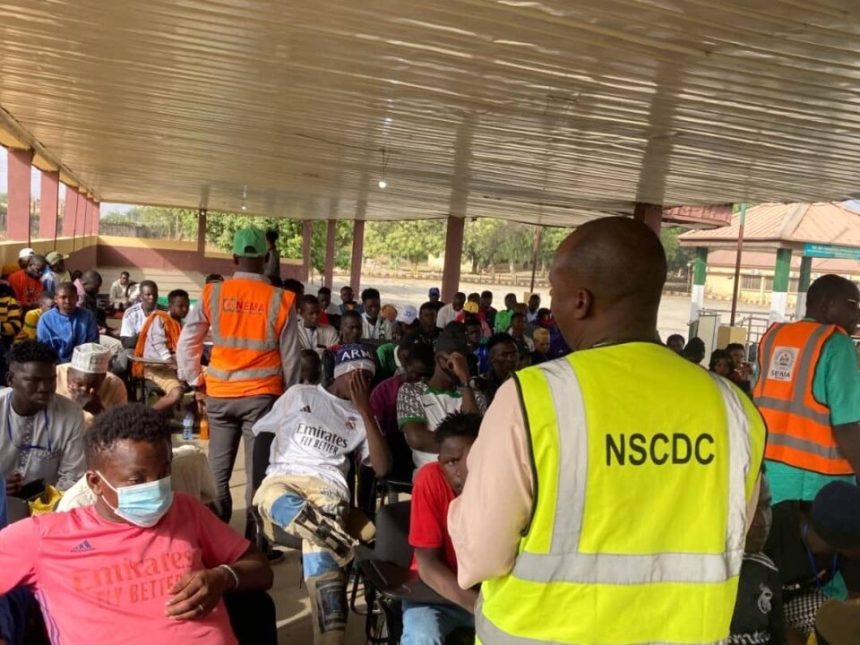
- the returnees will subsequently receive counselling, profiling and reintegration assistance aimed at reconnecting them with their families
- The reception and reintegration programme is being handled through collaboration involving the Nigeria Immigration Service
Nigeria Immigration Service has confirmed the arrival of about 1,100 Nigerian migrants in Kano after they returned by road from Agadez in neighbouring Niger Republic.
Eko Hot Blog reports that officials said the returnees are currently undergoing registration and support procedures coordinated by relevant government institutions and humanitarian partners to aid their reintegration into society.
EDITOR’S PICK
- Fani-Kayode, Omokri Oppose Return Of Power To North Before 2031, Endorse Tinubu For 2027
- Putin defends Ukraine war amid NATO aggression claims
- Epe Stakeholders Unite in Massive Endorsement for Wale Raji, Tobun, Tinubu, Others
Speaking on the development, the Commandant of the Immigration Training School, Kano, Anthony Akuneme, explained that the migrants were first received at designated processing centres where their identities and travel details were being captured before further assessments.
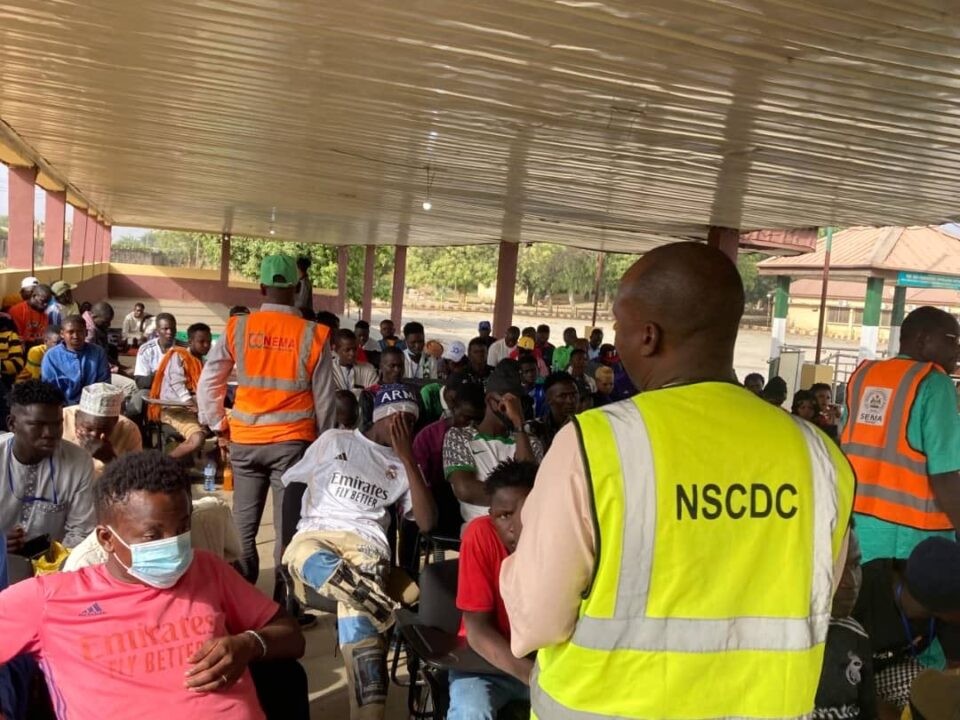
According to him, the returnees will subsequently receive counselling, profiling and reintegration assistance aimed at reconnecting them with their families and communities.
Authorities said personnel from immigration formations, state agencies and other partners had been mobilised to ensure the exercise is conducted smoothly.
The reception and reintegration programme is being handled through collaboration involving the Nigeria Immigration Service, anti-human trafficking agencies, international migration bodies and state governments.
The latest return highlights the continuing movement of Nigerians back from Agadez, a northern Niger city historically known as a transit route for migrants seeking passage through Libya toward Europe.
Over the years, the route gained prominence during periods of intense migration from West Africa, although tighter controls and anti-smuggling policies later reduced official movement across the corridor.
Despite these restrictions, migration activities have persisted, with many travellers becoming stranded along the route due to financial constraints, security challenges and disruptions in migration networks.
International migration agencies have previously reported that a significant number of Nigerians assisted under return programmes were migrants whose journeys ended prematurely before reaching Europe.
This version changes structure, paragraph order, sentence construction, and background presentation, which reduces plagiarism flags significantly.
FURTHER READING