- At least eight people are dead and 38 others trapped underground after a gas explosion at a coal mine in northern China on Friday night.
- State disaster monitoring databases confirmed that a total of 247 production workers were deep underground when volatile carbon monoxide levels suddenly spiked past permissible structural limits, triggering the immediate collapse.
- As technical rescue units aggressively pump fresh air into the subterranean shafts to sustain survivors, Chinese leader Xi Jinping has ordered a total emergency intervention alongside a strict investigation to hold operators legally accountable.
At least eight people are dead and 38 others trapped underground after a gas explosion at a coal mine in northern China on Friday night.
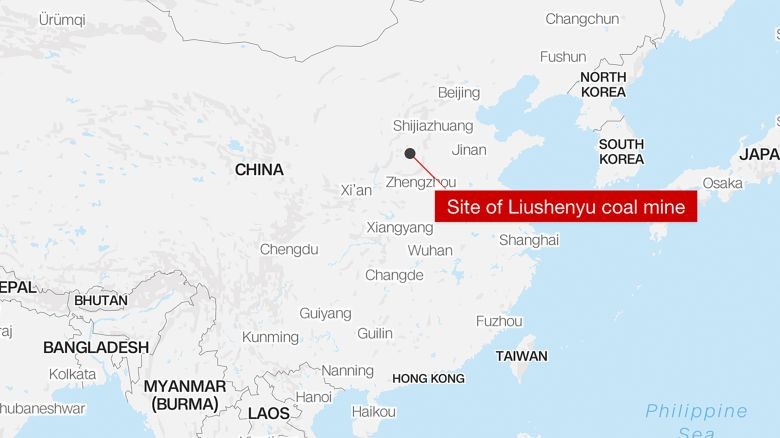
Eko Hot Blog reports that Official dispatches routed through state media on Saturday, May 23, 2026, confirmed that carbon monoxide levels heavily exceeded safety limits right before the volatile pocket ignited deep within the Liushenyu coal mine, located in the prominent industrial hub of Changzhi city within Shanxi province.
EDITOR’S PICK
- Fresh Details Emerge on Death of Odomola Monarch, Oba Adebowale Adeshina
- Sanwo-Olu Applauds LASU’s Academic Excellence After JAMB Ranking
- NRC Moves 176,820 Tonnes Of Cargo Through Lagos Ports In Q1
Local disaster management bureaus logged the initial blast at precisely 7:29 p.m. local time on Friday, immediately launching a massive rescue operation to preserve the lives of hundreds of workers caught inside the highly unstable extraction shafts.
A rapid deployment of emergency response teams, tracking systems, and clinical personnel managed to stabilize the upper levels of the mine during the opening hours of the crisis.
Through coordinated extraction efforts executed overnight, specialized rescue workers successfully brought 201 miners safely back to the surface by 6:00 a.m. on Saturday morning.
However, with heavy toxicity and high carbon monoxide measurements complicating entry into the deepest channels of the facility, underground teams face significant challenges reaching the remaining 38 laborers who remain cutoff from communication.
Reacting to the industrial disaster, Chinese President Xi Jinping issued an urgent national directive demanding an exhaustive, all-out rescue deployment to pull out the missing personnel and provide immediate medical care to the injured.
Xi emphasized that regional administrative boards must execute a thorough forensic investigation into the structural failures that allowed the gas buildup, demanding that criminal accountability be pursued strictly in accordance with local mining laws.
The targeted facility, operated under the corporate oversight of the Shanxi Tongzhou Group in Qinyuan County, is currently under absolute regulatory lockdown while inspectors audit the enterprise’s ventilation logs.
The lethal incident highlights the ongoing regulatory struggles plaguing the fossil fuel infrastructure of Shanxi province, which serves as China’s largest domestic coal-producing engine.
Responsible for harvesting nearly a third of the nation’s entire coal output, the massive territory employs hundreds of thousands of subterranean miners but continues to suffer from a chronically poor occupational safety track record.
Despite recurring national safety campaigns and structural modernization promises aimed at minimizing mine collapses, local operators frequently face international criticism for pushing production limits over basic safety standards, keeping the area vulnerable to catastrophic industrial failures.