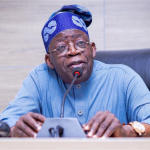
The sentencing of Cyril Ndifon, the suspended Dean of the Faculty of Law at the University of Calabar (UNICAL), has become one of the most consequential sexual-harassment rulings in Nigeria’s recent academic history.
Ndifon, a professor of law, was suspended after female students of the faculty staged a public protest accusing him of persistent sexual harassment.
EDITOR’S PICKS
Though he denied the allegations and claimed that internal rivalries within the faculty had influenced the students, the Independent Corrupt Practices and Other Related Offences Commission (ICPC) proceeded with a criminal case built on multiple witness statements and digital evidence.
He faced a four-count charge filed in October 2023, including allegations that he solicited nude photographs and videos from a Year 2 diploma student, a 400-level law student seeking a project supervisor, and a 16-year-old prospective applicant. In another count under the Cybercrime Act, he was accused of inducing a student to send pornographic content to him via WhatsApp. An amended charge later added one of his lawyers, Sunny Anyanwu, who was accused of attempting to influence witnesses during the investigation.
Delivering judgment, Justice James Omotosho held that the ICPC had proved counts one and two beyond reasonable doubt. Describing the conduct as a grave abuse of office, the judge sentenced Ndifon to five years’ imprisonment on one count and two years on another, to run concurrently.
He noted that leniency was granted only because the lecturer was a first-time offender. Anyanwu, however, was acquitted for lack of evidence establishing criminal intent. The case has since drawn national attention, given the debate over the prevalence of harassment in Nigerian universities and the difficulty victims face in obtaining justice.
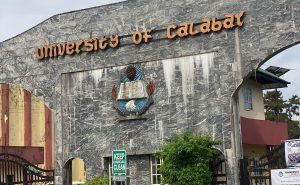
A judicial statement that accountability is possible
Ndifon’s conviction carries enormous symbolic weight for the Nigerian university system. For years, complaints of sexual exploitation by lecturers have circulated in whispers, often dismissed or suppressed by internal power structures. Many students believe senior academics wield too much influence, making justice nearly impossible to secure.
This judgment challenges that assumption. By convicting a sitting professor and faculty dean on the strength of evidence presented, the court affirmed that academic rank does not confer immunity. Justice Omotosho’s pointed remarks—describing the pattern of abuse as shocking and unacceptable—signal a judicial unwillingness to overlook misconduct cloaked in institutional authority. The ruling sets a precedent and offers reassurance to students nationwide that lecturers who abuse their power can indeed be held to account.
The conviction therefore serves as a deterrent, a reaffirmation of legal protections, and a clear message that the era of invincible, untouchable lecturers is drawing to a close.
Universities must strengthen reporting and investigation systems
Another key lesson from this case is the urgent need for Nigerian universities to reform their internal mechanisms for reporting sexual harassment. The Ndifon matter only gained traction after students felt compelled to protest publicly, a sign that existing structures were either ineffective or not trusted.
Institutions must now adopt more transparent, student-friendly systems that guarantee safety, confidentiality and impartiality. This includes setting up independent and permanent sexual-harassment investigation units, equipped with trained personnel and insulated from faculty interference. Such bodies should provide clear reporting channels, protect complainants from retaliation, and ensure that investigations do not depend on public pressure before being taken seriously.
Strengthening these mechanisms will not only encourage victims to speak up but will also help universities detect and address misconduct early. The ruling in the Ndifon case underscores that institutional silence and inadequate oversight are no longer defensible.
FURTHER READING
For Nigerian higher institutions, this is a moment that demands structural reform, one that prioritises student welfare, restores trust, and reinforces the integrity of academic spaces.
Philip Ibitoye is a Special Correspondent with EKO HOT BLOG. Click here to find daily analysis and critical insight on trending issues in Lagos and other parts of Nigeria.
Click here to watch the video of the week below: