Lagos State Commissioner for the Environment and Water Resources, Tokunbo Wahab, has defended the state’s environmental strategy following public criticism about the pace and consistency of waste-management reforms.
His response came after an X user, Affiliate Stanley, questioned whether Lagos was focusing on the right priorities or overlooking the everyday waste problems faced by residents in high-density neighbourhoods.
The plans look good on paper climate action, green projects, cleaner transit but Lagos has a long history of big promises that struggle during implementation. Progress is showing, yes, but still feels uneven and slow for many residents living in high-density areas.
Do you think…
— Affiliate_stanley (@Stanleyade01) December 4, 2025
EDITOR’S PICKS
Wahab insisted the state’s efforts were neither ad-hoc nor faltering, saying every step “was shaped by extensive engagement with stakeholders and those directly affected.”
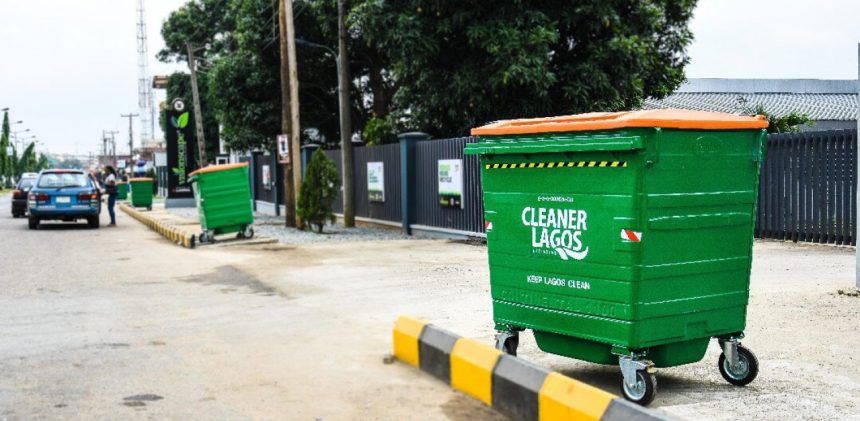
His defence reflects a broader debate: Lagos clearly outspends and out-plans most Nigerian states on waste management, but the gap between strategy and lived reality remains wide in many parts of the megacity. Over the past year, officials have highlighted a series of operational improvements, from expanding the compactor-truck fleet and deploying more waste bins to tightening enforcement against indiscriminate dumping and optimising waste-collection routes. Wahab said these measures were already yielding measurable benefits, citing faster stormwater drainage after heavy rains as evidence of improved maintenance of canals and primary drains.
Dear @Stanleyade01 ,
Thank you for your concern and the feedback. Lagos is not missing out on any details and our implementations are not struggling. Every step being taken today was shaped by extensive engagement with stakeholders and those directly affected. Nothing is… https://t.co/q4CsgH67iH
— Tokunbo Wahab (@tokunbo_wahab) December 4, 2025
The commissioner also addressed behavioural challenges, noting that Lagos receives a daily influx of new residents whose waste-disposal habits vary widely. “Lagos has a small land mass yet houses roughly ten percent of Nigeria’s population,” he said, arguing that sensitisation and enforcement must work side-by-side because millions enter the city with practices formed elsewhere. He recalled meeting a blogger who recently moved to Lagos and “had no idea it was wrong to dump waste on road medians because it was normal practice where she came from,” using the example to underscore the scale of awareness gaps.
Beyond Wahab’s defence, Lagos’s waste-management posture continues to evolve. The state is pushing a waste-to-energy programme, including a proposed plant in Epe designed to convert several thousand tonnes of refuse daily into electricity — a flagship project expected to reduce landfill reliance, cut long-haul truck movements and create an alternative revenue stream. Officials have also been working on a broader circular-economy plan that involves improving recycling markets, upgrading transfer stations, and adopting technology-driven tools such as smart bins and automated billing systems.
These efforts place Lagos ahead of many states that still struggle with basic collection, weak financing and outdated disposal methods. Its climate-action and green-infrastructure plans, supported in part by World Bank advisory work, outline medium- and long-term reforms that few subnational governments have matched in detail or scale. The state is also developing public-private partnerships (PPPs) to fund fleet renewal and modernise landfill operations — an approach largely out of reach for states with smaller economies.
Even so, challenges persist. While the government points to progress, critics argue that collection remains irregular in parts of Mushin, Ajegunle, Ikorodu and other dense communities where informal dumping remains common. Behaviour-change campaigns are active but uneven, and the recycling ecosystem still depends heavily on informal waste pickers who remain poorly integrated into the formal system. Large projects such as the waste-to-energy plant also face familiar concerns about financing transparency, technical readiness, and long-term maintenance — issues that have stalled similar attempts elsewhere in Africa.
The question of whether Lagos is “ahead” therefore depends on the metric. On planning, investment, partnerships and announced reforms, Lagos is the most forward-leaning state in Nigeria. On day-to-day environmental cleanliness, drainage management and public sanitation compliance, progress is visible but not uniform.
FURTHER READING
Wahab insists the state is “moving with purpose,” but the real test will be how consistently these gains appear across all neighbourhoods, from high-income estates to the most congested informal settlements.
Philip Ibitoye is a Special Correspondent with EKO HOT BLOG. Click here to find daily analysis and critical insight on trending issues in Lagos and other parts of Nigeria.
Click here to watch the video of the week below: