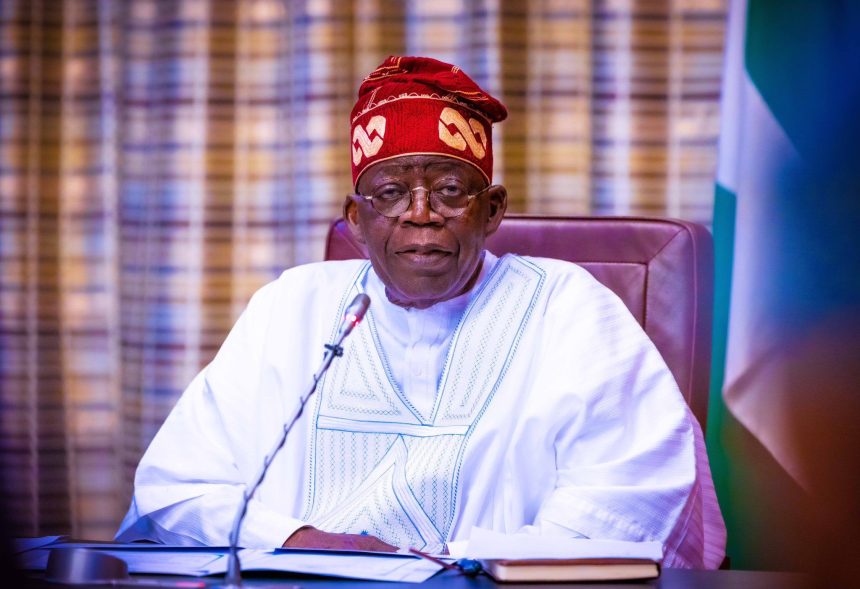
President Bola Tinubu’s renewed warning to state governors over the direct disbursement of funds to local governments goes to the heart of one of Nigeria’s most enduring development failures: the systematic weakening of the tier of government closest to the people.
The president spoke on Friday at the 15th national executive committee (NEC) meeting of the All Progressives Congress (APC) at the State House conference centre in Abuja.
EDITOR’S PICKS
For decades, local governments have existed largely as administrative shells; constitutionally recognised, politically visible, but financially emasculated by state governments that appropriate their funds and dictate their priorities.
The July 11, 2024, Supreme Court judgment affirming the financial autonomy of local governments was not merely a legal clarification; it was a verdict on a structural distortion that has hollowed out grassroots governance. By ruling that allocations from the Federation Account must be paid directly to local councils, and declaring it unconstitutional for states to retain or manage those funds, the apex court addressed a practice that has quietly undermined development outcomes across the country.
At the centre of the problem is the long-standing use of joint state–local government accounts, which in practice became instruments of control rather than coordination. Governors routinely determine what local governments receive, when they receive it, and how it is spent. In many states, council chairmen are reduced to political appointees in all but name, dependent on governors for releases that often come with instructions or are delayed indefinitely. The result is a local government system stripped of initiative, accountability, and capacity.
This neutering of local governments has had direct and visible consequences. Rural roads decay because councils lack the funds to maintain them. Primary healthcare centres exist in name but not in service because salaries, drugs, and basic equipment depend on irregular releases. Primary schools suffer from poor infrastructure and unpaid teachers, even though education is constitutionally a shared responsibility in which local governments play a critical role. Markets, drainage systems, sanitation services, and local security initiatives, all traditionally within the remit of councils, have withered under financial starvation.
Tinubu’s insistence on enforcing direct allocation, even if it requires an executive order, signals an understanding that development cannot be sustainably driven from state capitals alone. Development is granular. It happens in wards, communities, and neighbourhoods, where local governments are best placed to identify needs, mobilise citizens, and respond quickly. When councils control their funds, citizens know whom to hold responsible for failure or success. When those funds are filtered through governors, accountability dissolves into a maze of blame-shifting.
Critically, the president’s stance also reframes federalism as more than a negotiation between Abuja and the states. Nigeria’s federal structure recognises three tiers for a reason: concentration of power and resources at any single level breeds inefficiency and abuse. By warning governors that continued non-compliance could invite federal intervention, Tinubu is asserting that constitutional order must override political convenience.
FURTHER READING
Until local governments are financially free to act as true engines of grassroots development, national progress will continue to look impressive on paper while failing in villages, towns, and city outskirts. Forcing direct funds to LGs is thus not an administrative tweak; it is a foundational correction long overdue.
Philip Ibitoye is a Special Correspondent with EKO HOT BLOG. Click here to find daily analysis and critical insight on trending issues in Lagos and other parts of Nigeria.
Click here to watch the video of the week below: