- Children’s Health at Risk: Cardiologist Advises Reducing Sugary Beverages
- Stressed the need for parents to pay closer attention to children’s dietary habits
- According to the World Health Organisation (WHO), sugar-sweetened beverages include all drinks containing free sugars
A consultant cardiologist in Gombe has warned that excessive consumption of sugary drinks could heighten the risk of cardiovascular diseases in children, urging parents to reconsider what they include in school lunches.
Eko Hot Blog reports that Dr Abubakar Sani, a cardiologist at the Federal Teaching Hospital, Gombe, said children who consume large amounts of sugar-sweetened beverages (SSBs) are more likely to develop heart disease, hypertension and type 2 diabetes later in life.
EDITOR’S PICK
- ‘I Don’t Need International Law’: Cites Personal Morality as Sole Limit
- ‘Nobody Can Push Us Out’ – Wike Blasts New APC Defectors in Rivers
- FG, ASUU Set to Sign 40% Salary Increase Agreement
Speaking in an interview with the News Agency of Nigeria (NAN) on Monday, Dr Sani highlighted the rising prevalence of non-communicable diseases, stressing the need for parents to pay closer attention to children’s dietary habits.
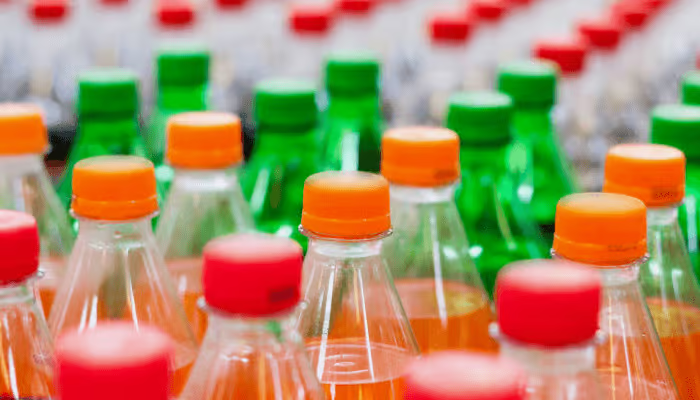
“Many parents regularly include sugary juices and other SSBs in their children’s school lunches, which are unhealthy,” he said. “Excessive consumption of sugary drinks also exposes children to serious risks like obesity and severe tooth decay.”
With schools resuming across the country, Dr Sani advised parents to reduce the availability of sugary drinks at home and in school lunch packs. “I advise parents to cut down on sugary drinks for their children, especially for school, and to prioritise water as the healthiest hydration option,” he added.
According to the World Health Organisation (WHO), sugar-sweetened beverages include all drinks containing free sugars, such as carbonated and non-carbonated soft drinks, fruit and vegetable juices, liquid and powdered concentrates, flavoured water, energy and sports drinks, ready-to-drink tea and coffee, as well as flavoured milk drinks.
The WHO notes that sugary drinks offer no nutritional benefit and are neither essential nor desirable in a healthy diet.