
- 2027 Must Be a Watershed Moment for Nigeria’s Democracy – INEC Chairman
- Says the commission stands at a defining moment with a rare opportunity to rewrite Nigeria’s electoral history
- Highlighted the growing influence of young voters
The Chairman of the Independent National Electoral Commission (INEC), Joash Amupitan, has unveiled a far-reaching reform agenda aimed at delivering world-class elections and redefining Nigeria’s democratic experience ahead of the 2027 General Election.
Eko Hot Blog reports that Amupitan, a Senior Advocate of Nigeria who assumed office on October 23, 2025, following the exit of Professor Mahmood Yakubu, said his central objective is to position INEC as the number 1 election management body in Africa.
EDITOR’S PICK
- Details Of Jonathan Meeting With PDP Leaders Emerge
- PDP Heavyweights Set To Dump Party For ADC As Faction Meets With Jonathan
- AFCON 2025: Quarter-Finals Fixtures, Dates (FULL LIST)
He spoke in Lagos at the opening session of an induction, orientation and retreat for new and serving National Commissioners of INEC drawn from across the country.
According to him, the commission stands at a defining moment with a rare opportunity to rewrite Nigeria’s electoral history.
“Our goal is clear,” Amupitan said. “The 2027 General Election must be free and fair and must represent a watershed moment in Nigeria’s election history.”
He reminded participants that over 200 million Nigerians, as well as the wider African continent, would be watching the commission’s actions closely, urging them to brace for the demanding task ahead.
“The work ahead is demanding, the hours will be long, and the scrutiny will be intense,” he warned.
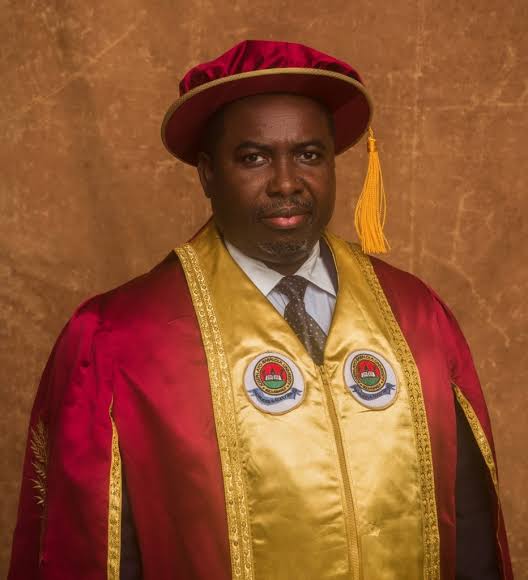
The INEC chairman stressed that the ambition of his leadership goes beyond conducting credible elections in 2027, saying the commission must aim for global recognition.
“I want us to build an institution that is recognised globally. Let it be said that under our watch, INEC became the best election management body in Africa—a beacon of integrity, a model of technological efficiency, and a fortress of democratic values,” he said.
Amupitan explained that success in 2027 must serve as a continental benchmark, proving that Nigeria can organise elections that are technologically driven, transparent and beyond reproach.
He outlined five non-negotiable pillars guiding the commission’s mandate: elections free from interference, fairness to all political actors, credibility in the eyes of the global community, transparency from polling units to result collation, and inclusiveness for all Nigerians regardless of physical ability or location.
He also highlighted the growing influence of young voters, noting that the 2027 elections would be shaped by millions of first-time voters who are digitally savvy and demand real-time transparency.
“It is our duty to earn the trust of these young Nigerians. By building inclusive systems and ensuring our technology is beyond reproach, we are not just conducting an election, we are securing the future of democracy,” he said.
Amupitan further pledged strict adherence to the Electoral Act 2022 and its amendments, insisting that the rule of law would remain central to INEC’s operations under his leadership.
“The rule of law is not a suggestion; it is our operating system,” he stated.
While reaffirming his commitment to staff welfare, the chairman made it clear that there would be zero tolerance for misconduct, whether by omission or commission.
He commended INEC staff for the “successful, peaceful and professional conduct” of the November 8, 2025 Anambra State off-cycle governorship election, describing it as a strong signal of the commission’s readiness for future challenges.
Looking ahead, Amupitan described the FCT Area Council elections in February 2026, as well as the off-cycle governorship elections in Ekiti and Osun states later in the year, as critical testing grounds.
“These elections will allow us to refine our processes, from voter register management to the integrity of the Bimodal Voter Accreditation System (BVAS), ahead of the national exercise in 2027,” he said.
Also speaking, the Resident Electoral Commissioner in Lagos State, Prof. Ayobami Salami, described the retreat as a key milestone in INEC’s institutional development.
He said the programme was designed to strengthen leadership capacity, enhance operational preparedness and reinforce the commission’s commitment to its constitutional mandate.
With public expectations at an all-time high, Salami stressed the need for early planning, strategic coordination and institutional cohesion as INEC marches toward the 2027 elections.
FURTHER READING
- Fire Guts BRT Bus on Third Mainland Bridge
- APC Boasts of Total Dominance in Plateau, Eyes 1 Million Votes for Tinubu
- Trump Administration Denies Occupation, Nation-Building Plans in Venezuela
Click here to watch video of the week