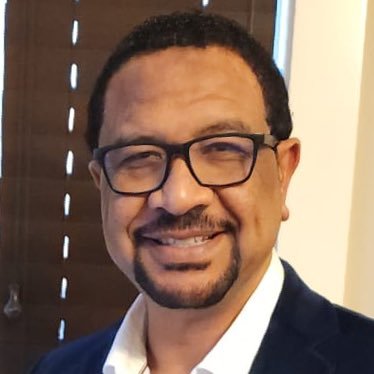
- Abba-Aji warns foreign bombing won’t solve Nigeria’s insecurity.
- The Nigerian professor based in Canada praises U.S. lawmakers for favouring partnership over intervention.
- He urges President Tinubu to improve diplomacy and appoint competent envoys.
A Canada-based Nigerian academic, Dr. Adam Abba-Aji, has urged the United States (U.S.) and Nigeria to embrace constructive partnership rather than military intervention as tensions rise over renewed U.S. scrutiny of Nigeria’s human rights and security record.
EKO HOT BLOG reports that Abba-Aji, a Clinical Professor in the Department of Psychiatry at the University of Alberta, issued the caution in a detailed response to the November 20 hearing of the U.S. House of Representatives Subcommittee on Africa, convened in the aftermath of President Donald Trump’s redesignation of Nigeria as a Country of Particular Concern (CPC).
EDITOR’S PICKS
According to him, the session marked “a very important moment in the international conversation about insecurity in Nigeria,” with lawmakers engaging in what he described as one of the most “constructive and informed” debates on Nigeria’s security crisis in recent years.
He noted that members from both U.S. political parties “spoke passionately about the situation in Nigeria,” acknowledging the scale of terrorism, the human toll across regions, and the intertwined causes of violence. Crucially, he said lawmakers “explicitly rejected direct military intervention in Nigeria,” instead advocating a more measured and respectful partnership.
“They recommended a joint approach to assess Nigeria’s current capacity to deal with terrorism,” Abba-Aji said. “They encouraged the U.S. to provide intelligence support and work closely with Nigerian security forces in identifying, isolating, arresting, or eliminating the terrorists who have caused havoc in different regions of our country.”
The Nigerian scholar stressed that Nigeria’s security challenges cut across all regions, from Boko Haram in the Northeast to banditry in the Northwest and North Central, and violent groups in the Southeast and Southwest. “Nigerians have suffered regardless of religion or tribe,” he said. “Every Nigerian deserves safety and dignity.”
He welcomed what he called a “wiser approach that respects Nigeria and focuses on what actually works,” contrasting it with previous “reckless and impulsive calls for aggressive military action in Nigeria that would have damaged our sovereignty and put civilian lives at significant risk.”
Abba-Aji argued that the Tinubu administration must act swiftly to take advantage of the shift in U.S. tone. “Nigeria should move quickly to strengthen cooperation with the U.S. and also with European partners,” he said, while also highlighting a major diplomatic gap: Nigeria’s failure to appoint ambassadors to key countries.
“Nigeria’s reputation has suffered from misinformation and disinformation,” he warned. “We need strong, capable representatives who can stand for Nigeria, defend our interests and engage with global leaders to restore confidence in our nation’s future.”
He urged President Bola Tinubu to appoint ambassadors based on competence and national interest rather than political patronage. “This is not a time for political rewards,” he said. “It is time to appoint qualified people — people who will represent Nigeria with honour.”
Abaji also criticised some Nigerians who publicly celebrated the possibility of U.S. military strikes against their own country, calling the idea dangerous and misguided. “You may feel angry or frustrated, but it is essential to step back and think carefully,” he cautioned. “Foreign bombing will not fix Nigeria. It will destroy lives and deepen our suffering.”
He described the moment as an opportunity for a reset in U.S.–Nigeria relations — one anchored on intelligence sharing, diplomatic cooperation, and strategic assistance, rather than coercion or force.
“If we take this opportunity seriously and if we work with the right partners, this could be a turning point,” he said. “A moment when Nigeria moves forward with dignity, strength, and unity… A moment when our government is supported to protect our people and secure our sovereignty. A moment when Nigeria begins to rise again.”
Since Trump’s military threat against Nigeria, the U.S.–Nigeria security cooperation has imprpved.
Last week, President Tinubu approved Nigeria’s participation in the U.S.–Nigeria Joint Working Group, established to implement security agreements from high-level talks in Washington led by National Security Adviser, Nuhu Ribadu.
FURTHER READING
The group, comprising senior ministers and security officials, is tasked with enhancing counterterrorism measures, intelligence sharing, border security, and coordination on humanitarian and civilian protection issues.
Click here to watch the video of the week below: