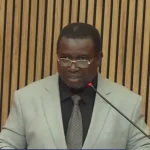
- Rahaman described the proposed law as essential to protecting the state’s environment and safeguarding future generations
- To ease the shift away from disposable plastics, the proposal provides for a 12-month transition period
- He warned that unchecked plastic waste continues to clog drainage channels and damage the soil, stressing the urgency of decisive action
The Oyo State House of Assembly has advanced a proposed law aimed at eliminating single-use plastics, marking the first reading of the legislation during Thursday’s plenary session.
Eko Hot Blog gathered that the bill, known as the Oyo State Single-Use Plastics Prohibition (SUPs) Bill, 2026, was introduced on the floor of the House under the leadership of Speaker Adebo Ogundoyin.
The bill which is jointly sponsored by the Chairman of the House Committee on Environment, Ecology and Water Resources, Olorunpoto Cephas Rahaman, alongside the Speaker and the House Leader, Sanjo Adedoyin.

Speaking during deliberations, Rahaman described the proposed law as essential to protecting the state’s environment and safeguarding future generations.
He warned that unchecked plastic waste continues to clog drainage channels and damage the soil, stressing the urgency of decisive action.
If passed, the legislation would outlaw the manufacture, importation, distribution, sale, and use of disposable plastic products across the state.
Items listed for gradual removal include plastic carrier bags, sachet water pouches, straws, disposable cutlery, cups, plates, and Styrofoam food containers. The bill also bars eateries, event centres, and other public venues from providing plastic straws and cutlery.
To ease the shift away from disposable plastics, the proposal provides for a 12-month transition period.
Within that timeframe, authorities plan to intensify public awareness campaigns and encourage residents and businesses to adopt environmentally friendly substitutes.
Ogundoyin said the move reflects the state’s determination to align with international environmental standards and transition from a culture of indiscriminate disposal to sustainable practices.
The grace period, he noted, would give producers, traders, and consumers adequate time to switch to biodegradable options.
Enforcement responsibilities would rest with the Oyo State Ministry of Environment and Natural Resources, which is expected to establish a Plastic Pollution Control Task Force.
The body would work with local councils, civil society groups, environmental officers, and security agencies to ensure compliance. Digital monitoring tools and whistleblower channels may also be introduced to strengthen oversight.
Adedoyin emphasised that while businesses would be given reasonable time to adjust, strict enforcement would follow once the phase-out deadline expires, maintaining that environmental protection remains a top priority.
The bill proposes a range of penalties for violators, starting with warnings and compulsory environmental education for first-time offenders. Repeat breaches could attract substantial fines, mandated corporate social responsibility projects, or even closure of affected premises.
Manufacturers that continue producing single-use plastics after the transition period would face an environmental levy of at least 500 percent above the standard production tax.
Beyond restrictions, the draft law outlines measures to encourage eco-friendly innovation. These include support for local producers of biodegradable and compostable materials, access to technical assistance, and partnerships with academic and research institutions to drive sustainable product development.
Incentives such as tax reliefs, grants, subsidies, and preferential procurement policies are also proposed for compliant businesses.
Additionally, medium and large enterprises would be required to undertake environmental responsibility initiatives, including community sanitation drives and periodic clean-up exercises.
The bill further calls for expanded investment in waste collection, sorting, and recycling systems, as well as public-private partnerships to establish recycling hubs across the state’s local government areas.