- Common Food Combinations Can Cause Food Poisoning
-
Cross contamination increases danger in mixed food servings.
-
Temperature control prevents most food poisoning cases.
In many Nigerian homes, food is rarely cooked for just one meal. Rice is prepared in large pots. Soup lasts for days. Beans is stored for tomorrow’s breakfast. At parties, plates are mixed generously. Jollof rice, salad, meat, moi moi, everything together.
Most of these meals are perfectly safe when handled properly.
EDITOR’S PICKS
- DSS Arrests El Rufai After Release From EFCC Custody
- Inside Tinubu’s Executive Order Stripping NNPCL of Oil Revenue Deduction Powers
- 5 Health Risks Men Face After Age 40
EKO HOT BLOG gathered that the problem is not really the combination of foods. The real danger lies in how they are prepared, stored and reheated.
Food poisoning in local communities often begins quietly. A meal left on the kitchen table. A soup reheated too many times. Salad prepared beside raw chicken. These small gaps in hygiene are what turn everyday food into a health risk.
Let us look at common Nigerian food combinations that can increase the risk of food poisoning when handled poorly.
1. Rice and Stew Left Out for Hours
Cooked rice can contain spores of a bacterium called Bacillus cereus. These spores survive the cooking process. When rice is left at room temperature for several hours, especially in our warm climate, the spores grow into bacteria and release toxins.
In many homes, rice is cooked in the afternoon and left covered on the stove till evening. Once mixed with stew and kept warm for too long, the risk increases. Even reheating may not destroy the toxins already produced.
The issue is not rice and stew. It is time and temperature.
2. Jollof Rice Served With Raw Salad
At weddings and parties, jollof rice is often served with coleslaw or fresh vegetables. The rice is hot. The salad is cold. That combination itself is not harmful.
However, raw vegetables can carry bacteria if not washed properly. If the same knife or chopping board used for raw meat is used for salad without washing, cross contamination happens. The bacteria from raw chicken or beef can transfer directly to the salad.
Since salad is not cooked again, any bacteria present are eaten alive.
3. Beans and Fried Plantain Packed Together
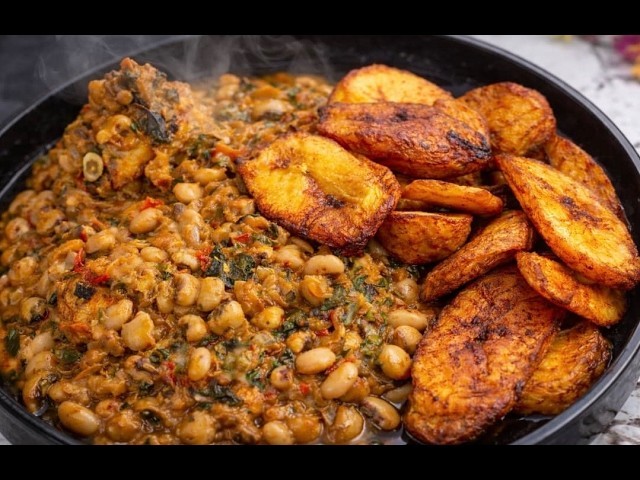
Beans is rich in protein and moisture. That makes it nutritious, but it also makes it a good environment for bacterial growth if stored wrongly. When beans and fried plantain are packed together in nylon and kept for hours in school bags or sold in traffic under the sun, the heat builds up inside the wrap. Bacteria multiply rapidly in that warm environment. The danger increases when leftovers are reheated the next day without proper refrigeration.
4. Suya With Raw Onions
Suya itself is grilled at high temperatures. That heat kills most bacteria on the meat. The risk usually comes from the raw onions served with it. If the onions are washed with contaminated water or handled with unclean hands, they can introduce bacteria back onto the meat after grilling. Because the onions are not cooked, whatever contamination is present goes straight into the body.
5. Egusi and Ogbono Soup Reheated Repeatedly
Thick soups like egusi and ogbono contain oil, protein and moisture. These conditions support bacterial growth if the soup is left in the danger temperature zone for too long.
Some households leave soup overnight and reheat it in the morning. The same soup may be reheated again in the afternoon and at night. Each cooling and reheating cycle increases risk if the soup was not refrigerated properly.
Repeated heating does not always make food safe. Some bacteria produce toxins that are heat stable.
Our climate is hot, Electricity supply can be unreliable, affecting refrigeration. Food is often prepared in bulk to save cost. Street food vendors may not have access to clean water. Bacteria grow fastest between 5 and 60 degrees Celsius. Unfortunately, many foods sit within this temperature range for long periods.
Food poisoning symptoms such as vomiting, diarrhoea and stomach cramps may appear hours after eating. In severe cases, especially in children and elderly people, it can lead to dehydration and hospitalisation.
FURTHER READING
- INEC Denies Plan for Real Time Transmission in FCT Council Polls
- Tinubu Orders Direct Payment of Oil Revenues to Federation Account
- Unpaid Electricity Bills Hit N6tn As GenCos Reject NLC “Extortion” Claims