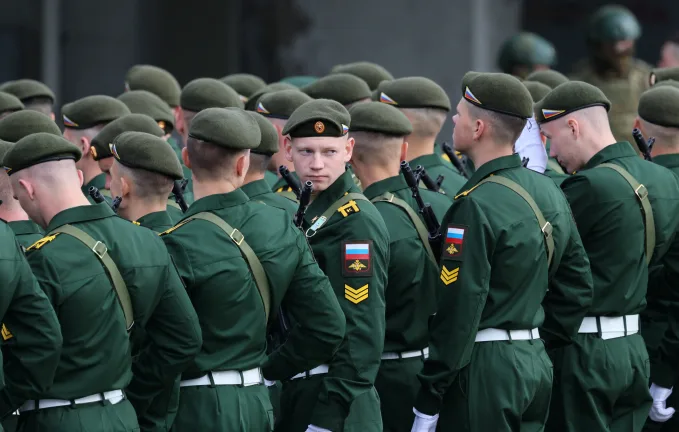
- President Vladimir Putin presided over a significantly diminished Victory Day parade on Moscow’s Red Square on Saturday, featuring marching troops and a flyover but notably excluding the traditional display of heavy military hardware.
- The decision to forgo the usual exhibition of tanks and missiles comes amid intensified security concerns following a series of Ukrainian strikes on Russian infrastructure and oil refineries.
- The event marks the first day of a historic 72-hour ceasefire brokered by US President Donald Trump, which includes a major “1,000 for 1,000” prisoner exchange between Moscow and Kyiv.
Russian President Vladimir Putin led the 81st anniversary of the Soviet victory over Nazi Germany on Saturday, but the atmosphere in Red Square was far from the usual display of overwhelming military might.
Eko Hot Blog reports that in a major departure from tradition, the Kremlin opted for a scaled-down ceremony, citing security risks.
EDITOR’S PICKS
- JAMB Delists 23 CBT Centres, Warns 89 After Mock UTME Review
- NASA Astronauts Return to Earth After First Human Trip to the Moon in 50 Years
- INEC Shifts Nationwide Voter Revalidation Until After 2027 General Election
While thousands of servicemen marched past Lenin’s mausoleum and fighter jets performed a flyover, the absence of heavy weaponry served as a stark reminder of the ongoing pressures of the conflict in Ukraine.
The parade coincided with the start of a three-day ceasefire that is set to run from May 9 to May 11.
The truce, announced on Friday by President Trump and confirmed by both Putin and Ukrainian President Volodymyr Zelenskyy, offers a rare humanitarian window in the four-year war.
Central to this agreement is a massive prisoner swap, which Zelenskyy confirmed would involve the return of 1,000 individuals to each side.
For many, the pause in fighting represents the most significant diplomatic breakthrough since the invasion began in 2022.
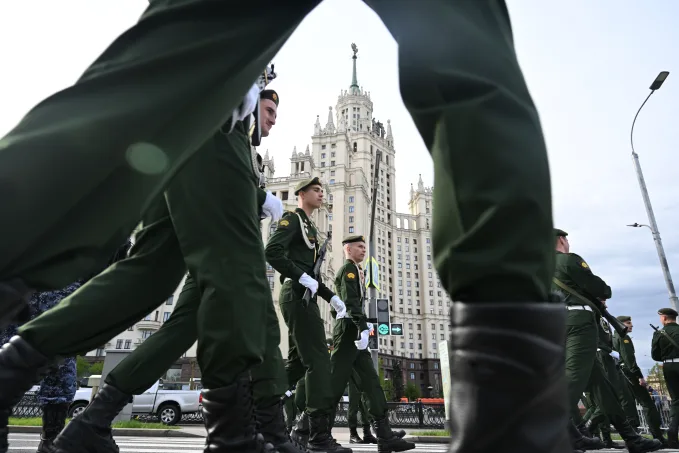
Despite the temporary silence of the guns, tensions remain high. The lead-up to the holiday was marked by mutual drone attacks and Russian threats of retaliation for strikes on its territory.
While the Soviet Union’s sacrifice of 27 million lives during World War II remains a central pillar of Russian national identity, this year’s celebrations were overshadowed by the logistical and security realities of modern warfare.
As the ceasefire enters its first full day, global observers are watching closely to see if this brief interval can be leveraged into more substantive peace negotiations.