- The United States Senate has narrowly blocked a critical war powers resolution designed to restrict President Donald Trump’s unilateral military authority regarding the monthslong armed conflict with Iran.
- The legislative motion failed in a tight 47 to 48 vote, with four breakaway Republican senators crossing party lines to join Democrats, while one lone Democrat voted with the Republican majority to kill the bill.
- The vote unfolded amidst growing frustration on Capitol Hill, as lawmakers from both parties demand full transparency and access to the secret text of a framework peace agreement recently touted by the White House.
The United States Senate has narrowly rejected a high-stakes war powers resolution intended to clip the executive military powers of President Donald Trump concerning the ongoing conflict with Iran.
Eko Hot Blog reports that in a tense 47 to 48 floor vote on Tuesday, senators blocked a motion to discharge the restrictive resolution out of committee.
EDITOR’S PICK
- Hamzat Appoints Obanikoro as Campaign DG Ahead of 2027 Lagos Governorship Race
- Tinubu’s State Police Plan Gains Momentum as Amendment Looms
- Residents Raise Alarm After Two Bodies Found in Lagos Waterway
The legislative showdown occurred just as President Trump arrived at the G7 summit in France, where he has been actively promoting a fragile framework truce signed with Tehran to bring an end to the intense, 109-day international conflict.
The razor-thin vote highlighted deep partisan divisions and shifting loyalties within the upper legislative chamber.
Four moderate Republican senators, Susan Collins of Maine, Bill Cassidy of Louisiana, Lisa Murkowski of Alaska, and Rand Paul of Kentucky, split from the GOP leadership to vote alongside nearly all Democrats in support of the restrictions.
Additionally, Pennsylvania’s Senator John Fetterman stood out as the sole Democrat to break ranks, casting a crucial vote against the measure to help the remaining Republican majority defeat the resolution on the floor.
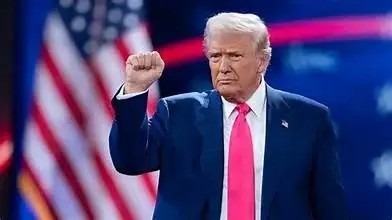
Sponsored by Democratic Senator Raphael Warnock of Georgia, the resolution sought to mandate the immediate removal of all United States Armed Forces from active hostilities within or against Iranian territories, unless explicitly authorized by a formal congressional declaration of war.
Addressing the chamber ahead of the tally, Warnock called on his Republican colleagues to hold the executive branch accountable, pointing out that despite a welcome temporary truce, the administration’s unilateral execution of the war had bypassed traditional constitutional oversight.
Compounding the tension in Washington is the extreme secrecy surrounding the terms of the U.S.-Iran peace memorandum. Under the statutory provisions of the 2015 Iran Nuclear Agreement Review Act, the White House is legally compelled to submit any bilateral deal linked to Iranian programs to Congress for rigorous review before any economic or trade sanctions can be lifted.
Senate Majority Leader John Thune, a South Dakota Republican, disclosed to journalists that he has formally requested the classified text of the agreement along with an immediate, closed-door intelligence briefing from administration officials to dispel growing legislative skepticism.
Concurrently, legal heavyweights within the Democratic camp, led by California Senator Adam Schiff, have challenged the White House’s assertion that the statutory 60-day deadline imposed by the War Powers Resolution of 1973 was effectively paused by an initial ceasefire in early April.
Critics argue that the historical act does not contain a “pause button” and that sporadic proxy exchanges have continued regardless of the truce.
While the House of Representatives successfully passed a separate war powers check earlier this month, Senate Minority Leader Chuck Schumer admitted that leadership will temporarily hold back further votes until they can secure additional Republican cross-votes to successfully override executive resistance.