- The United States and Iran signed a memorandum of understanding aimed at ending the Middle East conflict
- The agreement includes a 60-day negotiation period and plans for a final peace deal in Switzerland
- Both sides agreed to halt hostilities, ease sanctions, and restore regional stability
The United States and Iran have signed a major agreement aimed at ending the prolonged conflict in the Middle East, marking what both sides describe as a turning point in regional diplomacy.
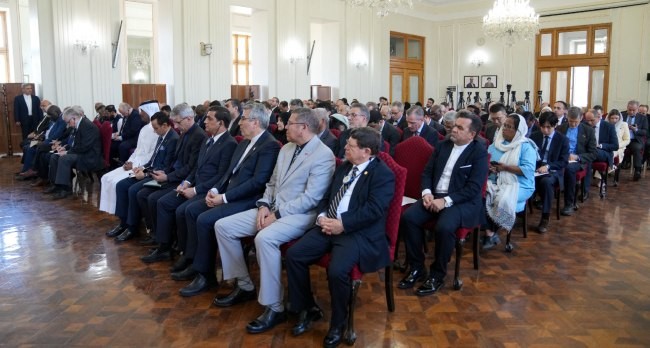
Eko Hot Blog gathered that the memorandum of understanding was signed during a high-level ceremony at the Palace of Versailles following a G7-related meeting in France.
EDITOR’S PICK
- Federal Lawmaker Yaya Tongo Dies In Abuja Hospital
- Rep. Wale Raji Celebrates Alhaja Aduke Salimot Seriki on Birthday
- Nancy Isime Recalls Alex Ekubo’s Fearless Humor, Generosity at Late Actor’s Tribute
US President Donald Trump confirmed the signing after a candlelit dinner hosted by French President Emmanuel Macron, where world leaders reportedly applauded the development.
The agreement is expected to be formally launched at a ceremony in Switzerland on Friday, where both nations will begin a 60-day negotiation period to finalise a comprehensive peace deal.
The conflict, which escalated after US-Israeli strikes on Iran earlier in the year, had triggered widespread instability across the Middle East, disrupted global energy markets, and strained key maritime routes, including the Strait of Hormuz.
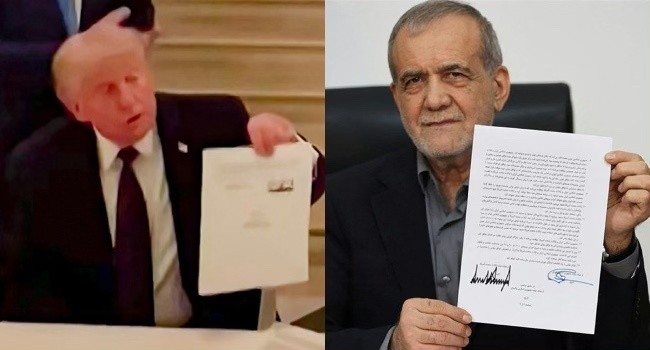
Officials from both countries confirmed that the memorandum was signed by President Donald Trump and Iranian President Masoud Pezeshkian, with mediation support reportedly provided by Pakistan’s Prime Minister Shehbaz Sharif.
The deal outlines an immediate and permanent cessation of hostilities between the United States, Iran, and their allies. Both sides agreed not to initiate military action against each other and to respect the sovereignty and territorial integrity of affected states in the region, including Lebanon.
A key element of the agreement is the commitment to conclude a final and binding settlement within 60 days, with the possibility of extension if both parties agree.
On the economic front, the United States and its partners are expected to support a reconstruction and development package for Iran valued at no less than $300 billion. The plan is intended to rebuild infrastructure, stabilise the economy, and support long-term regional recovery.
In return, Iran reaffirmed its pledge not to develop or acquire nuclear weapons. Its nuclear programme will remain under international monitoring, with arrangements for the management of enriched uranium to be determined under supervision of the International Atomic Energy Agency (IAEA).
The United States also agreed to gradually lift sanctions on Iran and unfreeze restricted assets once implementation of the agreement begins.
This includes waivers for Iranian crude oil exports, petroleum products, banking transactions, insurance, and transportation services.
In addition, Washington committed to lifting its blockade of Iranian ports and withdrawing military forces from areas close to Iran within 30 days after the final agreement is reached.
Both countries also agreed on measures to restore safe commercial navigation through the Strait of Hormuz, with temporary arrangements to ensure uninterrupted maritime traffic while security conditions are stabilised.
The agreement further stipulates that the final peace deal will be submitted for endorsement through a United Nations Security Council resolution, giving it international legal backing.
A formal signing ceremony is scheduled to take place in Switzerland, where technical-level negotiations are expected to begin immediately, signalling the start of what officials describe as a structured pathway to lasting peace in the region.
FURTHER READING