- The United States Senate has officially adopted a House-passed concurrent resolution demanding the immediate removal of US Armed Forces from hostilities against Iran, marking a historic legislative challenge to the executive branch’s war policy.
- In a narrow 50 to 48 vote, four prominent Republican senators broke party ranks to join the Democratic majority, successfully pushing the war powers measure through both chambers of Congress for the first time since the outbreak of the conflict.
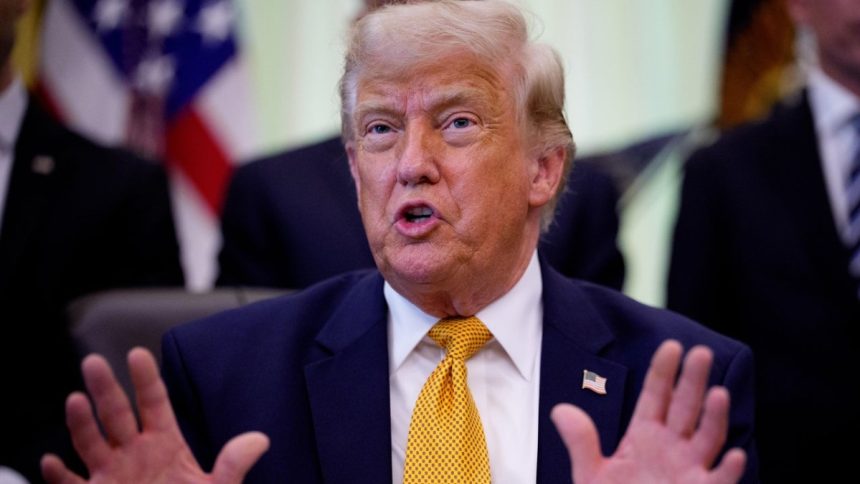
- President Donald Trump issued a fierce public response to the legislative development, labeling the concurrent resolution completely meaningless, blasting the dissenting members of his party, and vowing to execute his foreign policy with or without congressional consent.
The United States Senate has formally approved a House-passed resolution aimed at strictly reining in President Donald Trump’s unilateral military authority regarding the ongoing conflict with the Islamic Republic of Iran.
Eko Hot Blog reports that the highly contested legislative action represents the first time since the war erupted in late February that a joint measure restricting executive war powers has successfully navigated both chambers of the American Congress.
EDITOR’S PICK
- Hamzat Appoints Obanikoro as Campaign DG Ahead of 2027 Lagos Governorship Race
- Tinubu’s State Police Plan Gains Momentum as Amendment Looms
- Residents Raise Alarm After Two Bodies Found in Lagos Waterway
The decisive vote underscores a growing, cross-party legislative anxiety in Washington over the long-term operational directions, transparency, and strategic costs of the administration’s military campaign in the Middle East.
The structural breakthrough materialized through a razor-thin 50 to 48 vote margin, heavily enabled by a core faction of four Republican dissenters, Sens.
Susan Collins of Maine, Bill Cassidy of Louisiana, Lisa Murkowski of Alaska, and Rand Paul of Kentucky, who aligned with the overwhelming bulk of Senate Democrats.
Conversely, the Democratic front faced a singular defection from Pennsylvania Senator John Fetterman, who voted against the measure, while senior Republican lawmakers Mitch McConnell and Dave McCormick were officially recorded as absent.
Modeled under the statutory provisions of the historic War Powers Resolution of 1973, the current measure explicitly directs the Commander-in-Chief to pull American troops out of active hostilities unless Congress issues an official declaration of war or passes a highly specific statutory authorization for the use of military force.
Because the text was advanced as a concurrent resolution, it carries a unique constitutional status that bypasses the White House entirely, requiring no presidential signature to take statutory effect under congressional rules.
Despite this legislative milestone, senior White House officials and legal advisors have quickly dismissed the vote as an empty, symbolic gesture, firmly arguing that United States forces are not currently engaged in the technical definition of active hostilities with Iran following recent ceasefire negotiations.
Furthermore, several hardline administration officials have publicly reiterated their long-standing legal position that the 1973 War Powers Act itself constitutes an unconstitutional infringement upon the executive branch’s explicit powers as Commander-in-Chief.
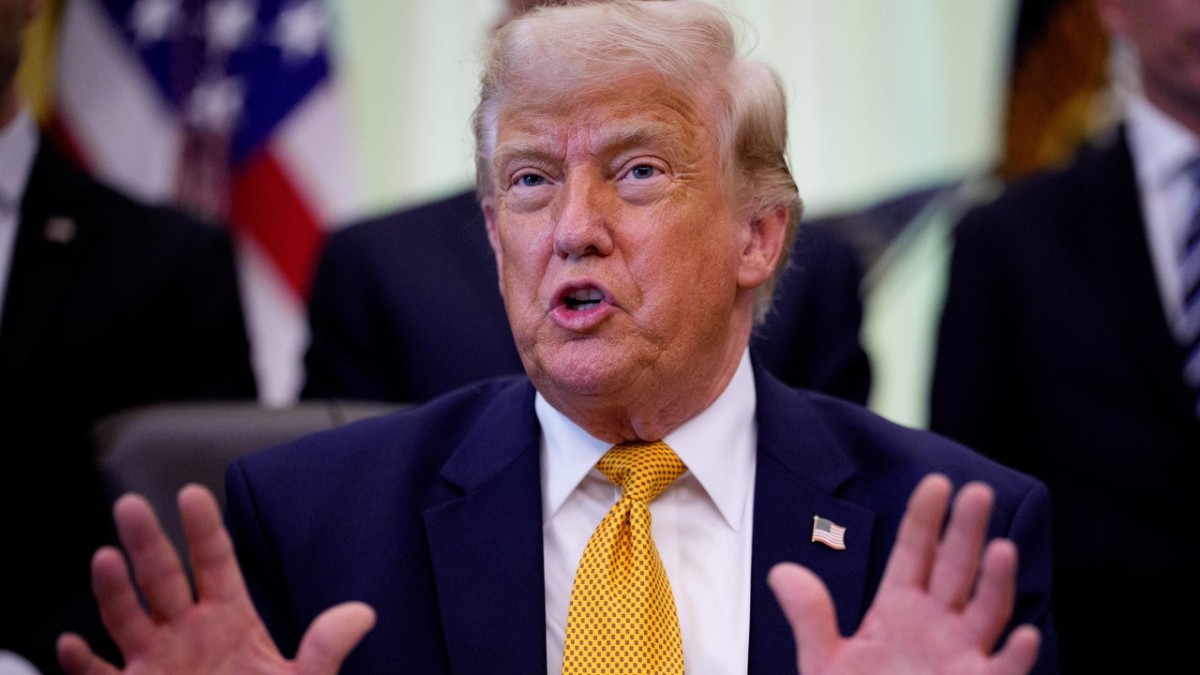
Reacting with characteristic fury via his Truth Social platform on Tuesday night, President Trump aggressively slammed the legislative action, characterizing it as a poorly timed distraction that actively harms ongoing diplomatic maneuvers.
“Four Republican Losers voted with the Dumocrats, and Iran asked my people, ‘what does that all mean?'” Trump wrote in an angry late-night post. “These Senators have just made my job more difficult, but I will get it done, one way or the other, because I always get it done.”
The public outburst was quickly countered by Representative Gregory Meeks of New York, the top Democrat on the House Foreign Affairs Committee and the original architect of the bill, who insisted that the measure is legally binding and vowed to explore all available judicial avenues to force executive compliance with the explicit will of Congress.
The successful passage of the concurrent resolution is expected to act as a massive catalyst for Senate Minority Leader Chuck Schumer and other anti-war lawmakers, who have forced ten separate war powers votes since the conflict began to keep political pressure on the White House.
The legislative victory is already injecting fresh momentum into a parallel joint resolution spearheaded by Democratic Senator Tim Kaine of Virginia.
Unlike Tuesday’s symbolic bill, Kaine’s upcoming joint resolution would actively compel a direct presidential veto, forcing a high-stakes constitutional showdown over the future of American military engagements in the Gulf region as public opinion polls continue to show American voters overwhelmingly favor a swift and permanent end to the war.