- Iranian authorities anticipate between 15 and 20 million mourners will gather in Tehran over the next three days as a six-day funeral procession officially begins.
- The state event serves as a show of strength following a five-week military conflict with the US and Israel, with military chiefs and top politicians openly vowing retaliation.
- The international community is closely watching the ceremonies for the first public appearance of the newly named supreme leader, Mojtaba Khamenei, who has only communicated via written statements since his father’s death.
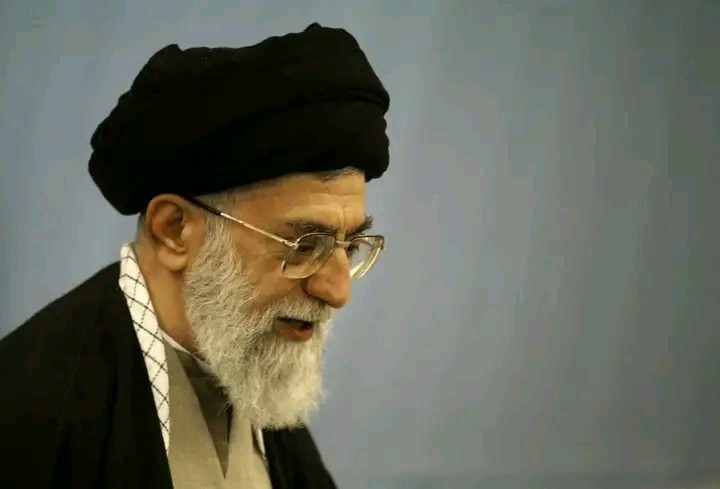
The official funeral ceremonies for Iran’s late supreme leader, Ayatollah Ali Khamenei, have commenced in Tehran, marking the beginning of a massive, six-day state event designed as both an epic show of personal grief and a defiant display of national strength to the Islamic republic’s adversaries.
Eko Hot Blog reports that the events, which began on Saturday, have already drawn hundreds of thousands of citizens, with state authorities anticipating an unprecedented turnout of between 15 and 20 million participants in the capital city alone over the next three days.
EDITOR’S PICK
- Hamzat Appoints Obanikoro as Campaign DG Ahead of 2027 Lagos Governorship Race
- Tinubu’s State Police Plan Gains Momentum as Amendment Looms
- Residents Raise Alarm After Two Bodies Found in Lagos Waterway
Mourners, many carrying red banners that traditionally symbolise a fierce call for vengeance, gathered early in the courtyard of Tehran’s sprawling Grand Mosalla religious complex.
The air filled with thunderous chants of “death to America” and “revenge, revenge” as the public waited for the arrival of the late leader’s coffin.
The multi-day state funeral comes nearly four months after Khamenei, who governed Iran for three and a half decades, was killed at the age of 86 on the opening day of the United States-Israeli military conflict with Iran on February 28.
Due to the intense hostilities and severe security risks that defined the early months of the war, the formal burial was repeatedly postponed.
Now, following an initial diplomatic accord and a pause in the fighting between Iran and the United States, the Islamic republic is using the long-awaited ceremony to project a completely united front and signal its structural resilience to the international community.
The unfolding ceremonies are being closely monitored worldwide, particularly for any public sighting of Mojtaba Khamenei, the late leader’s son and designated successor.
While Mojtaba was officially named the new supreme leader just a week after his father’s assassination, he has not yet made a single public appearance.
His communications have been strictly limited to written statements, fueled by reports that he was wounded in the exact same precision strikes that claimed his father’s life.
The true extent of his physical injuries remains shrouded in mystery, and analysts are keeping a keen eye on the proceedings for signs of his current health or leadership presence.
Beyond ordinary citizens, the solemn event has seen the reappearance of high-ranking Iranian officials who survived the recent conflict.
Parliament Speaker and top negotiator Mohammad Bagher Ghalibaf was visibly emotional and tearful during the preliminary ceremonies on Friday.
He issued an impassioned plea to the Iranian public, stating that the nation’s collective call for vengeance must resonate loudly across the globe.
New security leaders also emerged, including Ahmad Vahidi, the newly appointed chief of the powerful Islamic Revolutionary Guard Corps, who made a rare public appearance after succeeding his predecessor, who perished in the same fatal strikes.
The personal toll of the military conflict is also on stark display, as other family members killed in the February bombardment are scheduled to be buried alongside the supreme leader, including his infant granddaughter.
International dignitaries from a selective group of nations have also arrived in Tehran to pay their respects.
Among those present on Friday were Pakistani Prime Minister Shehbaz Sharif, whose government has been actively mediating diplomatic talks between Iran and the United States, and Russian ex-president Dmitry Medvedev, attending on behalf of President Vladimir Putin.
Delegations representing the Palestinian group Hamas, the Lebanese Shia group Hezbollah, and the Taliban government in Afghanistan were also confirmed in attendance.
Following the initial three days in Tehran, where the coffin will lie in state, the procession is scheduled to move to the clerical hub of Qom on Tuesday.
From there, the late leader’s body will be transported to holy Shia cities in neighbouring Iraq on Wednesday before finally returning to Iran for burial on Thursday in his home city of Mashhad.
With blistering summer temperatures expected to exceed 35 degrees Celsius, extensive logistics are underway to ensure public safety and prevent crowd disasters, including water tankers spraying the streets to cool down attendees.
As the world watches, Iranian military commanders, including Army Chief Amir Hatami, have firmly warned that the United States and Israel will ultimately pay for the blood of their martyred leader, underlining that the current pause in hostilities does not mean an end to their military resolve.