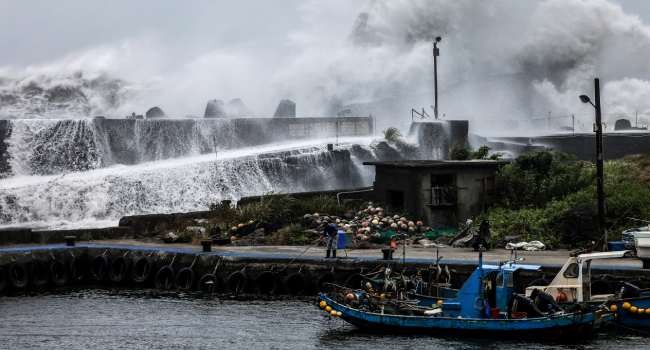
- Typhoon Bavi killed 15 people in landslides in the Philippines
- Thousands of residents were evacuated as the storm approached Taiwan
- Authorities warned of destructive winds, heavy rain and widespread flooding
Typhoon Bavi has left a trail of destruction across parts of Asia, killing at least 15 people in the Philippines while forcing thousands of residents in Taiwan to flee their homes as the powerful storm moves closer to the island.
Authorities in the Philippines said two rain-triggered landslides on the southern island of Mindanao claimed 15 lives, with six people still missing as rescue operations continued, Eko Hot Blog gathered.
EDITOR’S PICK
- UN Mobilizes Humanitarian Aid For Venezuela Following Twin Earthquakes
- Dollar To Naira Exchange Rate Today, June 26, 2026
- Concerns As Repentant Boko Haram Members Allegedly Join Army Recruitment
The storm is forecast to batter northern and eastern Taiwan, as well as Japan’s southwestern islands, before making landfall in eastern China over the weekend. China is already grappling with severe flooding and deadly storms recorded earlier this week.
Typhoon Bavi kills 15, forces thousands to flee in Taiwan
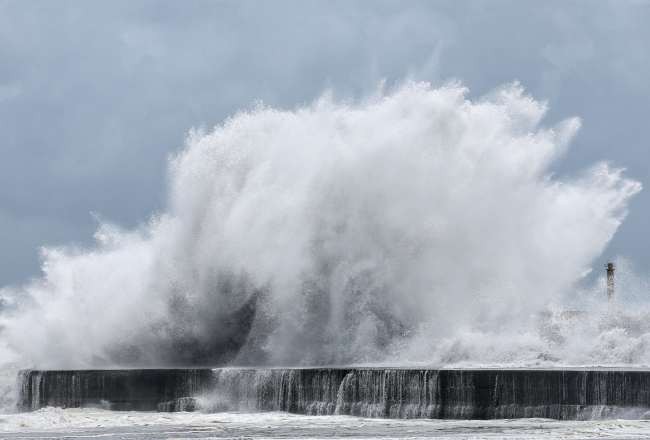
Residents in Taiwan’s northern port city of Keelung rushed to prepare for the approaching typhoon by buying food supplies, reinforcing buildings with sandbags and taping windows to reduce potential damage.
Business owner Chang Shih-huo said residents were taking the warnings seriously, adding that many shops planned to close once the weather deteriorated.
After sweeping through Guam and the Northern Mariana Islands earlier in the week as a super typhoon, Bavi has weakened slightly but remains a dangerous system.
Taiwan’s Central Weather Administration reported that the storm was packing sustained winds of about 155 kilometres per hour, with stronger gusts reaching nearly 190 kilometres per hour.
Weather officials warned that Friday night through Saturday would be the most dangerous period as the typhoon passes closest to Taiwan.
With a wind field stretching about 380 kilometres, Bavi is expected to become the largest typhoon to affect Taiwan in more than three decades.
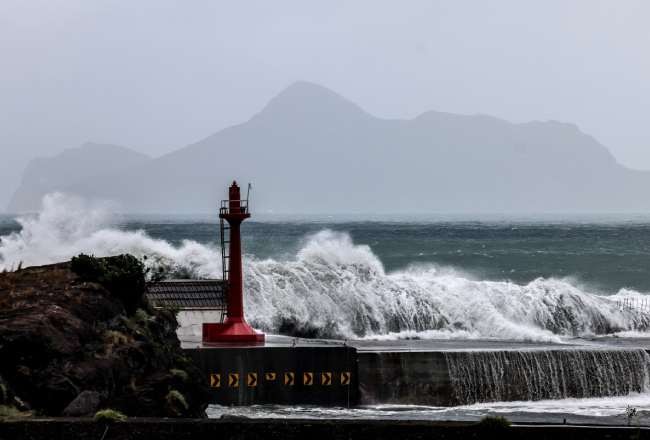
As a precaution, schools and businesses across northern and eastern Taiwan suspended operations, while hundreds of domestic and international flights were cancelled.
Markets in Keelung experienced heavy patronage as residents stocked up on fresh produce and essential supplies. Business owners also secured their premises, while temples protected outdoor religious statues from the anticipated strong winds.
Authorities warned that the storm could dump close to one metre of rainfall, raising fears of severe flooding and landslides, especially in mountainous communities.
Residents have also been advised to stay away from coastlines, where waves as high as nine metres are expected.
Nearly 9,000 people have already been evacuated, with more than half relocated from Hualien County in eastern Taiwan due to concerns over unstable terrain and barrier dams.
President Lai Ching-te urged citizens in vulnerable areas to remain vigilant, while more than 28,000 military personnel, supported by emergency equipment and vehicles, were placed on standby for disaster response.
In Japan, schools and public offices on the remote Sakashima Islands were closed as authorities warned of dangerous waves, strong winds and possible landslides. Numerous flights were also cancelled, disrupting travel for thousands of passengers.

Businesses across Okinawa reported significant losses after customers cancelled bookings ahead of the storm.
Meteorologists expect Bavi to move past Taiwan before striking eastern China, where recent torrential rains have already killed dozens of people, caused rivers to overflow and damaged critical infrastructure.
Climate experts say increasingly warm ocean temperatures are providing additional energy for tropical storms, making them stronger and capable of producing heavier rainfall. Scientists also note that the return of the El Niño weather pattern this year may further influence extreme weather conditions across the Pacific.
FURTHER READING