- A devastating pair of earthquakes measuring 7.2 and 7.5 on the Richter Scale has struck northern Venezuela less than one minute apart, marking the strongest seismic activity recorded in the South American nation in more than 125 years.
- Official situational updates have confirmed that the death toll has quickly climbed past 188 individuals, with more than 1,500 others sustaining severe injuries, while emergency workers fear the numbers will surge as rescue teams finally penetrate the worst-hit coastal state of La Guaira.
- United Nations Secretary-General António Guterres has declared full international solidarity with Caracas, immediately deploying urban search-and-rescue teams through the Office for the Coordination of Humanitarian Affairs (OCHA) to assist trapped victims under a newly declared state of emergency.
The international community is rapidly mobilizing emergency resources following a catastrophic seismic event in South America, where two immensely powerful earthquakes tore through the northern regions of Venezuela in rapid succession.
The United Nations has launched a sweeping humanitarian intervention after the twin tremors, which struck less than sixty seconds apart late Wednesday, left a trail of severe infrastructural destruction, collapsed buildings, and widespread public panic across multiple states.
EDITOR’S PICK
- Hamzat Appoints Obanikoro as Campaign DG Ahead of 2027 Lagos Governorship Race
- Tinubu’s State Police Plan Gains Momentum as Amendment Looms
- Residents Raise Alarm After Two Bodies Found in Lagos Waterway
UN Secretary-General António Guterres expressed his deepest fragments of solidarity with both the populace and the government of Venezuela, extending sincere condolences to families who have lost loved ones while ordering global agencies to offer immediate, unhindered operational support.
According to data compiled by the United States Geological Survey (USGS), the initial seismic shock registered a staggering 7.2 magnitude on the Richter Scale, with its primary epicenter localized near the highly populated city of San Felipe, which serves as home to approximately 220,000 residents.
Before citizens could process the initial shockwave, a second, even more violent tremor measuring 7.5 magnitude convulsed the region.
Seismologists have noted that this combined event stands indisputably as the most violent and destructive earthquake sequence to impact Venezuela in over a century and a quarter, causing structural vibrations felt intensely as far away as the capital city of Caracas.
While initial counts placed the casualties lower, updated reports from national disaster agencies indicate that the death toll has tragically risen to at least 188 people, with over 1,500 others receiving treatment for various degrees of physical trauma.
Acting President Delcy Rodríguez immediately addressed the nation to describe the unfolding crisis as an incident with profoundly serious consequences, promptly signing an executive decree declaring a national state of emergency.
Civil defense officials admit that the true scale of the catastrophe remains heavily obscured due to total communication blackouts and severed transit links in the worst-affected coastal areas, particularly within the state of La Guaira, where entire neighborhoods built along hilly terrains are feared to have suffered catastrophic mudslides and structural pancaking.
In response to the domestic declaration of emergency, UN Spokesman Stéphane Dujarric announced from the global headquarters in New York that the United Nations Humanitarian Country Team inside Venezuela has been fully activated.
The UN Office for the Coordination of Humanitarian Affairs (OCHA) is currently spearheading the arrival and tactical deployment of international Urban Search and Rescue (USAR) teams equipped with specialized K-9 units and acoustic listening devices to locate survivors trapped deep beneath the concrete rubble.
To ensure seamless logistics, a central emergency coordination hub has been rapidly erected within Caracas to synchronize incoming foreign medical teams and cargo flights carrying heavy rescue machinery.
Simultaneously, the United Nations High Commissioner for Refugees (UNHCR) has issued a stern warning regarding the long-term socio-economic fallout of the disaster.
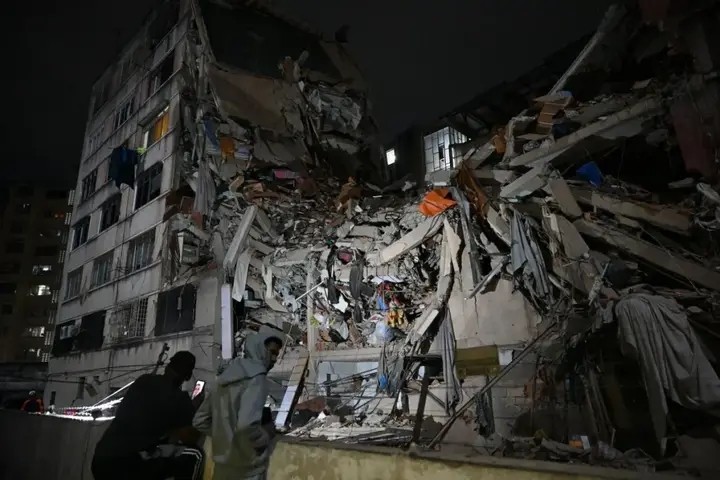
The agency emphasized that the physical destruction of houses and local water infrastructure will heavily exacerbate existing protection vulnerabilities across vulnerable communities, significantly compounding the hardships faced by internally displaced persons and recent returnees.
Experts warn that the loss of stable shelter and clean water lines introduces immediate risks of waterborne disease outbreaks and gender-based vulnerabilities in temporary displacement camps.
As international relief flights begin landing at intact airfields, the primary focus of global rescue teams remains entirely fixed on the critical 72-hour golden window to extract buried survivors from the debris.