- Nine factory workers were confirmed dead after thousands of tonnes of destabilised waste from an adjacent landfill collapsed onto the administrative block of a major waste-to-energy facility in western India.
- The industrial accident, triggered by relentless monsoon downpours, trapped twenty-three personnel inside the building, requiring an emergency rescue operation that successfully pulled fourteen survivors from the debris.
- Following the disaster, the plant’s management officially suspended all processing operations at the location pending a comprehensive forensic safety assessment and structural integrity review.
A devastating industrial disaster struck the outskirts of Pune in western India as a massive garbage heap collapse at a waste-to-energy plant claimed the lives of nine workers.
Eko Hot Blog reports that the catastrophic event occurred last Wednesday at the Antony Waste processing facility following days of continuous, torrential downpours.
EDITOR’S PICK
- Hamzat Appoints Obanikoro as Campaign DG Ahead of 2027 Lagos Governorship Race
- Tinubu’s State Police Plan Gains Momentum as Amendment Looms
- Residents Raise Alarm After Two Bodies Found in Lagos Waterway
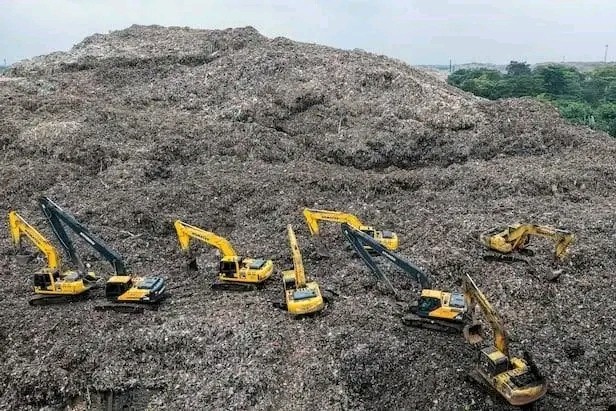
According to official corporate briefings released by the facility’s operator on Monday, thousands of tonnes of saturated solid waste from an adjacent municipal landfill lost structural stability, triggered a massive landslide, and directly crushed a nearby administrative building housing twenty-three factory personnel.
Emergency first responders and rescue teams faced immediate logistical hurdles as relentless rainfall continued to hamper efforts to clear the thick mud and heavy debris field.
Despite the dangerous working conditions, rescue units successfully extricated fourteen individuals alive from the wreckage, who were immediately transported to regional medical centres for urgent treatment.
The corporate management team confirmed that the sheer volume of the descending waste severely compromised the structural integrity of the administrative complex, completely trapping everyone inside within a matter of seconds.
In response to the tragedy, industrial operations at the multi-purpose waste plant have been temporarily halted to facilitate a full inspection by environmental engineers and occupational health inspectors.
Structural failures, building collapses, and industrial accidents routinely spike across India during the intense monsoon season, which spans from June to September.
The prolonged downpours regularly overwhelm old, poorly maintained infrastructures and unstable waste management systems, causing structures to buckle under extreme environmental pressure.
Climate scientists and global meteorological agencies emphasize that rapid climate change is driving a noticeable increase in the frequency and overall intensity of these extreme weather patterns across the world’s most populous nation.
Compounding the seasonal weather shifts this year is the arrival of a potentially severe El Niño climate pattern. Environmental experts warn that this macro-climatic shift could further disrupt traditional monsoon rhythms, generating concentrated bursts of highly destructive rainfall.
As Indian regulatory authorities initiate a formal probe into the Antony Waste disaster, the incident has renewed global policy debates regarding the safety proximity of landfill sites to administrative hubs, the structural reinforcement of waste-to-energy installations, and the urgent need for climate-resilient industrial planning in high-risk zones.