- Trump says a Hormuz agreement could be reached within days
- He warns Iran of severe consequences if talks fail
- Fresh attacks on ships highlight ongoing regional tensions
United States President Donald Trump has expressed optimism that an agreement to reopen the Strait of Hormuz could be reached within days, while warning Iran of severe consequences if negotiations collapse.
Speaking to reporters in California, Eko Hot Blog gathered that Trump said discussions had made significant progress and suggested an agreement could be finalised as early as Wednesday.
“We had a very good day,” the president said, adding that a breakthrough could come “tomorrow or the next day.”
Earlier in an interview with Fox News, Trump adopted a firmer tone, warning that the strategic waterway would soon be reopened one way or another.
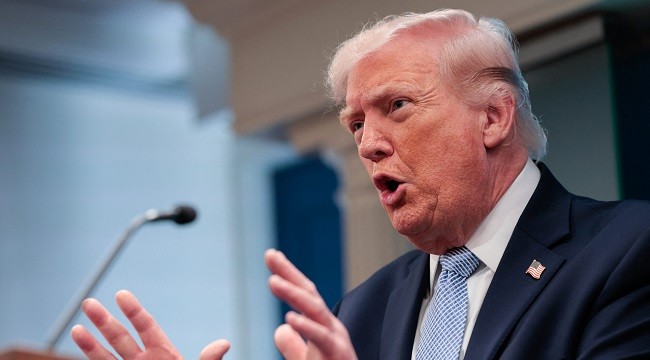
According to him, if diplomatic efforts fail, Iran would face a strong military response that would ultimately ensure the passage is restored.
The Strait of Hormuz, one of the world’s busiest energy shipping routes, has remained at the centre of tensions after Iran tightened its control of the channel following renewed hostilities despite an earlier ceasefire reached in April.
Tehran is reportedly seeking greater authority over the waterway, including the ability to regulate shipping and impose transit charges, powers it had not exercised before the conflict escalated in February.
US Treasury Secretary Scott Bessent also indicated that negotiations were progressing, saying there was a realistic possibility of reaching an agreement by Wednesday or Thursday.
Despite the diplomatic optimism, security concerns persisted across the region.
A crew member aboard a commercial vessel struck by a projectile in the Strait of Hormuz was reported missing on Tuesday, while an Indian cargo ship also sank in the Red Sea after coming under attack from unidentified assailants.
The incidents underscored the fragile security situation surrounding key international shipping lanes.
Although Trump has repeatedly warned Iran of military action in recent weeks, he has also continued to suggest that diplomacy remains the preferred option whenever negotiations show signs of progress.
Iran’s Foreign Ministry has denied holding direct talks with Washington, even as Trump insisted discussions were taking place.
US Secretary of State Marco Rubio confirmed that Washington was involved in mediation efforts alongside Oman to improve maritime access through the Strait of Hormuz.
Multiple reports indicate that the United States, Iran and Oman are working toward a temporary 60-day arrangement that would guarantee safe navigation through the strategic waterway.
Qatar, which has also played a mediation role, said diplomatic contacts were continuing, although no direct meeting between Iranian and American officials had been scheduled.
Trump and Qatar’s Emir, Sheikh Tamim bin Hamad Al-Thani, reportedly discussed ongoing efforts to ease regional tensions during a telephone conversation on Tuesday.
The US administration has maintained that reopening the Strait of Hormuz and addressing concerns over Iran’s nuclear programme remain central objectives of the negotiations.
Meanwhile, Iran continues to maintain strict oversight of shipping through the strait, requiring vessels to coordinate their movements as commercial traffic remains heavily restricted.
The disruption has increased the importance of alternative shipping routes through the Red Sea, where attacks linked to Yemen’s Houthi rebels have also threatened international maritime trade.
On Tuesday, an Indian cargo vessel sank in the Red Sea following an attack, though all crew members were rescued safely.
The continuing instability in both waterways has heightened concerns over global energy supplies and international shipping as diplomatic efforts intensify to prevent further escalation.