- Katsina State Governor, Malam Dikko Umaru Radda, has authorized the release of N500 million as counterpart funding for the Child Nutrition Fund to bolster healthcare and child survival interventions across the state.
- The United Nations Children’s Fund (UNICEF) has requested an additional N1.2 billion allocation in the state’s upcoming 2027 budget, which the global body pledges to match equal-for-equal to procure therapeutic food and prenatal micronutrients.
- Katsina State has been selected as a pioneer participant in a global pilot program testing revised World Health Organisation (WHO) guidelines for preventing and managing severe child wasting.
The Katsina State Government has approved the release of N500 million in counterpart funding dedicated to the Child Nutrition Fund, reinforcing its ongoing partnership with international health agencies to curb maternal and child malnutrition across its 34 local government areas.
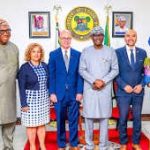
Eko Hot Blog reports that Governor Dikko Umaru Radda announced the funding approval during a courtesy visit to the Government House in Katsina by a delegation from the United Nations Children’s Fund (UNICEF), led by the newly appointed Chief of the UNICEF Kano Field Office, Mr. Shafeeq Ur-Rehman.
EDITOR’S PICK
- Tinubu Approves Army Expansion, Recruitment of 28,000 Personnel
- Aregbesola Claims Record as First Nigerian Governor to Serve Eight Years Without Owning a House
- Ikosi-Ejinrin LCDA Commissions Fully Equipped NSCDC Divisional Headquarters, Donates Patrol Vehicle and Motorcycle to Boost Security
The high-level meeting provided an opportunity for both parties to review joint initiatives in public health, basic education, child protection, and social welfare spanning Katsina, Kano, and Jigawa states.
Speaking on the impact of the multi-year collaboration, Governor Radda observed that sustained investments between the state government and UNICEF have produced measurable improvements, particularly in mitigating severe acute malnutrition among vulnerable populations.
Through joint funding mechanisms, the state has supported stabilization centers and outpatient treatment sites, leading to a visible reduction in the volume of critical malnutrition cases requiring specialized care.
Radda emphasized that his administration’s willingness to commit significant financial resources to development programs is driven by an obligation to safeguard the health and well-being of citizens rather than merely satisfying international donor requirements.
He reiterated his commitment to leaving behind significantly elevated human development indicators by the conclusion of his tenure, pointing out parallel investments in the education sector where over 9,000 public school teachers have been recruited alongside extensive capacity-building programs.
During the meeting, Mr. Shafeeq Ur-Rehman formally presented a request for Katsina State to commit an additional N1.2 billion to the Child Nutrition Fund within its 2027 budget planning cycle. Ur-Rehman explained that every naira contributed by the state government under this framework will be matched equally by UNICEF.
The combined capital will be deployed directly toward procuring Multiple Micronutrient Supplements (MMS) for pregnant women as well as Ready-to-Use Therapeutic Food (RUTF) for infants suffering from severe wasting.
Responding to the proposal, Governor Radda assured the visiting delegation that despite prevailing fiscal constraints, the state government will accommodate the N1.2 billion request in the 2027 state budget to guarantee uninterrupted supply chains for life-saving nutrition commodities.
Highlighting Katsina’s growing role in global health policy, Ur-Rehman revealed that the state is currently participating in a global pilot program testing revised World Health Organisation guidelines for the prevention and management of severe child wasting.
Nigeria is one of only five countries selected globally for the pilot, with Katsina hosting implementation across ten designated local government areas. Lessons gathered from Katsina’s rural healthcare facilities will form a critical evidence base to refine global response strategies against childhood malnutrition.
UNICEF also commended Katsina for becoming the first state in Nigeria to appropriate N270 million toward conducting a comprehensive SMART Nutrition Survey, an initiative designed to provide baseline empirical data for evidence-based governance.
Beyond nutrition, the agency noted that routine immunization coverage in Katsina has more than doubled, while formal birth registration coverage has risen to 68 percent, representing the highest rate recorded across the Kano Field Office’s operational zone.
FURTHER READING