- The Taliban has marked five years in power with celebrations in Kabul
- The anniversary comes amid worsening humanitarian needs and continued restrictions on women and girls
- The Taliban government remains internationally isolated despite efforts to strengthen diplomatic and economic ties
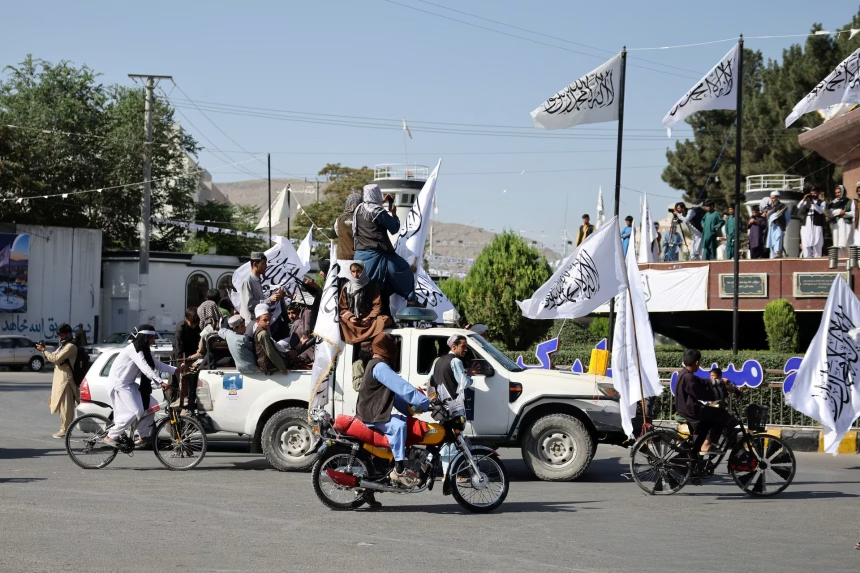
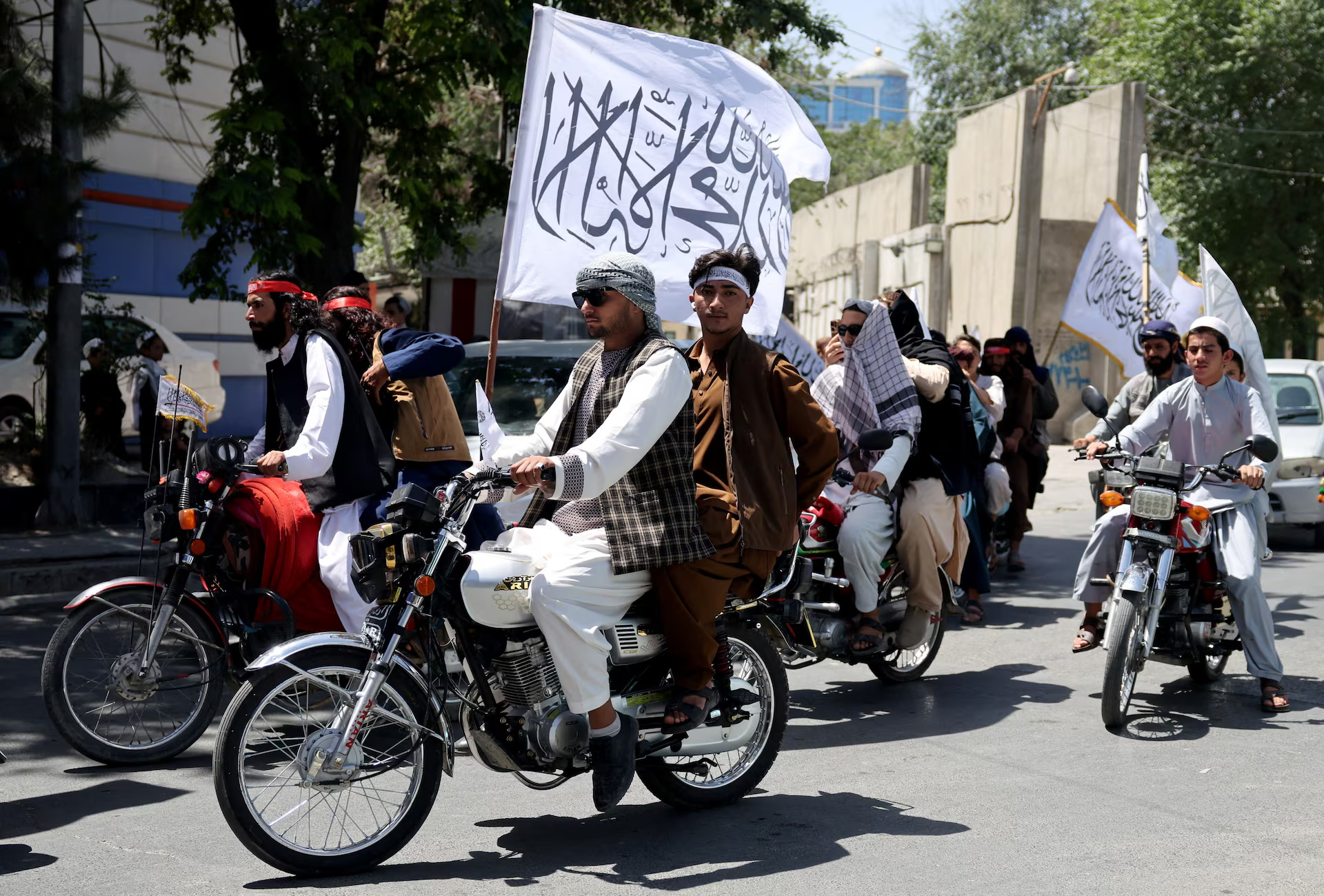
The Taliban on Saturday marked five years since returning to power in Afghanistan, staging celebrations in Kabul as international organisations warned that the country continues to face severe humanitarian and human rights challenges.
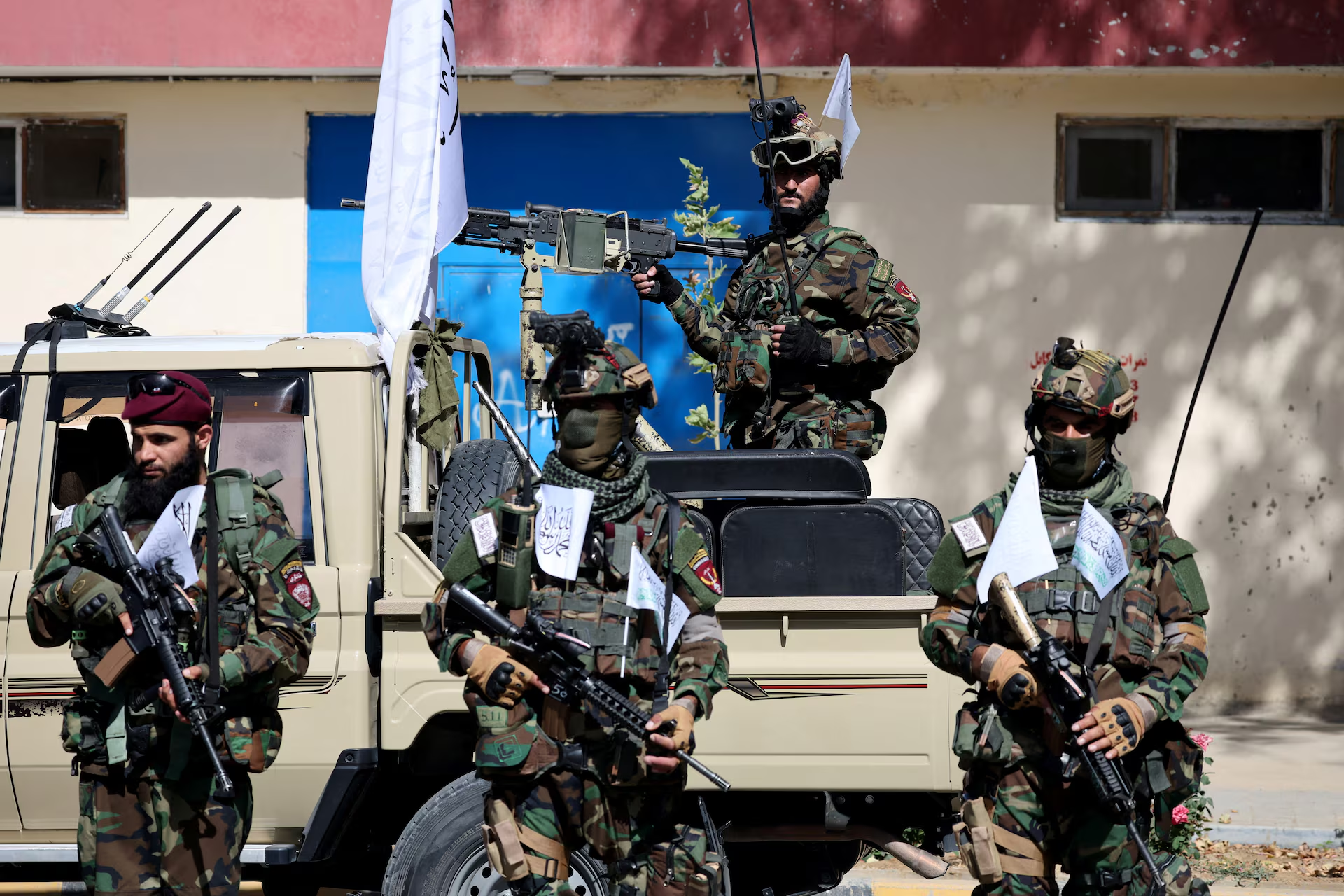
Eko Hot Blog gathered that armoured Taliban vehicles were displayed outside the former United States embassy in Kabul as fighters gathered for a parade featuring flags and banners. The Taliban described the anniversary as a “victory day” marking the end of Western military presence in the country.
In a video address, Taliban Interior Minister Sirajuddin Haqqani attributed the group’s return to power to courage, determination and what he called divine assistance. He also acknowledged that Afghanistan still faced unresolved problems.
The anniversary comes as the United Nations and humanitarian organisations continue to express concern over the country’s worsening economic and humanitarian conditions.
Afghanistan has faced multiple crises in recent years, including drought, natural disasters and declining international assistance. The International Rescue Committee said the number of Afghans requiring humanitarian aid has increased by 3.5 million since the Taliban returned to power in 2021.
The Taliban’s policies towards women and girls have also remained a major source of international criticism.
According to UNESCO, about 2.5 million Afghan girls and women have been excluded from secondary and university education since the Taliban imposed restrictions on female education.
UN Women also reported that half of Afghan women now leave their homes only once or twice a month, reflecting the severe restrictions placed on their movement and participation in public life.
The Taliban maintains that it protects women’s rights within the framework of Islamic Sharia law.
Security concerns have also persisted, with several senior Taliban officials reportedly killed in attacks in the country’s northeast in recent weeks.
The Taliban’s information director in Badakhshan province was killed in an attack in late July that was claimed by Islamic State. Local media also reported that the mayor of the provincial capital was killed in another attack on Thursday, although Taliban officials had not immediately confirmed the reports.
When the Taliban seized power in 2021 following the withdrawal of US and allied forces, the group promised a more moderate form of government than during its previous rule in the late 1990s and early 2000s.
Human rights organisations, however, say those assurances have not been fulfilled, pointing particularly to restrictions imposed on women and girls.
Five years after returning to power, the Taliban government remains largely isolated internationally. Russia is currently the only country to have formally recognised the Taliban administration.
Despite the lack of broad diplomatic recognition, the Taliban has made efforts to strengthen relations with several countries and expand its international engagement.
Relations with neighbouring Pakistan have deteriorated, with Islamabad accusing Kabul of supporting militants operating against Pakistan.
At the same time, the Taliban has sought closer economic and diplomatic ties with countries across Asia and the Middle East. Officials have also been engaging European governments over the return of Afghan migrants and deportees.
Zia Ahmad Takal, a deputy spokesman for the Taliban foreign ministry, said anniversary ceremonies were expected to take place in several countries, including Pakistan, China, Uzbekistan, Iran, Turkey and Malaysia.
The Taliban also hopes to use Afghanistan’s strategic position between South and Central Asia and the Middle East to attract investment and strengthen economic partnerships.
However, humanitarian agencies say Afghanistan’s economic and social challenges remain severe.
The International Rescue Committee warned that humanitarian needs had reached unprecedented levels, citing drought, deadly earthquakes and the return of large numbers of Afghans deported from neighbouring Iran and Pakistan.
A senior United Nations representative for Afghanistan, Georgette Gagnon, said lasting peace would require more than simply ending armed conflict, stressing the importance of ensuring that Afghans could fully exercise their rights and realise their potential.
For many Afghans, the anniversary has therefore been marked by uncertainty rather than celebration.
One Afghan woman, identified as Fatima, said she returned to Afghanistan after being deported from Iran, where she had been able to work as a makeup artist.
She said her daily struggle was now focused on meeting basic needs and securing a better future for her child, highlighting the difficulties facing ordinary Afghans five years after the Taliban’s return to power.