- Lagos Unveils New Waste Strategy, Targets Illegal Dumping, Refuse Heaps
- Reveals plans to integrate cart pushers into new waste system
- Moves to convert refuse into biogas, jobs
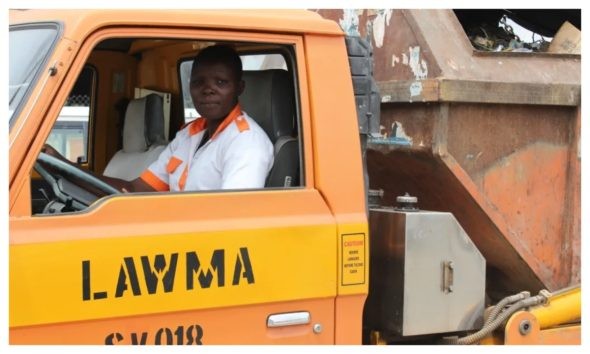
The Lagos State Government is rolling out a new waste management system involving 150 new compactor trucks, smart bins, tricycle collection, material recovery facilities and biogas plants as part of efforts to tackle the growing waste crisis across the metropolis.
Eko Hot Blog reports that the Managing Director of the Lagos Waste Management Authority, LAWMA, Dr Muyiwa Gbadegesin, disclosed this in an interview, saying Lagos generates between 13,000 and 15,000 tonnes of waste daily, requiring major investment across the waste management value chain.
EDITOR’S PICK
- Beyond the Glamour: The Hidden Price Celebrities Pay for Looking Perfect
- Hamzat Gives Condition for Reconstruction of Alaba Market Roads
- Lagos Must Prepare for Next Pandemic, Health Commissioner Warns
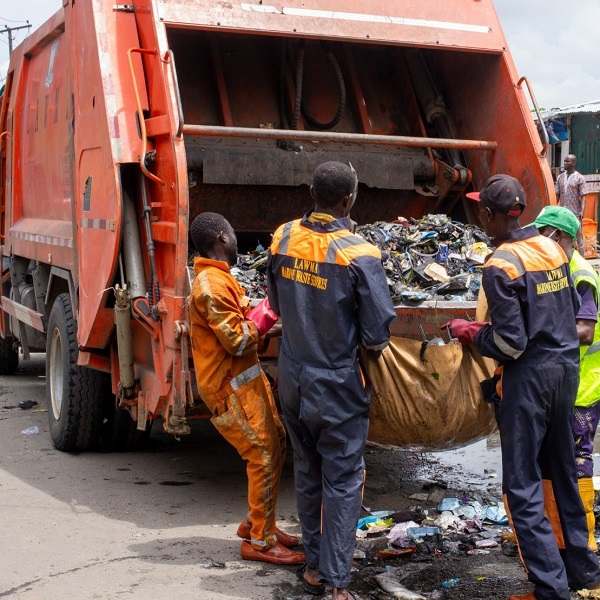
Gbadegesin said the state was expecting 150 new compactor trucks by the end of 2026, comprising two trucks for each of the 57 local governments and Local Council Development Areas, LCDAs, and 36 additional trucks being procured by the state government.
He said the new vehicles would form part of a unified waste management fleet to be jointly managed with local governments, while the long-term target was to increase the fleet to about 2,000 trucks.
The LAWMA boss also disclosed plans to introduce smart bins to more households, explaining that the state had about 80,000 bins but was considering distributing them to residents and recovering the cost through small monthly payments.
Gbadegesin said the state was also working on a five-year project to establish a biogas plant that would convert organic waste into energy.
According to him, organic waste accounts for about 50 per cent of the waste generated in Lagos, making it a significant resource for energy production.
He said the project was being developed in partnership with the Lagos Metropolitan Area Transport Authority, LAMATA, and was expected to complement the state’s energy transition programme.
He explained that the biogas produced could eventually be used to power some of the 2,000 CNG buses being introduced through LAMATA.
LAWMA has also begun installing smaller biodigesters at markets that generate large quantities of organic waste, with Ikosi Fruit Market serving as a pilot location.
Gbadegesin said similar facilities were planned for markets including Alamutu, Mile 12 and Afolabi Ege to convert organic waste into biofertiliser rather than sending it to landfills.
The LAWMA boss said the planned reforms would also create new economic opportunities for residents, particularly through waste recovery, recycling, transportation and the operation of transfer loading stations.
He disclosed plans to establish mini Transfer Loading Stations, TLS, in local government areas where waste collected by tricycle compactors could be deposited before being moved to larger facilities.
Gbadegesin said former waste collectors and cart pushers who meet the required standards could be trained, licensed and integrated into the new system as operators of tricycle collection vehicles.
He said the workers would be provided with uniforms and identification cards and brought into a regulated waste collection system.
He added that former PSP operators and other qualified private-sector players could also operate some of the transfer stations as businesses.
Gbadegesin said the tricycle collection system was already operating in some parts of Lagos, including Ibeju-Lekki, Lagos Island and Badagry.
He explained that residents in areas covered by the system pay N800 per bag through POS, after which the tricycle collectors move the waste to a compactor truck for evacuation.
He said the model was designed to provide waste collection services in communities where conventional compactor trucks could not operate because of narrow or poor roads.
The LAWMA chief also blamed indiscriminate dumping and illegal waste collection for some of the persistent refuse heaps across Lagos.
He cited the Agege Motor Road corridor, where he said LAWMA was clearing waste daily but continued to encounter fresh heaps shortly after evacuation.
According to him, investigations uncovered individuals allegedly operating illegal waste collection businesses, collecting money from residents before dumping the waste on the highway for LAWMA to remove.
Gbadegesin said the authority had established a Waste Investigation, Surveillance and Enforcement Unit to identify the sources of illegal dumping instead of simply clearing waste repeatedly.
He said LAWMA was also working with local governments to establish Waste Management Task Forces involving the authority, community representatives, PSP operators and environmental health officials.
The task forces are expected to meet regularly to identify the causes of illegal dumping and develop solutions.
Gbadegesin also disclosed that enforcement operations along the Badagry Expressway uncovered more than 10,000 people living and conducting commercial activities along the road corridor.
He said LAWMA had been working with the Rapid Response Squad, KAI officials, the military and other agencies to clear the area and restore order.
He stressed that the government’s waste management efforts were not only about cleanliness but also public health, flood prevention and the protection of road infrastructure.
According to him, improperly disposed waste can block drainage channels, contribute to flooding and damage roads.
Gbadegesin appealed to Lagos residents to comply with waste disposal regulations and report complaints to LAWMA through its official channels.
FURTHER READING
- How Lagos Achieved 57.4% Exclusive Breastfeeding Rate
- Nigeria Has Joined WEC to Lead, Not Just Participate – Tinubu
- Alausa Reviews NESRI Progress, Sets Fresh Push for Outstanding Deliverables
Click here to watch video of the week