- Obasanjo says Africa’s democratic system lacks local context and values
- He criticises the winner-takes-all nature of elections on the continent
- The former president calls for an African model built around history and culture
Former President Olusegun Obasanjo has called for a rethink of the democratic system practised in Africa, arguing that the Western model adopted by many countries on the continent does not adequately reflect African realities.
Eko Hot Blog gathered that Obasanjo said the system had encouraged a winner-takes-all political culture in which those who emerge victorious at elections often have little regard for their opponents or minority groups.
The former Nigerian leader spoke on Tuesday at the 2026 Goodluck Jonathan Foundation Democracy Dialogue held in Bauchi, the Bauchi State capital.
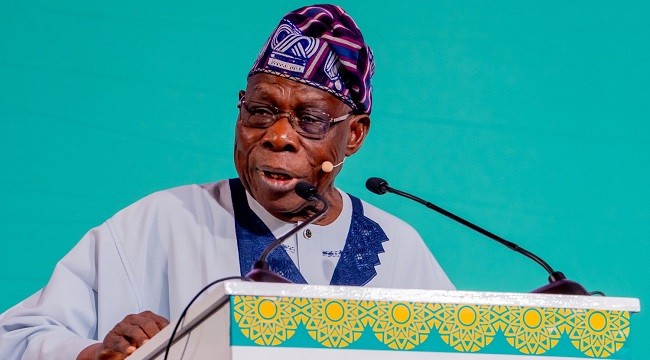
According to Obasanjo, African countries adopted Western liberal democracy without sufficiently adapting it to their history, culture and social realities.
He compared the situation to wearing clothing that was not designed for the person using it, arguing that such a system would inevitably fail to provide a proper fit.
He said the concept of opposition in many African societies was often interpreted as hostility rather than as a legitimate component of democratic governance.
“The democracy we practise has no African context, no African content,” Obasanjo said, stressing that the system had contributed to the perception that political power belonged entirely to election winners.
He argued that the current electoral arrangement allows a candidate to take control of government after securing only one more vote than an opponent, leaving the interests and contributions of other groups largely disregarded.
Obasanjo also warned that Nigeria and other African countries must pay greater attention to managing their diversity, describing it as an important part of the continent’s political and social identity.
He said Nigeria’s strength was rooted in the diversity of its people and warned that undermining that diversity could threaten the country’s unity.
“Nigeria is what it is because of our diversity,” he said, adding that the country’s different ethnic and cultural groups must be deliberately protected and accommodated.
The former president also raised concerns about the increasing role of money and inducements in African politics. He said the influence of financial considerations in elections had expanded significantly and was weakening democratic practices.
Obasanjo acknowledged that poverty and illiteracy posed challenges to the development of democracy, but said political leaders and citizens must also confront other weaknesses within the system.
He particularly criticised the limited participation of women in Nigerian political leadership, noting that no woman had been elected governor since the beginning of the Fourth Republic more than two decades ago.
According to him, the continued absence of women from the highest levels of state leadership raises questions about the inclusiveness of Nigeria’s democratic system.
Obasanjo argued that Nigeria should not limit democratic reforms to changing political parties, electoral arrangements or judicial institutions. Instead, he said the country should develop a system that reflects its own historical experiences, cultural values and social conditions.
He maintained that democracy should be viewed as an evolving process rather than a finished political model that cannot be reviewed.
The former president also pointed out that some Western countries that influenced Africa’s adoption of liberal democracy were themselves examining weaknesses within their political systems.
He therefore questioned why African countries should not equally reassess the model they inherited and develop approaches better suited to their societies.
Obasanjo said such a system could still be called democracy but should incorporate African history, culture and values.
“Call it what you like, just make sure it has history, culture and values that are African,” he said.
The democracy dialogue was chaired by Obasanjo and attended by former President Goodluck Ebele Jonathan and former Vice President Namadi Sambo.
Bauchi State Governor Bala Mohammed hosted the event, which also attracted constitutional experts, civil society representatives and other participants from Nigeria and across Africa