- Alausa Leads Overhaul of Agricultural Curricula in Tertiary Institutions
- Alausa reveals master plan to repurpose unused agricultural lands within tertiary institutions
- The newly inaugurated committee draws membership from universities, polytechnics, colleges of education, professional agricultural bodies
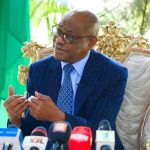
The Minister of Education, Dr. M³aruf Tunji Alausa, has launched a bold initiative to reform agricultural education in Nigeria, inaugurating a 24-member Inter-Ministerial Technical Working Committee to review and modernize the curricula used in tertiary institutions across the country.
Eko Hot Blog reports that Dr. Alausa while speaking at the inauguration ceremony in Abuja, emphasized that outdated curricula have hindered the potential of agricultural education to drive food security and youth employment.
EDITOR’S PICK
- Former Presidential Aspirant Returns To PDP
- APC Governors Hold Closed-Door Talks Ahead Of NEC Meeting
- Electricity Price Cuts: Discos Reject Tariff Talks With States
“Our Colleges and Universities of Agriculture should be the engines of food security,” he said. “But what we see today is a gap between potential and performance, largely due to outdated curricula. This committee has a unique opportunity to correct that trajectory.
The Federal Government has a clear path forward and the political will to support this transformation.”
The newly inaugurated committee draws membership from universities, polytechnics, colleges of education, professional agricultural bodies, and farmer associations.
Its mandate includes identifying all agriculture-related programmes in tertiary institutions, evaluating their current status, and recommending updates to align them with national development goals and modern agricultural practices.
Dr. Alausa revealed that the Federal Government is also finalizing a master plan to repurpose unused agricultural lands within tertiary institutions.
Through strategic partnerships with private investors, these lands will serve as training farms and food production hubs.
“We’re committed to turning idle acres into innovation hubs. Students will no longer just graduate with theoretical knowledge—they will leave with real skills, confidence, and the mindset to become agro-entrepreneurs,” Dr. Alausa said.
The curriculum reform is part of a broader national strategy to strengthen vocational and technical education.

Dr. Alausa referenced the Ministry’s recent launch of a TVET Data Dashboard, noting that over 1.3 million Nigerians registered within 10 days.
Agriculture emerged as one of the top two most requested trades, with more than 210,000 individuals applying specifically for livestock training.
In outlining the committee’s scope, Alausa urged members to work with urgency and insight, stressing the need for a realistic and actionable timeline. “We must move quickly, but with clarity,” he said.
Responding on behalf of the committee, Prof. Idris Bugaje, Executive Secretary of the National Board for Technical Education (NBTE), thanked the Minister for the confidence placed in the team. He assured that the committee would deliver a forward-thinking report within six weeks.
“Our aim is to embed real skills, adopt modern techniques, and make agriculture attractive for today’s youth. We want our graduates to be confident, employable, and proud of their training.”
The reform effort supports key pillars of the Renewed Hope Agenda under President Bola Ahmed Tinubu’s administration, particularly in the areas of food security, education reform, and youth empowerment.
FURTHER READING
- APC Moves NEC Meeting To Presidential Villa, Eyes New Chairman
- Brock Lesnar Banned From Wrestling Over WWE Scandal Link
Click here to watch video of the week