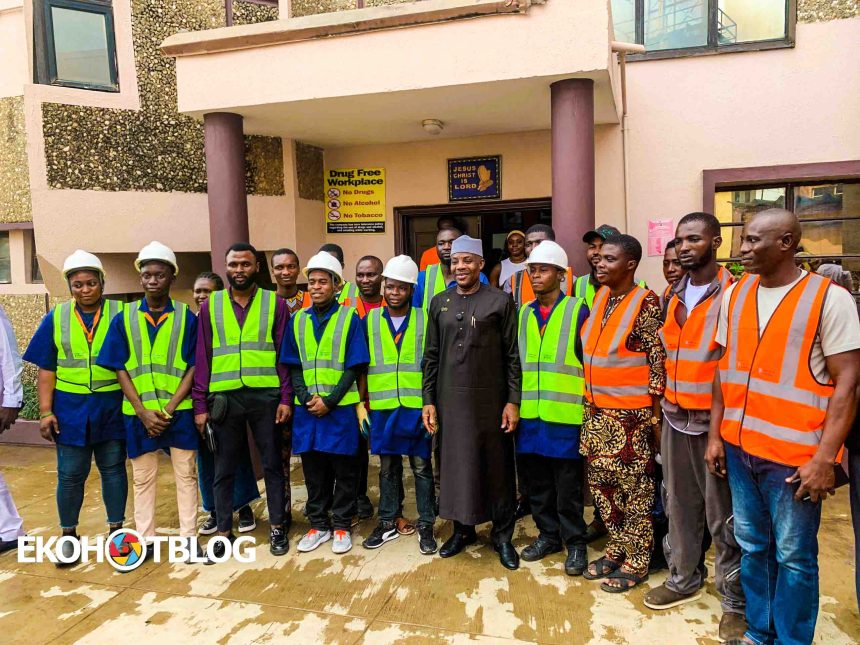
- The initiative targets high-demand skill areas identified through national research, including fashion and garment making
- Alausa emphasized that the initiative aligns with Nigeria’s economic goals, describing it as “a critical investment
- Alausa noted that the initiative is part of a broader effort to prepare Nigerian youth for the workforce
Education Minister Tunji Alausa visited the Lagos Technical and Vocational Education and Training (T-VET) Centre to assess the progress of the federal government’s nationwide skills development programme for young Nigerians, shortly after launching the E-Tricycle project at UNILAG.
Eko Hot Blog reports that the programme, championed by President Bola Tinubu, aims to equip youths with practical skills that promote entrepreneurship, self-reliance, and active engagement in the economy.
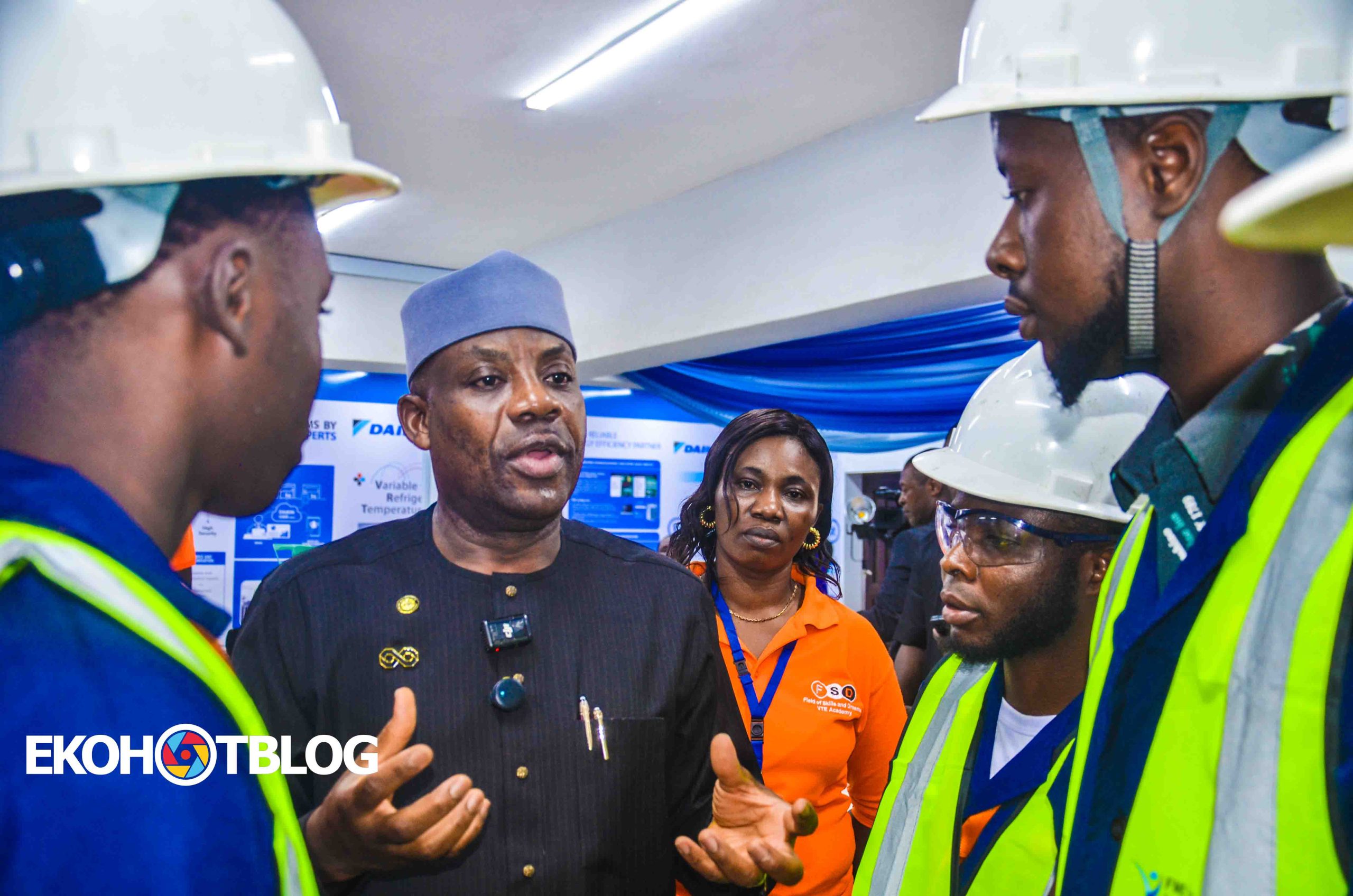
Addressing journalists at the centre, Alausa noted that the initiative is part of a broader effort to prepare Nigerian youth for the workforce while tackling unemployment and encouraging innovation.
The initiative targets high-demand skill areas identified through national research, including fashion and garment making, livestock farming, solar energy installation, electrical and electronic repairs, plumbing, and air conditioning maintenance, totaling 28 specialized skills.

Alausa explained that the T-VET scheme operates through a four-phase approach, covering tuition fees, supporting training centres, offering mentorship, and providing starter kits for graduates to launch their own businesses.
“Every student will leave the programme with the tools and resources to become micro, small, or medium-scale entrepreneurs,” he said.
The minister highlighted the programme’s overwhelming response, revealing that more than 1.3 million young Nigerians applied within the first ten days.
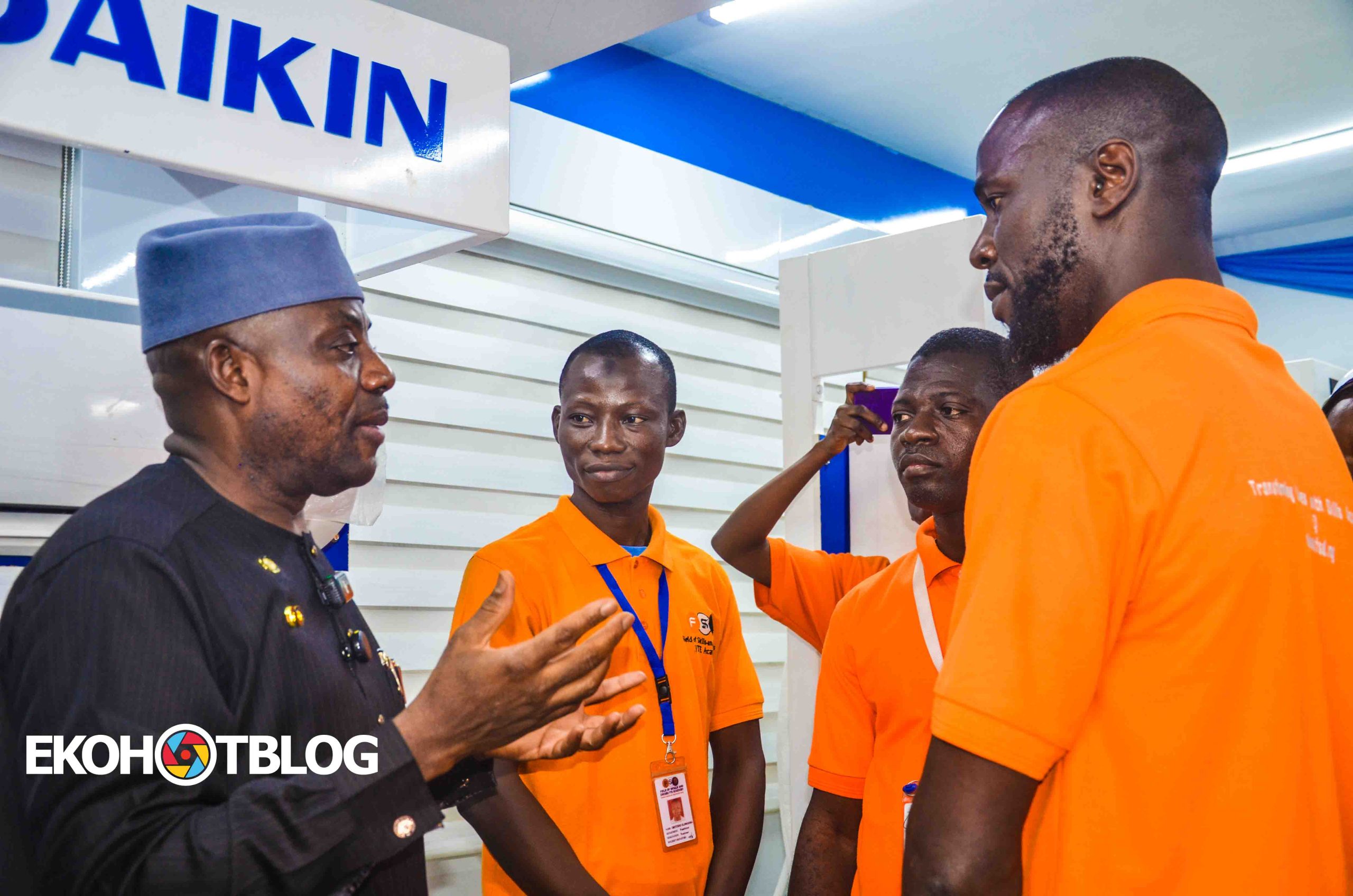
“Currently, 960,000 applicants have been verified, with approximately 130,000 already training across 1,600 centres nationwide. The initial cohort of 250,000 students will soon begin receiving monthly stipends,” he added.
Quality assurance remains central to the programme, with all courses accredited and structured to provide market-ready skills.
Alausa emphasized that the initiative aligns with Nigeria’s economic goals, describing it as “a critical investment in human capital, aimed at expanding our manufacturing base and supporting the nation’s journey toward a $1 trillion economy by 2030.”