By Rilwan Balogun
The first time I saw a Nigerian politician was in 2003. I sat on the shoulders of my brother as Gbenga Daniel campaigned in our hometown to become Governor of Ogun State.
Daniel visited all 236 wards in Ogun State and, unsurprisingly, won the governorship election against Olusegun Osoba of the Alliance for Democracy (AD). He went on to lead Ogun State for two terms—eight years under the umbrella of the People’s Democratic Party (PDP).
Today, both Daniel and Osoba are card-carrying members of the APC. That was my first real understanding of the malleable, flaky, ideologically fluid, and self-serving nature of Nigerian politicians.
The years that followed only reinforced how common this is.
Nigeria is a country with a steep political history. The events leading up to 1999 featured many key figures—most of whom never became President despite repeated attempts, yet remained central to the system.
After the PDP’s moneyball reign between 1999 and 2015 when it was arguably Africa’s most dominant political party, the very people who built it turned their backs on it when ambition called.
Nigerian leaders rarely move out of love for the country. More often, they move in pursuit of personal benefit. Those who fund their campaigns do so, largely, to sustain their own interests.
The election that removed Goodluck Jonathan was powered by one of the strongest coalitions of political heavyweights Nigeria has seen. It took the merger of three major parties and many unstable political ideologies to unseat him.
Their campaign felt almost angelic. As is typical of opposition politics in Nigeria, they bulldozed the incumbent’s record and mocked every policy as though they alone held the answers. The election quickly became a one-way contest. That coalition was simply too formidable.
That was how the APC was born.
Then came Muhammadu Buhari.
Buhari sold Nigerians a dummy. Having contested four times before finally winning, one might have expected a leader with a deep understanding of Nigeria’s political terrain. Instead, from delaying ministerial appointments for six months to struggling across key areas of governance, his presidency often felt detached.
At times, it seemed less like a mission to govern and more like a personal milestone; finishing what he started in 1983.
Nigeria deteriorated under his watch. His appointments reflected limited vision. His anti-corruption drive, though popular in rhetoric, often appeared selective and performative, targeting opponents while allies operated with impunity. It became a government that seemed comfortable in low expectations.
What the APC experiment revealed was simple: a coalition built on a shared enemy, rather than shared ideals, is unlikely to produce coherent governance. It was not a union forged in national interest, but one driven by vendetta.
Jonathan may not have been a particularly effective President, but what replaced him was far from the promised alternative.
Then came 2023.
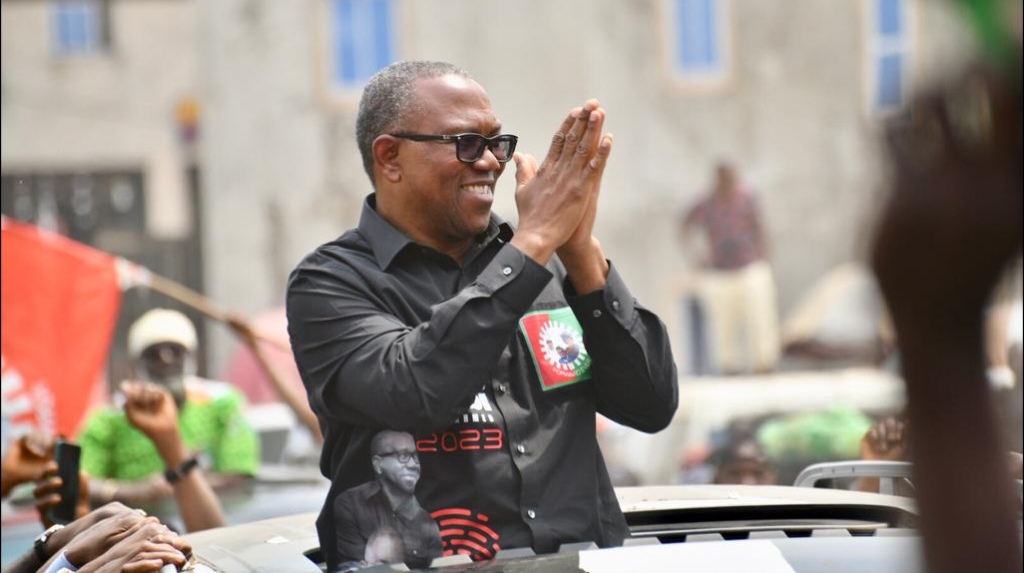
The emergence of Peter Obi introduced something different into Nigeria’s political space. Though not entirely outside the establishment, he felt like a departure from its most entrenched patterns.
He projected honesty, a rare currency in Nigerian politics, and mobilised the country’s most powerful demographic: the youth. His candidacy, outside the traditional two-party dominance, made him easier to rally behind.
Obi lost, but not without impact.
His victory over Bola Ahmed Tinubu in Lagos, Tinubu’s long-standing political stronghold, sent a clear message: with broader national structure, Obi could be a serious disruptor.
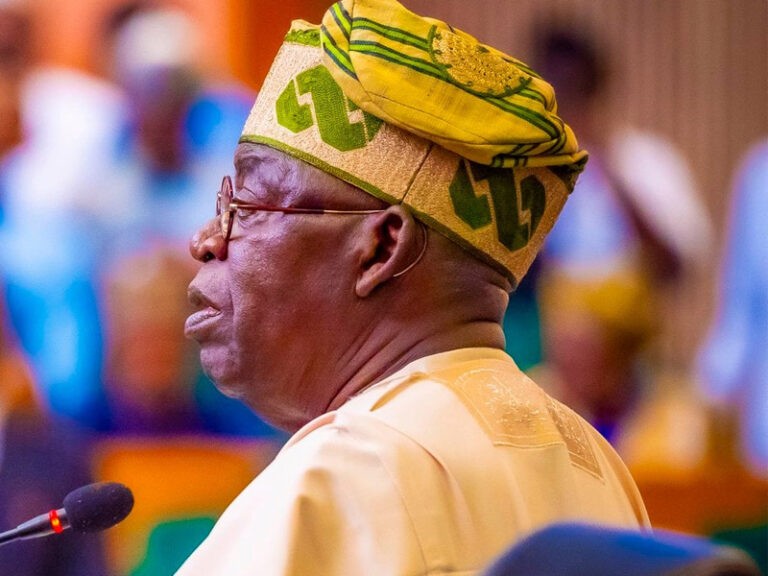
Tinubu’s presidency has, so far, been greatly underwhelming. While some global economic indicators show cautious optimism, local sentiment remains largely critical. The familiar complaints persist. The old concerns have probably worsened.
He emerged as the least popular electoral winner in Nigeria’s Presidential election history. Even some of his supporters have been surprised by how difficult governance has proven for him. His confidence in his methods has not always translated into convincing outcomes.
Nigeria itself remains a complex political entity. It’s one shaped by uneasy unity and deep-rooted distrust. Its history is filled with sharp rhetoric and persistent underperformance. It is hardly surprising that nearly every President has struggled.
Part of this lies in the electoral system. Nigeria has long battled accusations of electoral manipulation, making it difficult for incumbents to lose, unless, like Jonathan, they concede with unusual restraint.
For many politicians, power is not a platform for service but a structure to be maintained for as long as possible.
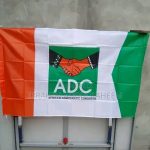
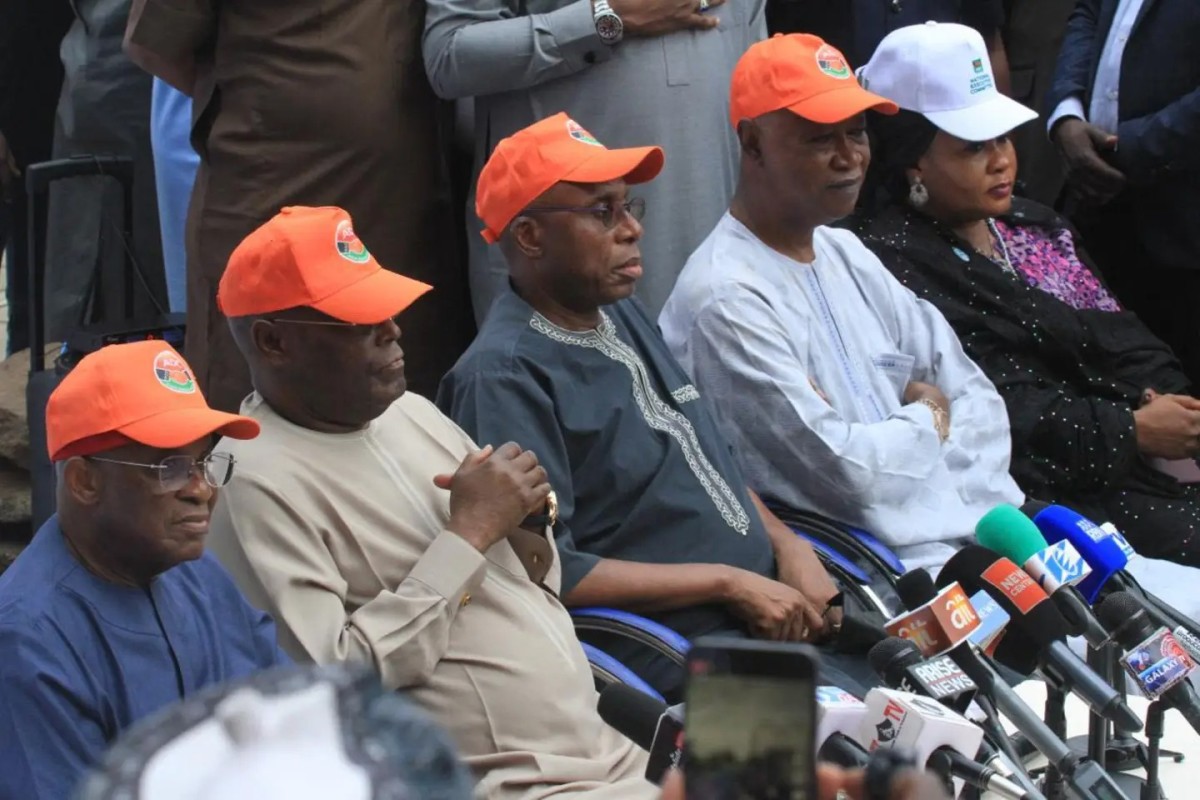
Now, the African Democratic Congress (ADC) is experiencing a resurgence, one that closely mirrors the formation of the APC in 2015. A dangerous replication of a once fanciful, formidable project that eventually floundered.
Again, we see a coalition. Again, we see discontent. Again, we see familiar names: Nasir El-Rufai, Rotimi Amaechi, Atiku Abubakar, figures who often re-emerge when political winds shift against them.
This is not a movement built on new ideas. It is a gathering of experienced, battle-hardened actors responding to changing circumstances. They’re responding to an unmet bargain and trying to take their own pound of flesh.
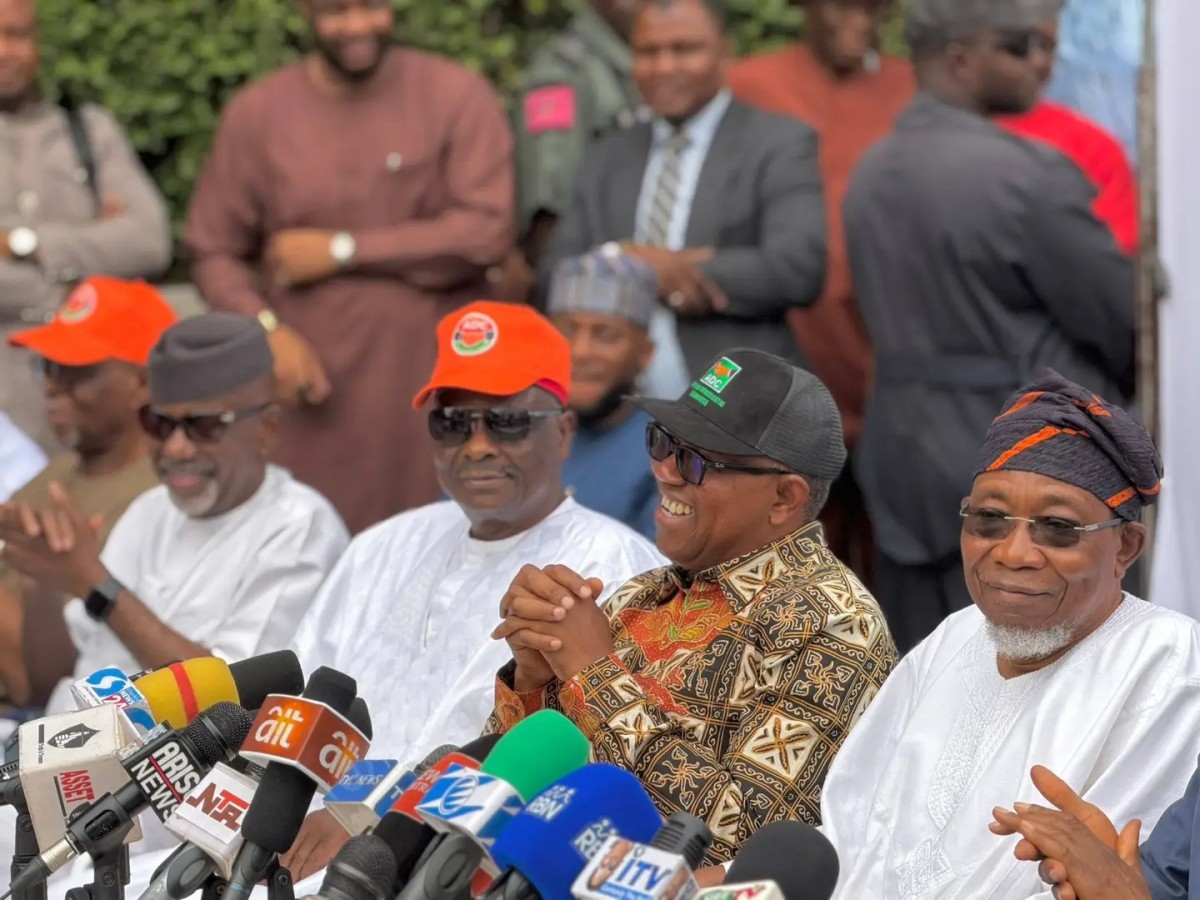
Obi may be different in that he’s not of that class, despite his strong association with them. What he lacks is a structure that can absorb the shocks of a warped Nigerian polity, yet his alignment with this coalition risks erasing the very ideological distance that made him credible.
At its core, the ADC is a congregation of allies who may ultimately be rivals who agree on nothing but are united, for now, by a common adversary. It’s the wily old Nigerian script.
Nigerians see this. For all the perceived electoral naivety, the electorate is far from blind and probably more educated by their consistent exposure to failed promises. The 2023 elections showed a shift in awareness and engagement.
Still, the road ahead looks tense. The incumbent holds structural advantage, while a broad coalition assembles to challenge it. Yet voter fatigue may be the defining factor: many Nigerians may simply choose not to participate. And that is the quiet danger.
Because what remains is a choice between two congresses. Neither is convincingly rooted in principle, they’re both ideologically inconsistent and shaped by political convenience.
The risk is a familiar narrative: contested mandates, electoral violence, and legitimacy struggles. Power defended not by performance, but by force.
Nigerians must resist the illusion. They must think critically, vote consciously, and refuse to be sold another political gimmick.
The country is under siege. Not just by individuals, but by a system that continually reproduces them.
Time may heal. But without meaningful reform, and without structures that reward competence over connection, progress will remain slow.
For now, Nigeria stands caught between two congresses, both armed with the porousness of yesterday, yet tasked with delivering a better tomorrow.
Opinions expressed in this article are solely the writer’s and do not represent the views of EKO HOT BLOG.
Click to watch our video of the week below: