- BRICS Summit:Tinubu Challenges Global Order, Calls for Structural Reforms
- Tinubu noted that environmental degradation, climate crisis, and global healthcare inequalities are shared challenges
- “We must be the architects of a future that addresses the specific needs and concerns of youths, who represent 70 per cent of our population in Nigeria”.
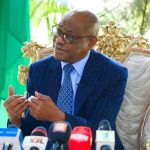
President Bola Tinubu has called for a reassessment of the existing global governance framework, as well as the financial and healthcare systems, emphasizing the need for greater fairness and inclusion for low-income and emerging economies, especially in Africa.
Eko Hot Blog reports that in a statement released by his spokesperson, Bayo Onanuga, Tinubu made these remarks during the 17th meeting of the Global South and Emerging Economies bloc, BRICS, held on Saturday in Rio de Janeiro, Brazil.
EDITOR’S PICK
- Viktor Gyokeres Reportedly Agrees €2m Pay Cut To Join Arsenal
- Musiala’s Injury: Is Football’s Calendar Breaking Its Brightest Stars?
- Babachir Lawal Resigns From APC, Denies Vice Presidential Ambition
He highlighted that environmental degradation, the climate crisis, and disparities in healthcare require increased global attention, as they hinder growth and development.
Tinubu, who was invited to the summit by Brazilian President Luiz Inacio Lula Da Silva, affirmed Nigeria’s support for the BRICS stance on promoting collective, just, and inclusive global progress.
In January 2025, Nigeria became the ninth partner country of BRICS, joining Belarus, Bolivia, Cuba, Kazakhstan, Malaysia, Thailand, Uganda, and Uzbekistan. The partner country category was established during the 16th BRICS Summit in Kazan in October 2024.
The President said, “Nigeria, therefore, associates with what I have heard today and all that has happened in BRICS. The next issues are financial restructuring and reevaluation of the global structure.”
He noted that environmental degradation, the climate crisis, and global healthcare inequalities are shared challenges that are especially relevant to Africa.

“Africa has contributed the least to global emissions but suffers the most,” he lamented.
Tinubu stressed the importance of forging a new path grounded in justice, emphasizing fairness, sustainable technology transfer, and accessible financing to ensure that emerging economies can fully benefit from global initiatives.
“The African continent is creating the path through the African Carbon Market Initiative and the Great Green Wall. We believe that COP-30 will strengthen our resolve to adopt a strategic approach to achieving a healthy global environment.
“Nigeria strongly believes in South-South cooperation. We can, therefore, not be passive participants in global decision-making on financial restructuring, debt forgiveness, climate change, environmental issues, and healthcare.
“We must be the architects of a future that addresses the specific needs and concerns of youths, who represent 70 per cent of our population in Nigeria.
Therefore, Nigeria remains guided by our long-term vision, 2050, and nationally determined contribution.
“We are taking bold steps to accelerate renewable energy adoption, mainstream climate action, promote nature-based solutions, strengthen urban resilience, champion South-South cooperation, align with the global renewal framework and achieve universal health coverage for all,” the President stated.
He also said that addressing non-communicable diseases must remain a collective health concern.
“As we approach COP-30 and look to strengthen the global health system, we believe the BRICS must not only be a bloc for emerging economies but also a beacon for emerging solutions and resolutions rooted in solidarity, self-reliance, sustainability, and shared prosperity of a common future.
“Nigeria reaffirms its commitment to strategic collaboration that translates into sustainable and inclusive development for all,” he noted.
Ambassador Yusuf Tuggar, Minister of Foreign Affairs, and Mr. Wale Edun, Minister of Finance, accompanied the President to the summit.
During its temporary presidency of BRICS, the Brazilian government officially announced Nigeria’s admission as a partner country on January 17, 2025.
As the sixth most populous country in the world and one of Africa’s leading economies, Nigeria shares common interests with other BRICS members.
Nigeria actively contributed to advancing South-South cooperation and reforming global governance, key priorities under Brazil’s current leadership.