However, for countries across Central and parts of West Africa, the virus never completely disappeared. Nearly five decades after it was first identified, Ebola has returned to global attention with a fresh outbreak in the Democratic Republic of Congo, reviving fears of another cross border health emergency.
EDITOR’S PICK
- Fani-Kayode, Omokri Oppose Return Of Power To North Before 2031, Endorse Tinubu For 2027
- Putin defends Ukraine war amid NATO aggression claims
- Epe Stakeholders Unite in Massive Endorsement for Wale Raji, Tobun, Tinubu, Others
The latest outbreak in eastern Democratic Republic of Congo has once again placed one of the world’s deadliest diseases under the spotlight after infections spread into neighbouring Uganda.
The development prompted the World Health Organization to declare the outbreak a Public Health Emergency of International Concern amid concerns that the virus could spread further across the region.
Yet beyond the emergency declarations and rising case numbers lies a deeper reality. Ebola’s return is not simply the story of a new outbreak. It is the story of a virus that never truly went away.
A Virus That Refuses To Disappear
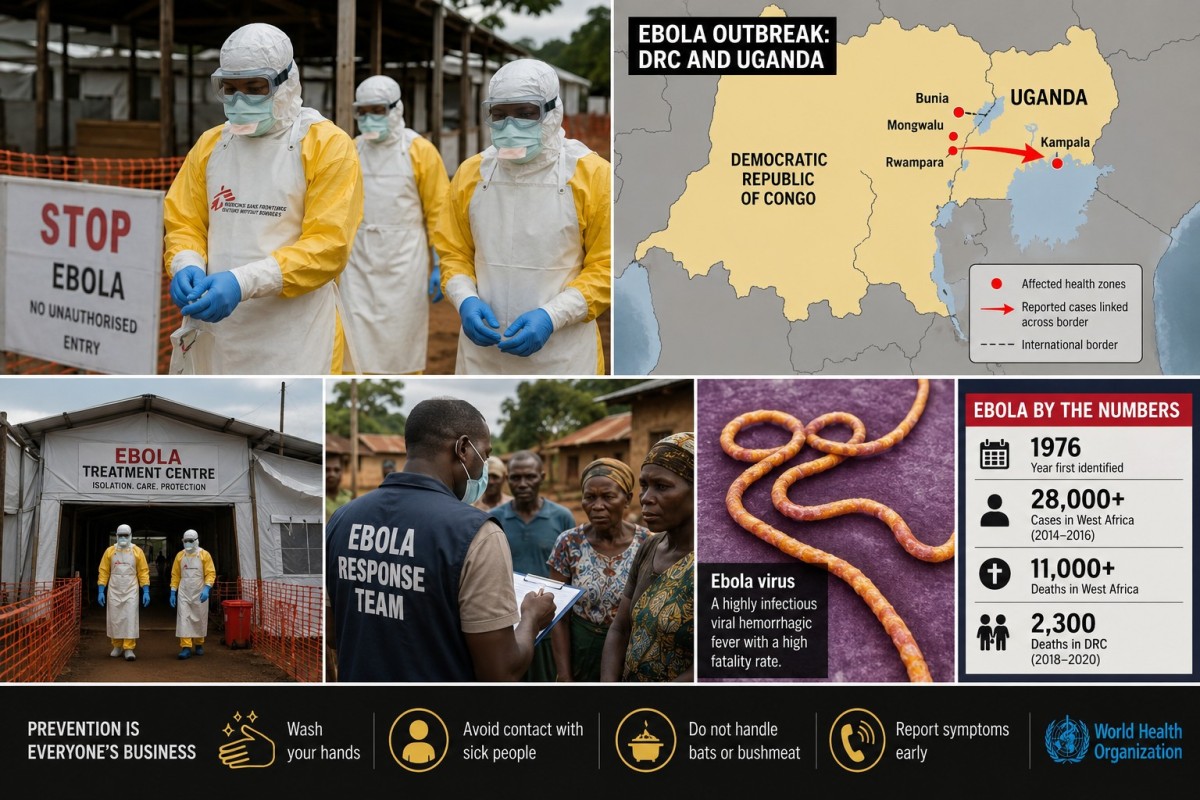
Ebola was first discovered in 1976 in what is now the Democratic Republic of Congo and has repeatedly resurfaced across parts of Africa ever since.
Data from the Centers for Disease Control and Prevention show that outbreaks have appeared periodically across western and central Africa, often emerging after spillover events from animals before spreading among humans.
Scientists believe the virus originates in animals, particularly fruit bats, before crossing into humans through direct contact with infected animals or contaminated materials. However, this is only part of the story.
Health experts say Ebola continues to reappear because it is not fully eliminated from its natural environment and can spill over from animals into humans, while in some cases the virus may persist in survivors and re emerge under certain conditions. Combined with conflict, population movement and weak health systems in affected regions, these factors make complete eradication extremely difficult.
Health experts say population movement, conflict, displacement, mining activities, weak healthcare systems and increasing interaction between humans and wildlife have also made eliminating Ebola more difficult.
For affected communities, Ebola has therefore become less of a one time emergency and more of a recurring threat that returns whenever conditions allow.
Why This Outbreak Is Different
The current outbreak has raised particular concern because it involves the Bundibugyo strain of Ebola, one of the less common types of the virus.
Unlike the Zaire strain which caused previous major outbreaks and for which vaccines and treatments exist, there are currently no approved vaccines or targeted therapies for Bundibugyo virus disease.
According to CDC information, Bundibugyo virus has historically recorded fatality rates ranging between 25 and 50 percent.
Health officials say patients affected in the current outbreak have shown classic Ebola symptoms including fever, headache, severe weakness, abdominal pain, vomiting and bleeding.
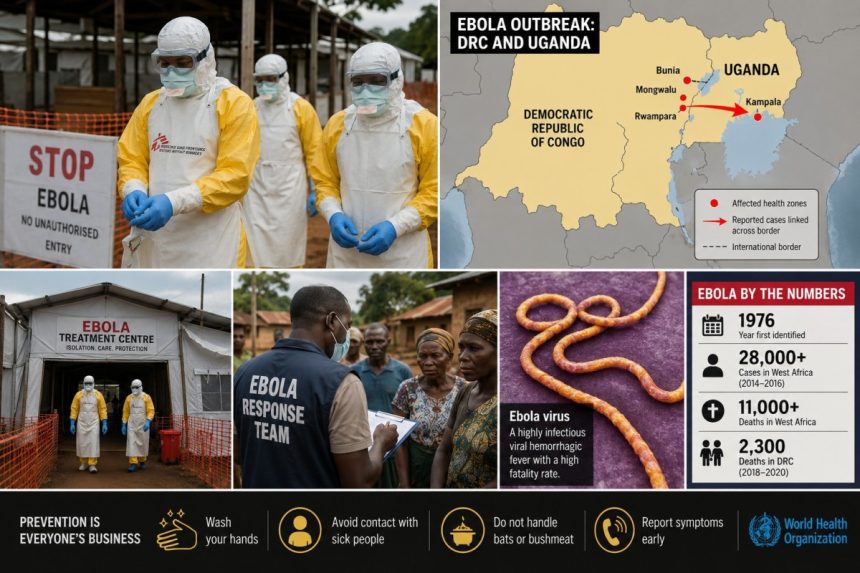
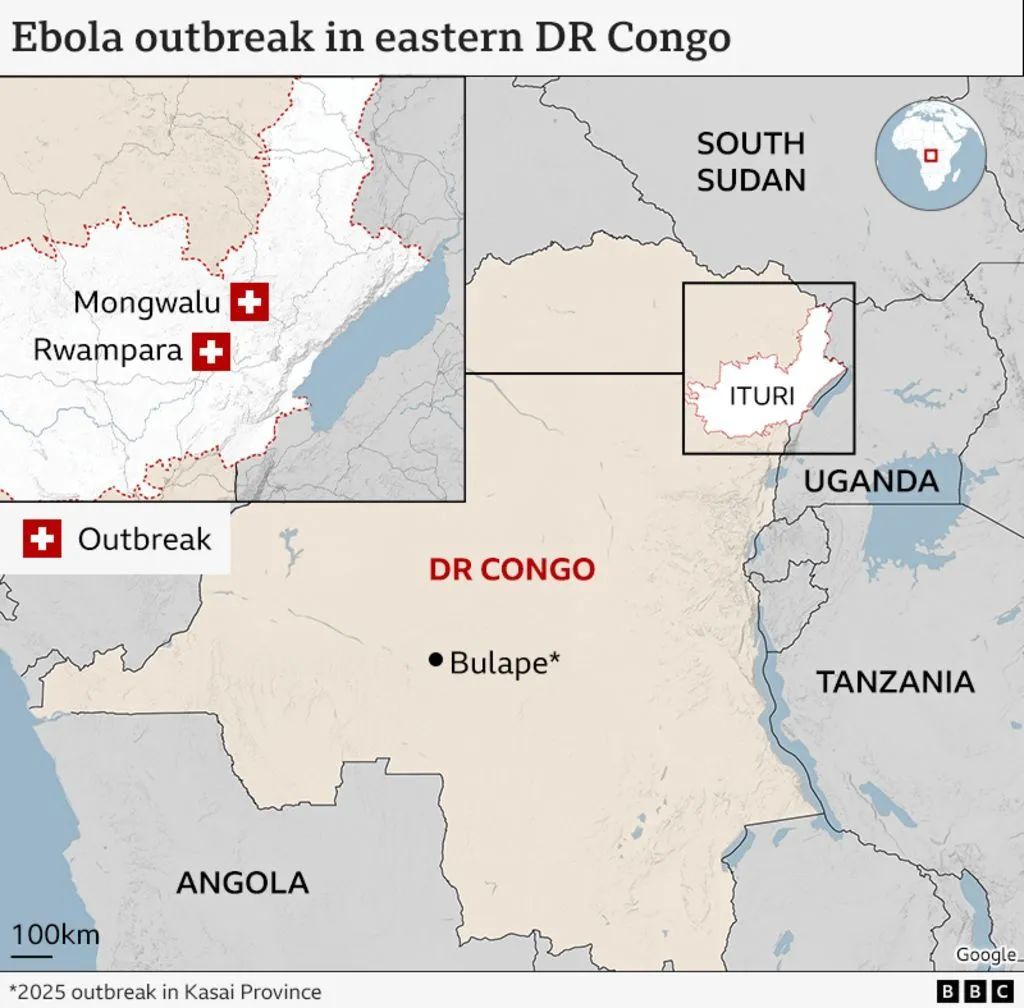
WHO reports indicate that cases have been identified across several health zones in Ituri Province including Bunia, Mongwalu and Rwampara, while Uganda has also recorded infections linked to movement from the Democratic Republic of Congo.
The outbreak is unfolding in a region already facing insecurity, humanitarian pressure and frequent population movement, increasing fears of wider transmission.
Lessons From Nigeria And West Africa
The memory of the 2014 West African Ebola epidemic still shapes how many countries respond to outbreaks today.
The epidemic affected Guinea, Liberia and Sierra Leone and became the largest Ebola outbreak ever recorded, infecting more than 28,000 people and killing over 11,000.
Nigeria also faced the threat after an infected traveller from Liberia introduced the virus into Lagos in 2014.
The country recorded 20 cases and eight deaths, but rapid response measures prevented wider transmission. Emergency treatment centres were established, while health authorities carried out aggressive contact tracing and isolation of suspected cases.
The response remains one of Africa’s strongest public health success stories and demonstrated how swift intervention can stop Ebola before it spreads uncontrollably.
Still, the years that followed proved that containment does not always mean elimination.
The Democratic Republic of Congo alone has continued to record outbreaks, including the devastating epidemic between 2018 and 2020 that claimed nearly 2,300 lives.
Can Africa Stay Ahead Again
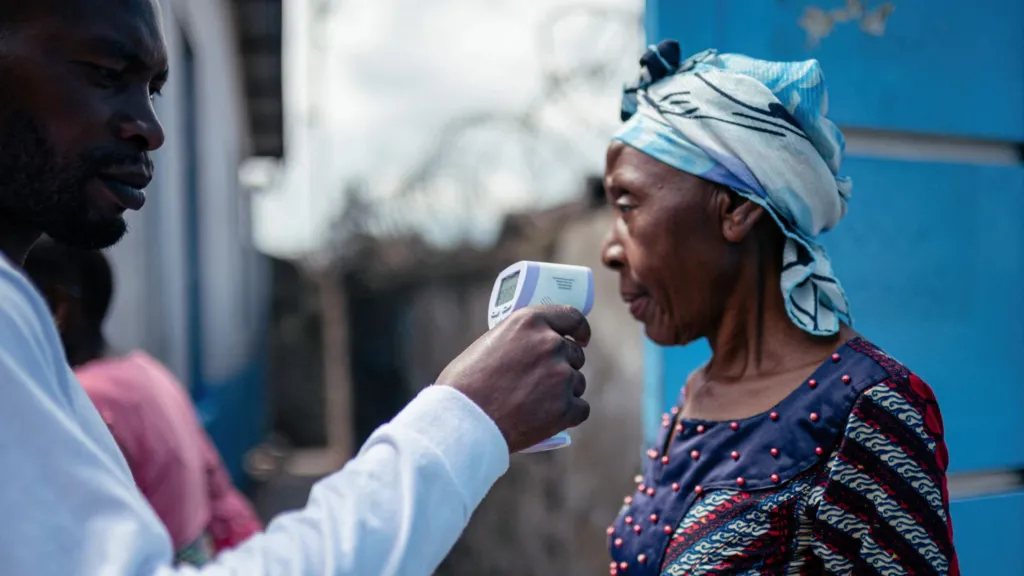
Health agencies are once again mobilising resources as surveillance teams, laboratory experts and emergency responders work to contain the outbreak.
The Centers for Disease Control and Prevention says it is supporting response efforts through disease tracking, contact tracing, laboratory testing, virus sequencing, infection prevention measures, border screening and community engagement.
The World Health Organization has also advised countries bordering affected regions to strengthen surveillance systems and improve health reporting to ensure early detection.
Despite growing concern, health officials insist that panic is not the answer.
WHO has advised countries not to close borders or restrict trade, arguing that evidence based measures such as early detection, rapid isolation, contact tracing and community cooperation remain the most effective defence.
Nearly fifty years after Ebola was first identified, the virus continues to test public health systems and expose persistent weaknesses in outbreak preparedness.
For much of the world, Ebola returns only when emergencies are declared and headlines appear. But for communities that have lived through repeated outbreaks, it never truly leaves.
It remains a persistent shadow across parts of Africa, returning quietly, adapting to new realities and reminding the world that some health threats do not disappear. They simply wait for another opportunity to return.
FURTHER READING