
- FG Introduces Mandarin Into Secondary School Curriculum
- NERDC confirmed that Mandarin will now be taught alongside French and Arabic as optional foreign languages
- The decision is aimed at expanding language options for Nigerian students
The Federal Government has officially approved the inclusion of Mandarin (Chinese language) in Nigeria’s senior secondary school curriculum, giving students the option to study the language from the 2025/2026 academic session.
Eko Hot Blog reports that the Nigerian Educational Research and Development Council (NERDC) confirmed that Mandarin will now be taught alongside French and Arabic as optional foreign languages in senior secondary schools.
EDITOR’S PICKS
- Trump Files $15bn Lawsuit Against New York Times
- Airline Operators Commend FG for Suspending 4% Import Levy
- Lagos: UBA branch, Offices Hit as Fire Guts Building in Marina
The policy was unveiled on Tuesday by the Secretary of Education for the Federal Capital Territory, Dr. Danlami Hayyo during the inauguration of the 14th “Chinese Corner” at Government Secondary School, Tudun Wada, Abuja, a cultural hub sponsored by the China Civil Engineering Construction Corporation (CCECC) to promote language and cultural exchange.
“May I inform you that in recent review of our curriculum, the Chinese language has been selected as one of the international languages to offer in senior secondary schools.
“That is to say that the FCT has been very visionary in introducing the subject in our schools through the Chinese Corners early enough.
“Chinese Mandarin has the largest number of speakers in the world, and today it has become the language of commerce, education, and tourism. Our decision to delve into Chinese education and culture is a wise move,” Hayyo stated.
The decision is aimed at expanding language options for Nigerian students, strengthening cultural and economic ties between Nigeria and China, and preparing students for global competitiveness in commerce, technology, and diplomacy.
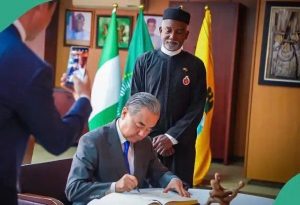
As part of the initiative, scholarship opportunities will be made available for Nigerian students to study in China, while teachers are expected to benefit from training and capacity-building programmes in Mandarin.
With China’s growing influence in global trade and technology, Nigeria’s decision to integrate Mandarin into its curriculum marks a bold step in education reform.
The success of the policy will, however, depend on effective implementation through teacher training, adequate resources, and a balanced approach that also supports the preservation of local languages.
FURTHER READING
- Arrival: Trump Begins Second UK State Visit
- Sowore Sues DSS, Meta, X Over Alleged Social Media Censorship
- Utah Student Charged With Murder of Charlie Kirk, Faces Death Penalty
Click here to watch video of the week