- 80The Federal Government targets over 80% electricity access within five years
- It also plans to close the power generation gap within three years
- Manufacturers say poor electricity supply remains their biggest challenge
The Federal Government says it plans to increase electricity access in Nigeria to more than 80 per cent within the next five years and bridge the gap between installed and available generation capacity within three years.
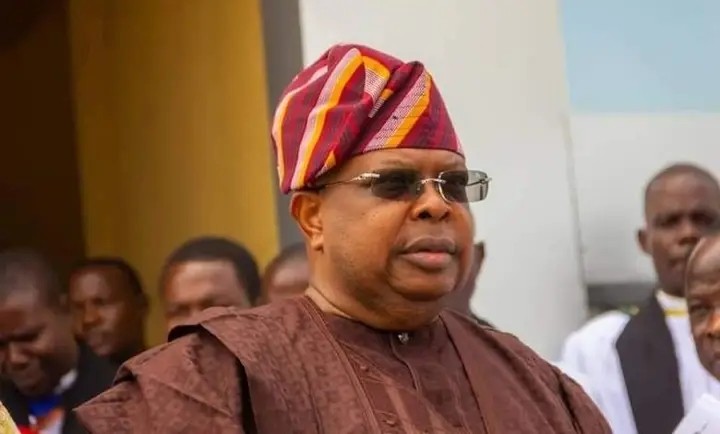
Eko Hot Blog reports that the Minister of Power, Joseph Tegbe, disclosed this while presenting a paper titled “Industrialisation and Regional Competitiveness: The Role of Power” at a recent Nigeria Economic Summit Group event in Lagos.
EDITOR’S PICK
- Tinubu Directs Installation of 3,700 Telecom Towers Across Nigeria
- Alara of Ilara Praises Sanwo-Olu, LASU Staff’s Dedication To Progress
- Burna Boy, Tems Bag Nominations at 2026 MTV VMAs
Tegbe, whose presentation was delivered by his Special Adviser, Martins Olajide, also said the government would work towards reducing Aggregate Technical, Commercial and Collection losses to below 17 per cent within three years, in line with the target set by the Nigerian Electricity Regulatory Commission.
According to the minister, the government is strengthening major transmission routes, including the Lagos, Enugu-Port Harcourt and Abuja-Kaduna-Kano corridors, while expanding electricity access and improving the reliability of power supplied to industries and households.
He said the government’s objective was to provide industries with dependable and affordable electricity capable of improving their competitiveness across the African Continental Free Trade Area, which has a consumer market of about 1.4 billion people.
Tegbe said reliable electricity was essential to President Bola Tinubu’s plan to transform Nigeria into a $1tn economy.
He added that work was already underway to reinforce major transmission corridors, deploy seven million electricity meters and train 5,000 people as part of the sector reforms. The government is also developing captive power arrangements aimed at connecting economic clusters directly to reliable electricity sources.
The minister said another priority was the development of an independent electricity market with reduced government interference. He added that the government would seek to improve sector liquidity, strengthen financial sustainability and tackle the debts and losses affecting the industry.
The Power Ministry described inadequate electricity supply as one of the major obstacles to Nigeria’s industrial development.
It said the country currently has 13,625 megawatts of installed grid capacity but only about 4,854MW is available on average each day. This means a significant portion of the country’s installed generation capacity remains unavailable, while peak electricity demand is estimated at about 20,000MW.
The ministry noted that the shortage has forced manufacturers and other businesses to depend heavily on alternative sources of electricity, increasing their operating costs.
It cited estimates showing that Nigerians spent N16.5tn on self-generation in 2023, compared with approximately N1tn generated in grid revenue. The World Bank has also estimated that unreliable electricity supply costs the Nigerian economy about $25bn annually, equivalent to between five and seven per cent of GDP.
According to the ministry, improving grid stability, expanding transmission infrastructure and establishing economic clusters would boost industrial output, attract investment and strengthen Nigeria’s competitiveness.
Speaking during a panel session at the summit, the Director of the Research and Economic Policy Division of the Manufacturers Association of Nigeria, Dr Oluwasegun Osidipe, said poor electricity supply remained the biggest challenge identified by manufacturers in the Q2 2026 Manufacturers’ CEO Confidence Index.
Osidipe said manufacturers had been forced to invest heavily in alternative electricity generation because of the unreliable national grid, further increasing the cost of production.
He noted that the cost of maintaining alternative power facilities was separate from manufacturers’ electricity bills, making it more difficult for Nigerian businesses to compete with firms operating in countries with more stable power supply.
Beyond electricity, Osidipe identified regulatory difficulties as another major problem confronting manufacturers. He said businesses had to deal with numerous government agencies, overlapping regulations and additional administrative costs.
He also listed exchange-rate instability, dependence on imported equipment and raw materials, and poor coordination between monetary and fiscal policies among the challenges affecting the manufacturing sector.
Osidipe argued that manufacturers would struggle to remain competitive unless government policies across different sectors were better coordinated and the cost of doing business was reduced.
FURTHER READING