The political cold war between Rivers State Governor Siminalayi Fubara and his predecessor, the Minister of the Federal Capital Territory (FCT), Nyesom Wike, has taken a decisive new turn, with indications that the former governor may now be facing resistance not just from within Rivers, but from powerful forces inside the ruling All Progressives Congress (APC) itself.
Developments over the past weeks suggest that Wike’s once-unassailable grip on Rivers politics is being tested by an unusual alignment of APC governors, party leaders and federal actors rallying behind Fubara.
EDITOR’S PICKS
EKO HOT BLOG breaks down what could become of Wike in a war with APC stakeholders backing Fubara.
From Rivers Feud to APC Showdown
At the heart of the crisis is the long-running rift between Wike and Fubara, which began less than a year after the latter succeeded him as governor and later devolved into President Bola Tinubu suspending the incumbent governor for six months to supposedly prevent a breakdown of law and order.
Although presidential intervention reportedly produced a truce — widely said to include an understanding that Fubara would not seek re-election in 2027 — events since then have pointed in a different direction.
Tensions escalated after Fubara defected from the Peoples Democratic Party (PDP) to the APC in December, a move that dramatically altered the political equation in Rivers State. Rather than being isolated within his new party, the governor appears to have attracted sympathy and support from key APC stakeholders, including governors and members of the party’s National Working Committee.
The clash spilled into the open following sharp exchanges between Wike and the APC National Secretary, Ajibola Basiru.
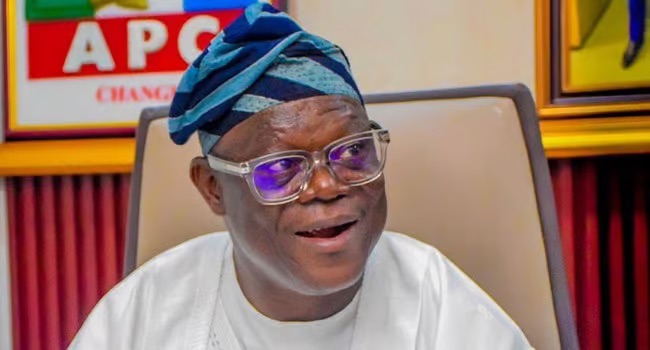
During a recent visit to Oyigbo Local Government Area, Wike openly warned Basiru to stay away from Rivers politics, saying: “Take this message to your National Secretary, leave Rivers State alone… This state is a no-go area.” He also accused unnamed political actors of being attracted by Rivers State’s resources, declaring, “Because you have heard that we have N600bn, you come here, you collect, and you open your mouth to talk anyhow.”
Basiru responded forcefully, questioning Wike’s standing within the APC and insisting that the minister had no authority to meddle in party affairs.
“From my record, he isn’t a member of APC. I don’t see which authority or temerity he has to be dabbling in APC affairs,” Basiru said, stressing that as National Secretary, his oversight covered the entire country. He further rejected Wike’s threats, describing them as empty and unbecoming of someone who was not formally part of the ruling party. The party’s top official also called on the minister to resign.
These exchanges have transformed what began as a local Rivers feud into a broader confrontation between Wike and influential elements within the APC.
A War of Relevance Wike May Be Losing
For years, Wike’s political strength rested on his ability to dominate Rivers State while maintaining strategic relevance at the national level. That dominance is now being challenged in a way he has rarely experienced.
Multiple APC sources, according to Punch, have confirmed that several governors within the ruling party have quietly thrown their weight behind Fubara’s second-term ambition, angered in part by Wike’s alleged attempts to impose political choices across state lines, including moves linked to Imo State politics that reportedly infuriated Governor Hope Uzodimma, chairman of the APC Governors’ Forum.
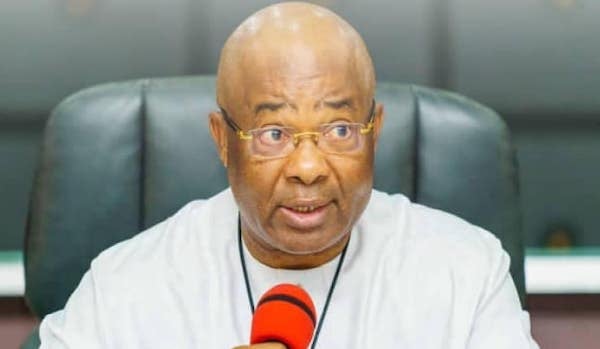
Unlike his experience in the PDP, where his suspension and crisis drew limited open backing from fellow governors — many of whom were already hedging their bets with the APC — Fubara now appears to enjoy something he lacked before: institutional and political cover from within the ruling party. Support from APC governors, party leaders like Basiru, and other stakeholders gives him legitimacy, confidence and a national platform to confront Wike’s influence in Rivers.
This backing has emboldened Fubara to openly challenge his predecessor, recalibrating the balance of power in the state. Where Wike once dictated outcomes almost unilaterally, he now faces a governor protected by party structures and allies beyond Rivers. The implication is stark: Wike risks fighting a relevance battle on two fronts — against his successor at home and against a party establishment that no longer sees him as indispensable.
The Tinubu Factor
Still, Wike retains one potentially decisive asset: President Bola Ahmed Tinubu. Conscious of this, the FCT minister has repeatedly emphasised his loyalty to the President, even as his influence within the APC remains contested. In a post on X on Tuesday, Wike underscored that his political tours across Rivers State were anchored on unwavering support for Tinubu.
“Yesterday, we were in Oyigbo and Ogu-Bolo LGAs. Today, we will be in Akuku-Toru and Degema LGAs,” Wike wrote. “Here, it is local politics, and our support for Mr President is total.”
Yesterday, we were in Oyigbo and Ogu-Bolo LGAs.
Today, we will be in Akuku-Toru and Degema LGAs.
Here, it is local politics and our support for Mr President is total. pic.twitter.com/eZEvamfy1A
— Nyesom Ezenwo Wike (@GovWike) January 6, 2026
This framing is strategic. With APC governors and party officials lining up behind Fubara, Tinubu may be the only figure with the authority to recalibrate the balance in Wike’s favour. A clear presidential intervention or tacit backing could halt Wike’s slide and restore some of his lost leverage in Rivers politics.
FURTHER READING
Conversely, silence or neutrality from the President could leave Wike increasingly isolated, confronting a coalition of APC governors and stakeholders determined to assert party supremacy over individual political fiefdoms.
Philip Ibitoye is a Special Correspondent with EKO HOT BLOG. Click here to find daily analysis and critical insight on trending issues in Lagos and other parts of Nigeria.
Click here to watch the video of the week below: