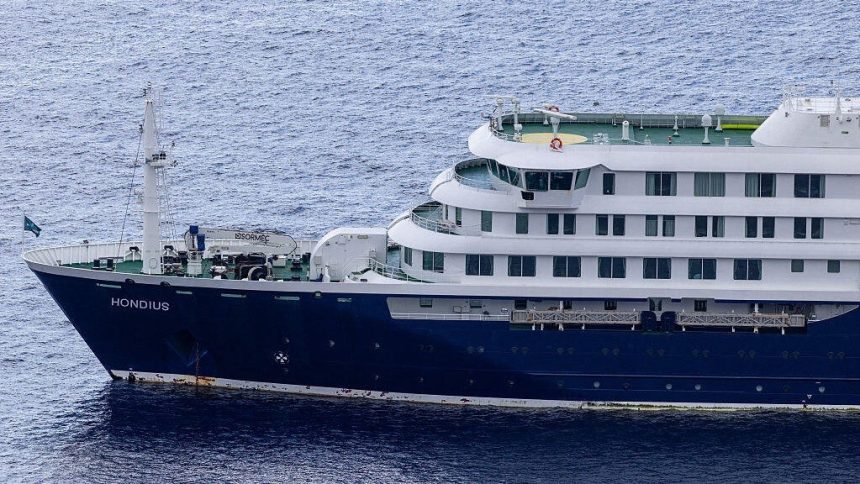
- Officials stressed that those leaving the vessel would have no direct contact with the public
- Authorities added that around 30 crew members would remain onboard as the ship continues to the Netherlands
- WHO recommends 42-day quarantine for passengers from Sunday
Passengers and crew members aboard the cruise ship affected by a hantavirus outbreak began leaving the vessel on Sunday as authorities launched an international evacuation operation coordinated by global health officials.
Eko Hot Blog reports that the evacuation process, expected to continue through Monday, saw passengers transported from the ship to Tenerife airport in secured military buses before boarding government-arranged flights to their home countries.
EDITOR’S PICK
- Fani-Kayode, Omokri Oppose Return Of Power To North Before 2031, Endorse Tinubu For 2027
- Putin defends Ukraine war amid NATO aggression claims
- Epe Stakeholders Unite in Massive Endorsement for Wale Raji, Tobun, Tinubu, Others
Officials stressed that those leaving the vessel would have no direct contact with the public.
Health authorities confirmed that none of the passengers being evacuated were currently showing symptoms of the virus.

However, the World Health Organization has advised that all passengers undergo a 42-day quarantine period starting from Sunday as a precautionary measure.
Flights carrying Spanish and French nationals departed earlier in the day, while other countries including Canada, the Netherlands, the United Kingdom, Turkey, Ireland and the United States prepared aircraft to repatriate their citizens.
Dutch evacuation flights were also expected to transport passengers from Germany, Belgium and Greece.
Australian authorities were also arranging flights for their nationals as well as passengers from New Zealand and several Asian countries, with departures scheduled for Monday.
The hantavirus outbreak was first identified on May 2 after South African medical officials tested a British passenger who had been admitted to intensive care.
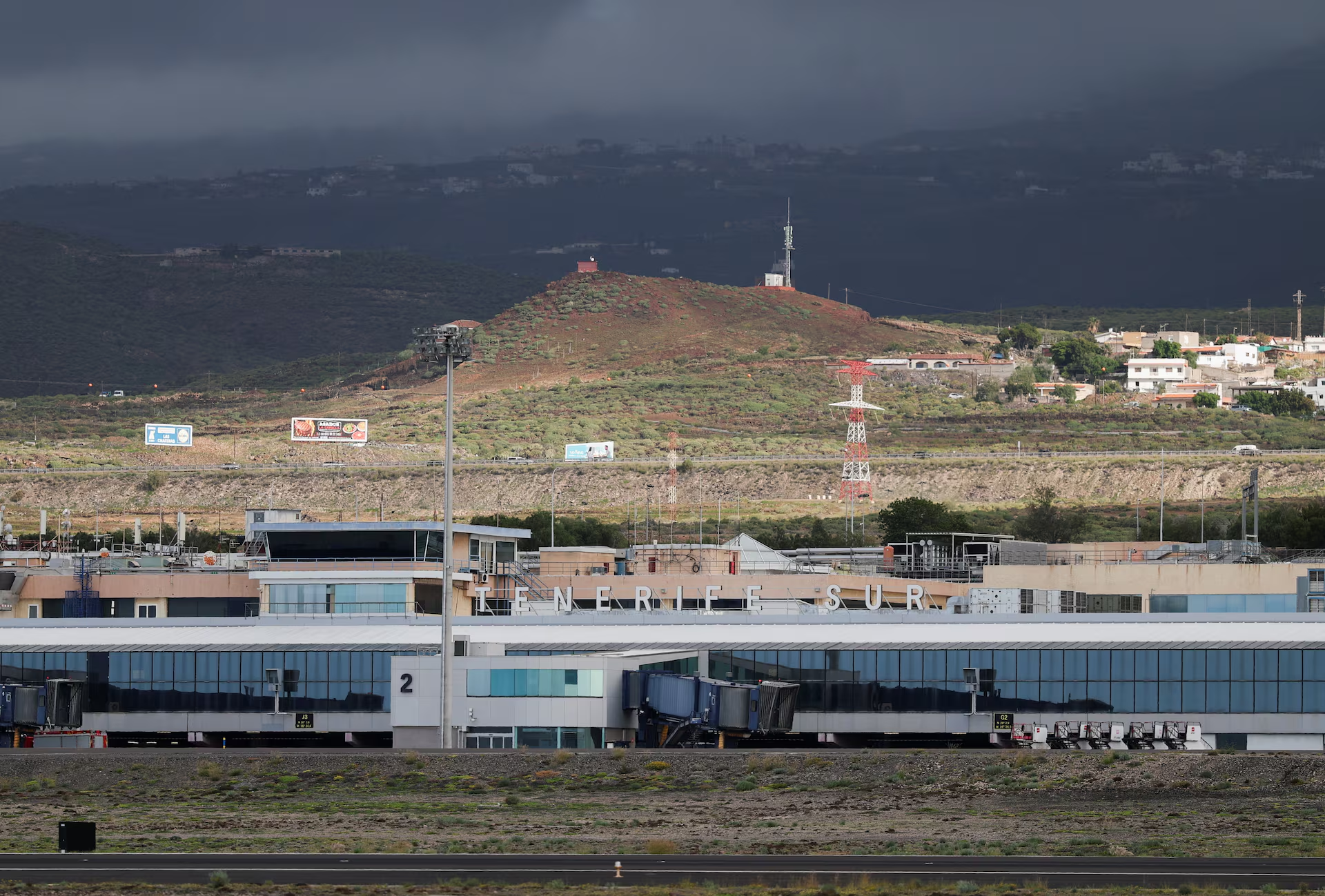
The virus, commonly spread through rodents but capable of limited human-to-human transmission in rare cases, has so far been linked to three deaths involving a Dutch couple and a German national.
The cruise vessel, the MV Hondius, departed waters near Cape Verde for Spain last week after the WHO and the European Union requested Spanish authorities to coordinate evacuation and health measures.
According to health investigators, the first infection may have occurred before boarding the ship during travel in Argentina or Chile, while subsequent transmission likely happened onboard.
The WHO disclosed that eight former passengers had fallen ill, with six confirmed hantavirus infections. Four patients remain hospitalised in countries including South Africa, the Netherlands and Switzerland, while another suspected case in Germany later tested negative.
WHO Director-General Tedros Adhanom Ghebreyesus travelled to Tenerife to oversee parts of the evacuation process and monitor ongoing health screenings alongside Spanish authorities.
Meanwhile, British authorities deployed a specialist medical team to the remote island of Tristan da Cunha to assist a British passenger suspected of infection.
European public health officials classified all passengers aboard the ship as high-risk contacts as a preventive measure, though they maintained that the danger to the wider public remains low.
Spanish health officials also stated that no rodents had been found on the ship during inspections and noted that cruise vessels regularly travel from South American regions where the virus exists without triggering outbreaks in Europe.
Authorities added that around 30 crew members would remain onboard as the ship continues to the Netherlands, where it is expected to undergo full disinfection.
FURTHER READING