- Israel and Lebanon signed a US backed framework agreement to ease tensions
- The deal includes security cooperation and plans for gradual troop withdrawal
- Both sides described the agreement as the first step toward lasting peace
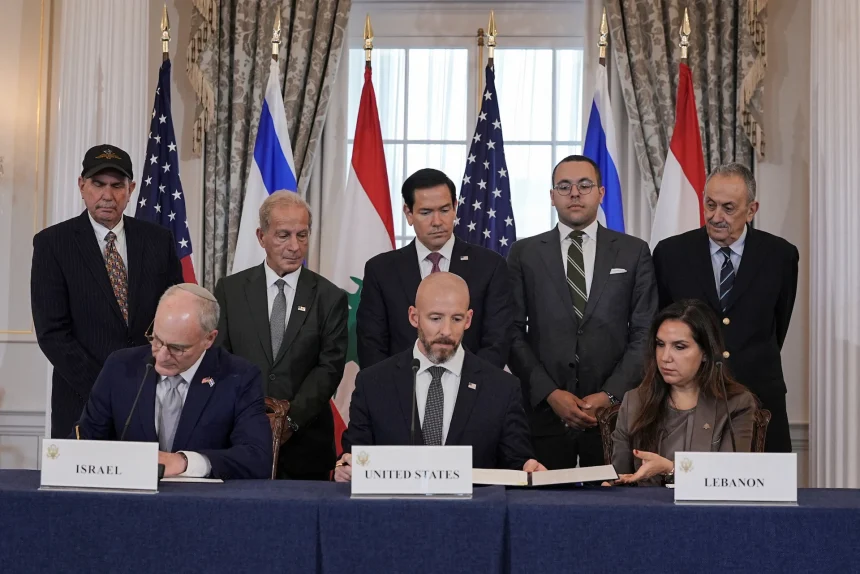
Israel and Lebanon have signed a framework agreement in Washington aimed at paving the way for a lasting end to hostilities between Israel and the Iran backed Hezbollah group, although both governments described the deal as only the beginning of a broader peace process.
Eko Hot Blog gathered that the agreement was signed on Friday at the United States Department of State by Lebanese Ambassador Nada Moawad, Israeli Ambassador Yechiel Leiter and representatives of the United States.
EDITOR’S PICK
- UN Mobilizes Humanitarian Aid For Venezuela Following Twin Earthquakes
- Dollar To Naira Exchange Rate Today, June 26, 2026
- Concerns As Repentant Boko Haram Members Allegedly Join Army Recruitment
While few details of the document were made public, US officials said it establishes a framework for implementing security arrangements in southern Lebanon.
Speaking before the signing, US Secretary of State Marco Rubio described the agreement as an important first step toward restoring stability.
“Today we have taken the first step in what will undoubtedly be a difficult journey, but it is an important, essential and necessary one,” Rubio said.
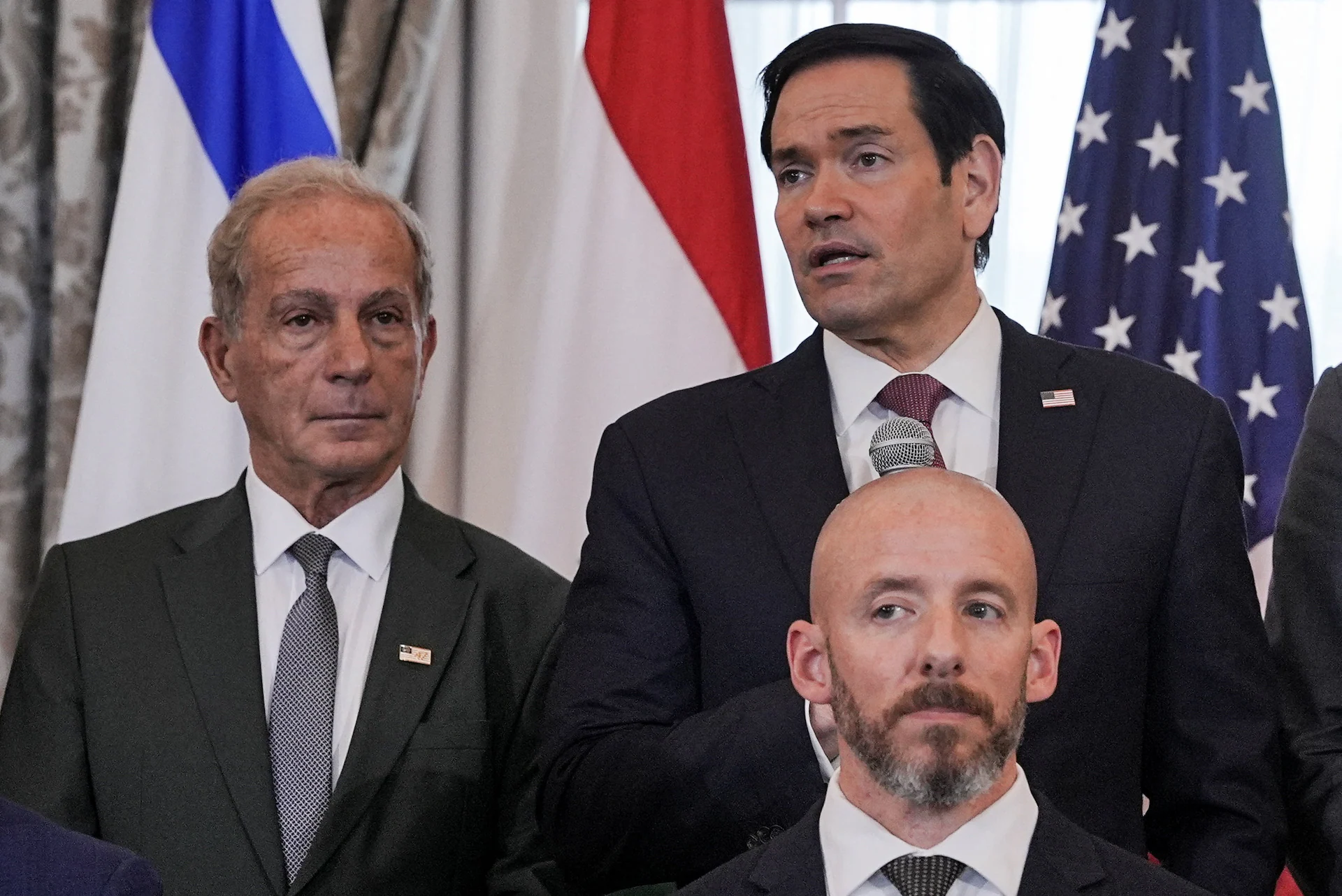
In a statement issued later, Rubio announced that Washington would oversee implementation through a new trilateral Military Coordination Group for Lebanon.
The US also pledged an immediate 100 million dollars in humanitarian aid in coordination with the United Nations, alongside more than 30 million dollars to strengthen the Lebanese Armed Forces under existing funding programmes.
Israeli Prime Minister Benjamin Netanyahu said the agreement would allow Israeli troops to remain in parts of southern Lebanon if Hezbollah failed to disarm.
He added that the Lebanese army would gradually take control of designated “pilot zones” from which Israeli forces would withdraw before any broader territorial handover.
According to Netanyahu, further Israeli withdrawals would depend on the Lebanese military’s success in dismantling Hezbollah’s military presence and securing the border.
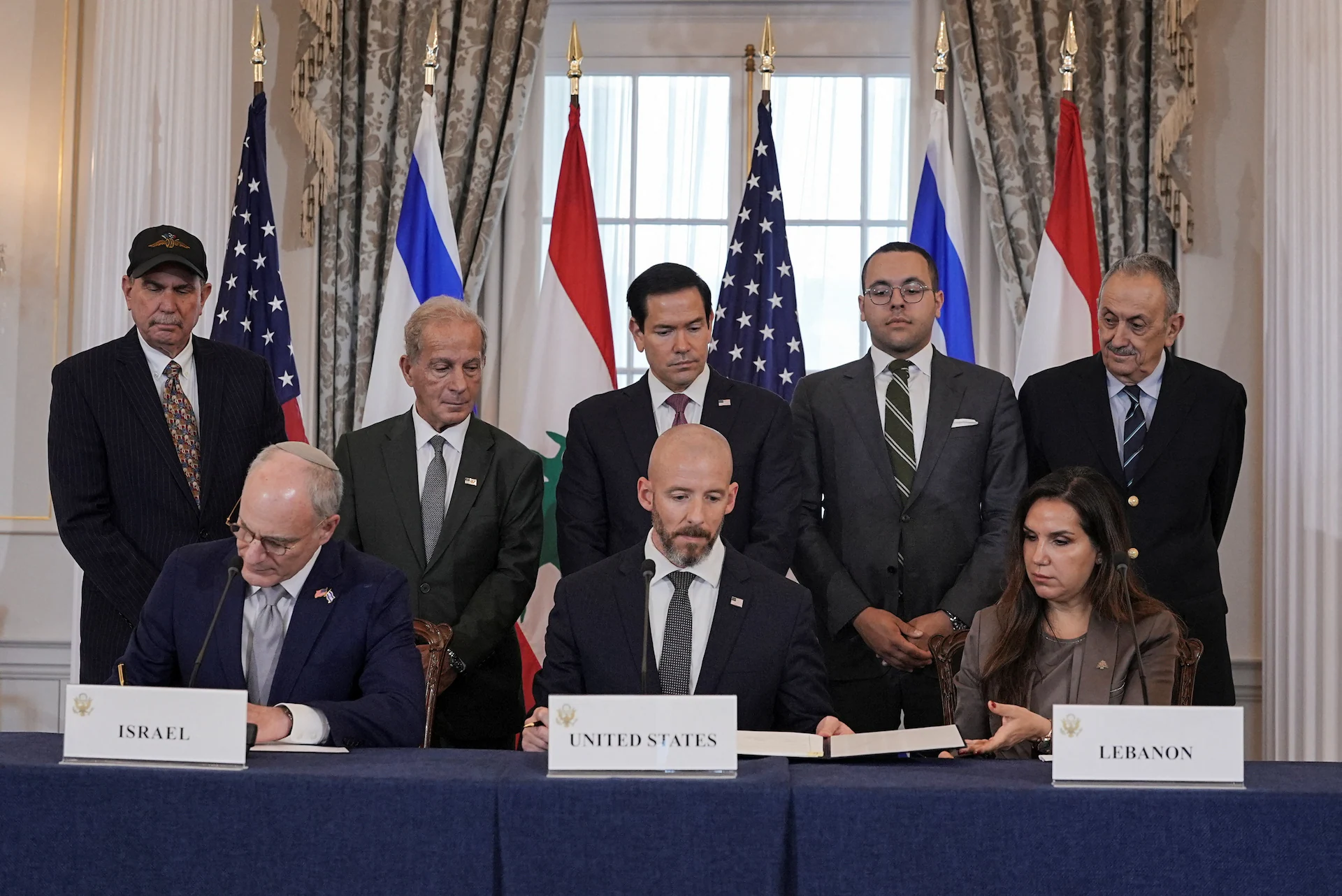
Lebanese President Joseph Aoun welcomed the agreement, expressing hope that it would enable displaced citizens to return to fully liberated areas and rebuild their homes under complete Lebanese sovereignty.
Lebanese Ambassador Moawad also described the accord as only the first stage toward restoring the country’s full territorial control.
For his part, Israeli Ambassador Leiter declared that “Iran is out, Hezbollah is out, and the road to peace between Israel and Lebanon is in.”
The conflict between Israel and Hezbollah escalated after the Lebanese armed group launched attacks on Israel on March 2, shortly after US and Israeli strikes on Iran. Israel responded with sustained air and ground operations that have reportedly killed more than 4,000 people in Lebanon and displaced over one million residents.
Israel says at least 32 soldiers and four civilians have died during the latest round of fighting. Hezbollah has not released official casualty figures, although previous reports suggested that thousands of its fighters may have been killed.
Despite the ceasefire framework, violence has continued. Israel said its military killed seven Hezbollah members on Friday near territory it currently occupies, although the claim could not be independently verified.
Tensions also remained high after Israeli forces reportedly dropped leaflets over the southern Lebanese town of Mansouri, warning residents to evacuate because the area falls within what Israel describes as its security zone.
A senior Lebanese military official said Mansouri had recently been added to Israel’s occupation zone, while an Israeli military spokesperson said the leaflets were intended to warn civilians to stay away from active military operations.
Meanwhile, Hezbollah lawmaker Hassan Fadlallah rejected the agreement, insisting the group would not surrender its weapons.
According to reports carried by pro Iran broadcaster Al Mayadeen, Fadlallah warned that Hezbollah would resist any attempt by Lebanese authorities to enforce disarmament, arguing that such efforts could push the country toward civil conflict.
Although the agreement signals renewed diplomatic efforts to reduce tensions, major disagreements over Hezbollah’s future, Israeli troop withdrawals and border security remain unresolved, leaving the success of the framework dependent on its implementation in the coming months.
FURTHER READING