The Nigerian Senate on Tuesday approved President Bola Tinubu’s request to deploy Nigerian troops to the Republic of Benin as part of a regional peace-stabilisation mission aimed at protecting democratic institutions and preventing an “unconstitutional seizure” of power.
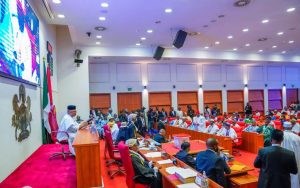
The approval followed a closed-door deliberation in which senators examined security, border and humanitarian implications of the deployment after the president’s formal request was read by Senate President Godswill Akpabio.
EDITOR’S PICKS
At plenary, Akpabio said lawmakers were convinced that the request was in line with Nigeria’s national interest and its obligations to regional peace. In his words, “This action protects our borders, prevents criminality, and upholds democracy in West Africa. An injury to one is an injury to all.”
Senators subsequently adopted the committee report by voice vote, a decision that formally authorises the deployment and allows the commencement of the mission without delay.
BACKGROUND: Why the deployment was necessary
The decision comes just days after a coup attempt was foiled in Benin on Sunday, when mutinous soldiers briefly seized a national television station and attempted to announce the dissolution of state institutions. The rebels were said to have held parts of a military camp and tried to broadcast messages asserting control over the country.
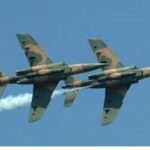
The Beninese government requested immediate international assistance after loyal security forces came under pressure from the mutineers. Nigeria responded by deploying air force jets which carried out targeted air strikes against positions held by the rebels. The air operations were critical in dislodging the insurgents from the seized locations and helping Beninese forces regain control.
Officials in Cotonou later reported that most of the rebel soldiers were arrested while security forces continued operations to track remaining elements involved in the failed takeover. The coup attempt revived regional fears about the rise of military interventions in West Africa and heightened concern that instability in Benin could spill over into neighbouring countries, including Nigeria.
In Nigeria, senators warned that escalation could trigger a refugee influx and fuel insecurity in border communities already strained by criminal activity. Their deliberations emphasised the importance of early regional action to prevent wider destabilisation.
What a peace-stabilisation force will do in Benin
While the deployment followed a combat intervention phase led by the Nigerian air force, the presence of Nigerian soldiers in Benin is expected to shift towards stabilisation tasks designed to secure constitutional order after the failed coup.
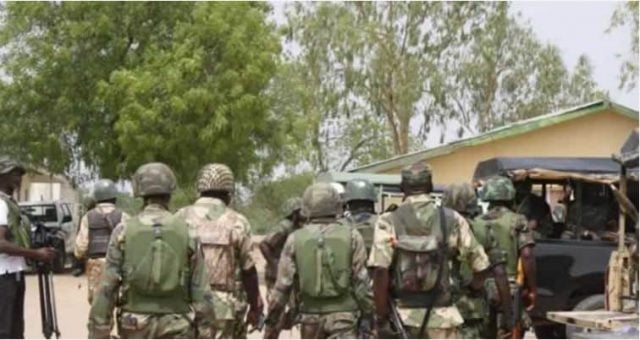
Troops will work in support of Benin’s security services to secure strategic state institutions, maintain control of critical government infrastructure and assist in preventing renewed attempts at seizure of power. The aim is to stabilise political authority, allow governmental functions to resume without disruption and support civilian confidence after the sudden military challenge to the presidency.
In addition to securing official sites, Nigerian forces are expected to coordinate with their Beninese counterparts on intelligence and surveillance activities to prevent regrouping by coup elements. Their continued presence also serves as a deterrent to any actors contemplating further destabilisation, particularly in a region that has witnessed multiple coups in recent years.
Nigeria’s involvement may also extend to border management in cooperation with Beninese authorities, especially if there are signs of movement towards Nigeria’s territory by armed groups or displaced civilians. Lawmakers have already flagged the possibility of humanitarian consequences if unrest re-emerges near the frontier.
Although the operation began with rapid mobilisation and combat assistance, its subsequent phase is largely about stabilisation: preserving constitutional governance, preventing the re-emergence of armed threats and assuring the region that further attempts at unconstitutional rule will meet swift collective response.
FURTHER READING
In essence, Nigerian soldiers will act as a peace-stabilisation force whose role combines security support, deterrence and protection of democratic institutions. Their presence represents a regional statement that Benin’s constitutional order must not be undermined and that destabilisation inside one ECOWAS state will not be permitted to endanger others.
Philip Ibitoye is a Special Correspondent with EKO HOT BLOG. Click here to find daily analysis and critical insight on trending issues in Lagos and other parts of Nigeria.
Click here to watch the video of the week below: