- He maintained that exports do not jeopardise domestic supply, stressing that power trading only occurs after local demand is met
- economists warned that exporting electricity while local industries face blackouts sends the wrong signal
- Nigeria recently completed a historic four-hour grid synchronisation test with 15 West African countries
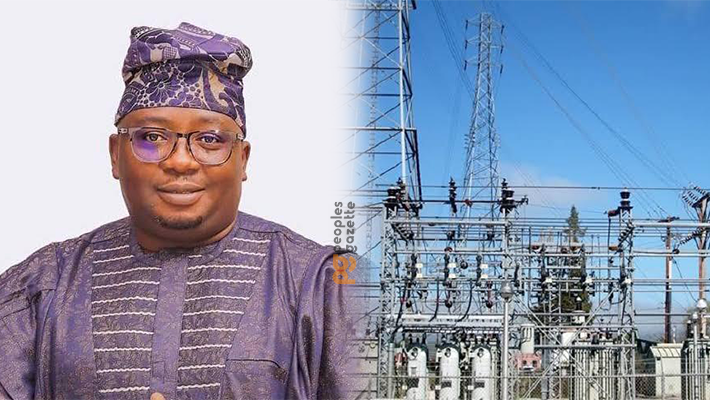
Nigeria’s Minister of Power, Adebayo Adelabu, has revealed that the nation’s power generation remains capped at around 5,000 megawatts despite a transmission capacity of 8,500 megawatts, blaming low demand and chronic distribution challenges for the persistent shortfall.
Eko Hot Blog reports that Adelabu made the disclosure in Abuja during the Nigerian Independent System Operator’s maiden stakeholders’ engagement, where he explained that the country’s improved transmission infrastructure cannot be fully utilised because Distribution Companies (DisCos) are unable to take or distribute more power.
EDITOR’S PICK
- Lagos Tenancy Law 2025 Lauded as Game Changer for Renters
- Army Dismisses Four Soldiers For Alleged Standing Order Violation
- APC USA Seeks to Testify Before US Congress on Nigeria’s Security
According to him, Nigeria recently completed a historic four-hour grid synchronisation test with 15 West African countries on November 8, 2025, linking the nation to the West African Power Pool (WAPP) and opening opportunities for energy trading and foreign exchange earnings.
He confirmed that Nigeria currently exports about 360MW of electricity out of the 600MW contracted for export.
However, industry players and consumer groups have faulted Adelabu’s figures, arguing that Nigeria’s weak distribution infrastructure, energy theft, poor collections, and recurring grid collapses undermine the minister’s claims.
They insist that without urgent investments in last-mile infrastructure, the country cannot sustainably absorb more power or justify exports.
Stakeholders, including the Nigerian Consumer Protection Network, power sector analysts, and economists warned that exporting electricity while local industries face blackouts sends the wrong signal and deepens economic strain.
They pointed to high production costs, factory shutdowns, and rising dependence on diesel generators as indicators of an electricity market in distress.
Adelabu, however, maintained that exports do not jeopardise domestic supply, stressing that power trading only occurs after local demand is met. He added that ongoing investments including new substations, transformers, and renewable energy projects, will strengthen the grid in the coming years.
Despite criticisms, the minister described the successful WAPP synchronisation as a landmark achievement that enhances grid stability, boosts investor confidence, and positions Nigeria as a potential regional power hub.
FURTHER READING