At the Ford Foundation’s 65th anniversary event in Abuja on Wednesday, former Vice President Yemi Osinbajo revisited a longstanding debate in development economics — the gap between statistical growth and lived realities.
EKO HOT BLOG gathered that he argued that while Africa remains the fastest-growing continent in Gross Domestic Product (GDP) terms, this progress has not translated into a better quality of life for most citizens.
EDITOR’S PICKS
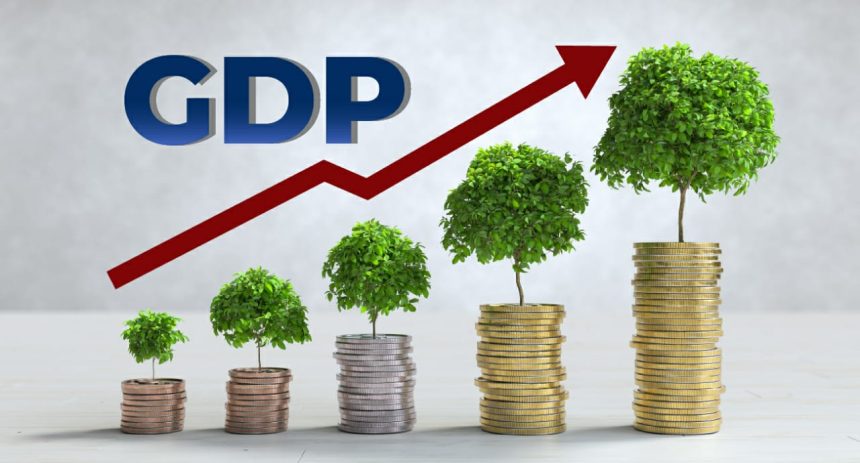
GDP, a measure of all goods and services produced within an economy, is widely used to assess national growth. Yet, as Osinbajo noted, GDP expansion often coexists with poverty, unemployment, and inequality. “GDP growth does not mean development for the majority,” he said. “It does not necessarily translate to jobs or a decent life for citizens.”
This discrepancy, he recalled, was one of his biggest frustrations as chair of Nigeria’s economic team between 2016 and 2019. Citizens, he said, often found it difficult to relate to reports of growth when daily economic hardships persisted. “When we as governments talk about growth, citizens wonder what we are talking about,” he observed.
Why GDP Growth doesn’t always mean better living conditions
GDP growth can give the illusion of progress while masking deep structural problems within an economy. One key limitation is that it measures total output, not how wealth is distributed. A country’s GDP may rise sharply due to booming oil exports, for instance, while most citizens experience stagnant wages, rising costs, or joblessness.
Secondly, GDP figures fail to account for informal economic activities — a major component of livelihoods in developing countries like Nigeria. When millions operate outside the formal economy, their struggles and resilience remain invisible in national statistics.
Another issue is that GDP ignores environmental degradation and social inequality. A nation may record high growth driven by resource extraction or urban expansion, but these same processes may deplete natural assets, displace communities, or widen inequality. In essence, GDP captures the size of the economy, not the health of society.
Finally, economic growth without strong institutions and social infrastructure can lead to what economists describe as “jobless” or “exclusive” growth. Without targeted investments in education, healthcare, and social protection, the benefits of expansion are often captured by a small elite, leaving the majority trapped in poverty.
Measuring Development by Human Welfare
Osinbajo’s comments highlight a critical distinction between economic expansion and human development. For him, genuine progress must be assessed not by aggregate numbers but by improvements in health, education, access to jobs, and the ability of citizens to live dignified lives.
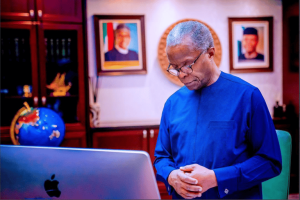
“True development can only be measured when it is tied to the wellbeing and welfare of citizens,” he explained, advocating for economic frameworks that prioritize equity and opportunity. This approach shifts the focus from elite-driven, top-down growth to inclusive, bottom-up development strategies that directly benefit ordinary people.
The Case for a Social Justice Framework
To address this imbalance, Osinbajo urged policymakers to embed social justice into economic planning from the start — not as an afterthought. He called for budgets, investments, and reforms designed around the welfare of the majority. Such a framework, he argued, ensures that growth outcomes are not limited to corporations or the financial sector but are felt across all levels of society.
Echoing this sentiment, ChiChi Aniagolu, Ford Foundation’s regional director, said that social justice forms the bedrock of inclusive and sustainable growth. She emphasized that genuine progress also depends on citizen participation, noting that “change takes time and courage” but is ultimately driven by the people themselves.
FURTHER READING
In essence, Osinbajo’s message was both an economic and moral reminder: numbers alone cannot define development. Growth must serve people, not the other way around.
Philip Ibitoye is a Special Correspondent with EKO HOT BLOG. Click here to find daily analysis and critical insight on trending issues in Lagos and other parts of Nigeria.
Click here to watch the video of the week below: