- Six Court Cases That Could Shape Nigeria’s 2027 General Elections
- Appeals challenge INEC’s timetable, powers and political party registration decisions.
- INEC insists election preparations will continue pending final court judgments.
The Independent National Electoral Commission (INEC) is currently facing at least six major court cases that could significantly influence preparations for the 2027 general elections.
The cases, pending before the Federal High Court and the Court of Appeal, challenge the commission’s powers, aspects of its revised election timetable and the legal status of some political parties.
EDITOR’S PICKS
- Messi Breaks 96-year World Cup Record As Argentina Sends Egypt Home
- I Deposited Billions In Cash For Emefiele – Witness Reveals
- Tinubu Gives Fresh Appointment To Gbajabiamila, AGF, Others
EKO HOT BLOG reports that the legal battles come just months after INEC released its revised timetable for the 2027 elections. Under the schedule, political parties were required to submit their membership registers between March 24 and April 25, conclude primary elections by May 31, while the nomination portal for presidential and National Assembly candidates opened on June 27 and is expected to close on July 11. Campaigns for presidential and National Assembly elections are scheduled to begin on August 19, with the polls fixed for January 16, 2027. Governorship and State Assembly elections will follow on February 6, 2027.
One of the most significant cases was filed by the Youth Party before the Federal High Court in Abuja. The party challenged portions of INEC’s revised timetable, arguing that the commission lacked the authority to shorten timelines expressly provided under the Electoral Act. The court ruled that while INEC has constitutional powers to conduct elections and issue guidelines, it cannot alter statutory timelines contained in the Electoral Act. The affected provisions of the timetable were consequently nullified.
INEC appealed the judgment, insisting that its timetable is an integrated framework in which all electoral activities are interconnected. According to the commission, removing certain timelines could disrupt preparations for the 2027 elections. The Court of Appeal has heard arguments in the case and reserved judgment.
A similar case was instituted by the Social Democratic Party (SDP), which also challenged provisions relating to candidate nomination and substitution. Although the Federal High Court affirmed INEC’s authority to issue election timetables, it ruled that the commission could not modify timelines specifically provided by law. INEC has equally appealed the decision, with judgment still pending.
The two appeals are regarded as some of the most consequential pre election cases ahead of the 2027 polls, as they are expected to determine the extent of INEC’s powers to regulate electoral timelines beyond those expressly contained in the Electoral Act.
Another major dispute involves a judgment directing INEC to deregister five political parties, namely the African Democratic Congress (ADC), Accord, Action Alliance (AA), Action People’s Party (APP) and Zenith Labour Party (ZLP). The suit was filed by the Incorporated Trustees of the National Forum of Former Legislators.
Although the Federal High Court ordered the deregistration of the parties, the Court of Appeal granted a stay of execution pending the hearing of their appeals, allowing the affected parties to retain their legal status for now.
Another pending case before the Federal High Court was filed by Ahidjo Ibrahim Karlahi against INEC and the Nigeria Democratic Congress (NDC). The plaintiff is challenging the registration of the political party and is asking the court to determine whether its recognition complied with constitutional and statutory requirements. The outcome could affect the party’s participation in the 2027 elections.
The appeal challenging the deregistration of the five political parties was recently adjourned by the Court of Appeal until July 14, 2026, to allow parties to regularise and exchange relevant court documents. The eventual judgment will determine whether the parties remain eligible to sponsor candidates before INEC publishes the final list of presidential and National Assembly candidates.
Legal experts have expressed differing views on the impact of the pending cases. Senior Advocate of Nigeria, Mike Ahamba, said the Court of Appeal would likely consider the election timetable when delivering its judgments but declined to speculate on the outcome.
Another Senior Advocate of Nigeria, Bankole Akomolafe, argued that the litigation should not disrupt INEC’s preparations because the commission has continued to receive and process submissions from political parties while awaiting final court decisions.
According to him, INEC’s approach allows it to comply with existing timelines while retaining the flexibility to implement any court judgments before the elections.
INEC has also maintained that preparations for the 2027 elections remain on course. National Commissioner Mohammed Kudu Haruna said the commission would continue to implement its timetable while complying with any final court decisions.
He noted that party primaries had concluded and political parties were expected to submit the names of their candidates before the July 11 deadline.
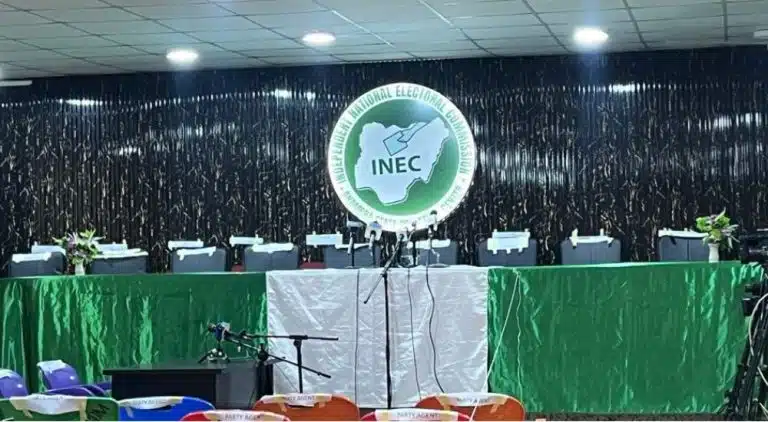
Haruna added that although some of the cases are still pending, INEC would continue preparations in line with its timetable until the courts deliver their final judgments.
FURTHER READING
- Portable Backs Remi Tinubu Over Controversial ‘Akara and Corn’ Business Advice
- Dangote Begins $17bn Kenya Refinery Project
- State Police: Tinubu Sets Up Committee To Prepare Implementation Framework
.