- Dangote Industries has begun preliminary work on a proposed refinery in Kenya
- The 700,000-barrel-per-day facility will serve Kenya and neighbouring countries
- The project is expected to strengthen fuel supply and reduce import dependence in East Africa
Dangote Industries Limited has started preliminary activities for the construction of a proposed 700,000-barrel-per-day oil refinery in Kenya, a multibillion-dollar investment expected to become the largest refining facility in East Africa.
Eko Hot Blog gathered that the company confirmed that the project has moved beyond the planning phase, with site selection completed and early technical assessments already underway ahead of full-scale construction.
EDITOR’S PICK
- UN Mobilizes Humanitarian Aid For Venezuela Following Twin Earthquakes
- Dollar To Naira Exchange Rate Today, June 26, 2026
- Concerns As Repentant Boko Haram Members Allegedly Join Army Recruitment
The refinery will be located on Lamu Island along Kenya’s coast and is expected to supply refined petroleum products to Kenya and neighbouring East African countries, helping to reduce the region’s dependence on imported fuel.
According to Reuters, soil investigations, engineering designs and other preparatory works are currently in progress. The project is expected to take about three years to complete.
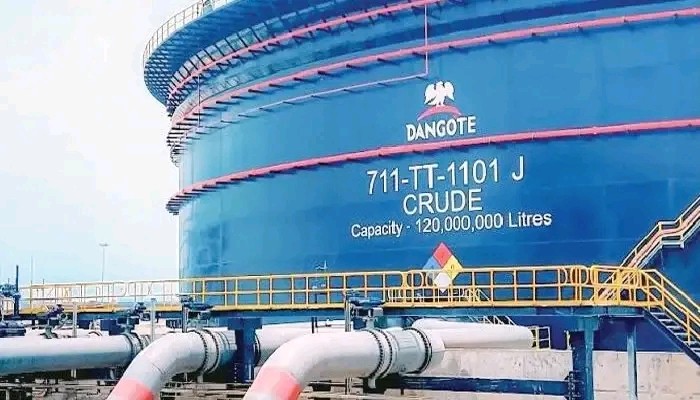
Bloomberg also reported that the refinery could cost up to $17 billion, making it Dangote Group’s biggest refining investment outside Nigeria.
A spokesperson for Dangote Industries told Bloomberg that the proposed facility would mirror the company’s refinery in Lagos, with the capacity to process about 700,000 barrels of crude oil daily.
The report added that Dangote had previously assured the Presidents of Kenya and Uganda of his commitment to establishing a world-class refinery in East Africa. Kenyan President William Ruto had earlier announced that construction was expected to commence this year.
Dangote Industries Vice President for Oil and Gas, Devakumar Edwin, said the company had made significant progress in preparing the project.
“The site has been selected, soil tests are underway, and design and engineering work have commenced. Kenya was the preferred location from the beginning,” Edwin said.
He explained that Lamu was chosen for both commercial and technical reasons, although further details were not disclosed. Tanzania had also been considered before Kenya emerged as the preferred destination.
The project forms part of Dangote Group’s broader strategy to expand refining capacity across Africa following the successful launch of its 650,000-barrel-per-day refinery in Lagos.
Edwin said funding for the Kenyan refinery would come from a combination of internally generated revenue, bond issuances and proceeds from the company’s planned initial public offering.
While he did not disclose the exact project cost, he noted that it would be comparable to the Lagos refinery, which eventually exceeded $20 billion after years of construction.
The Lagos refinery was initially projected to cost about $9 billion in 2013, but expenses increased because of site relocation, engineering challenges, exchange rate fluctuations, the COVID-19 pandemic and rising global inflation.
Alongside the Kenyan investment, Dangote Industries is expanding its Nigerian refinery, with plans to increase its capacity from 700,000 barrels per day to 1.4 million barrels daily by 2028. When completed, the facility is expected to rank among the world’s largest refining complexes.
The company has also announced plans to raise its combined refining capacity in Nigeria and Kenya to 2.1 million barrels per day.
Speaking during a visit by officials of the Republic of the Congo’s national oil company, Société Nationale des Pétroles du Congo, to the Lagos refinery, Edwin said the group’s long-term strategy targets 1.4 million barrels per day in Nigeria and an additional 700,000 barrels per day from the planned Kenyan refinery.
He further revealed that Dangote Industries intends to invest an additional $46 billion between 2026 and 2028 across its refining, cement and fertiliser businesses as part of its drive to strengthen industrial development across Africa.
The planned Kenyan refinery comes at a time when many African countries are increasing investments in local refining to improve energy security and reduce reliance on imported petroleum products.
Despite being a major producer of crude oil, Africa still imports a significant portion of the refined fuel it consumes because of limited refining capacity.
According to the African Petroleum Producers’ Organisation, the continent exports about three-quarters of its crude oil while importing nearly 70 per cent of its refined petroleum products.
Industry observers believe the Kenyan refinery could transform fuel supply across East Africa by boosting regional refining capacity, reducing import costs, supporting cross-border trade and strengthening the continent’s energy independence.
FURTHER READING