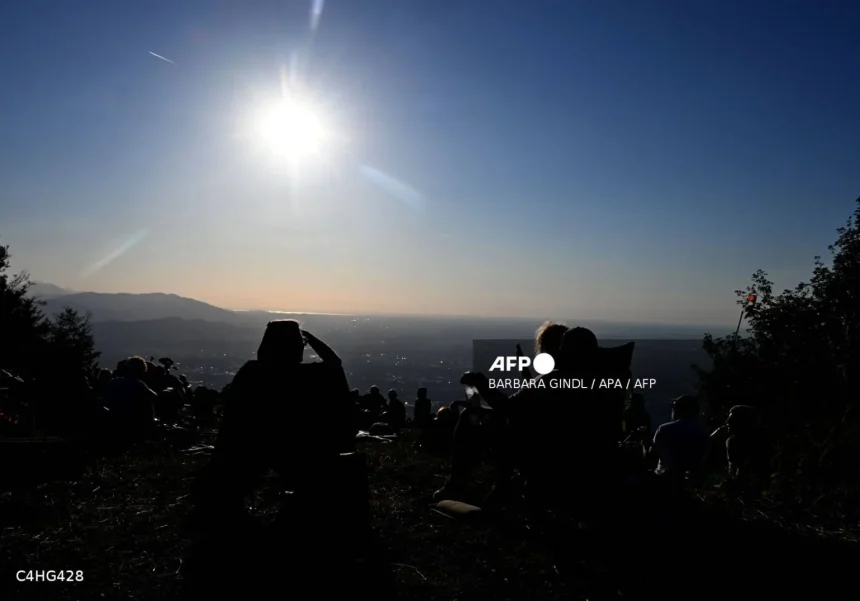
- A solar eclipse has become visible across the UK and parts of Europe
- More than 90% of the Sun is expected to be covered in parts of the UK
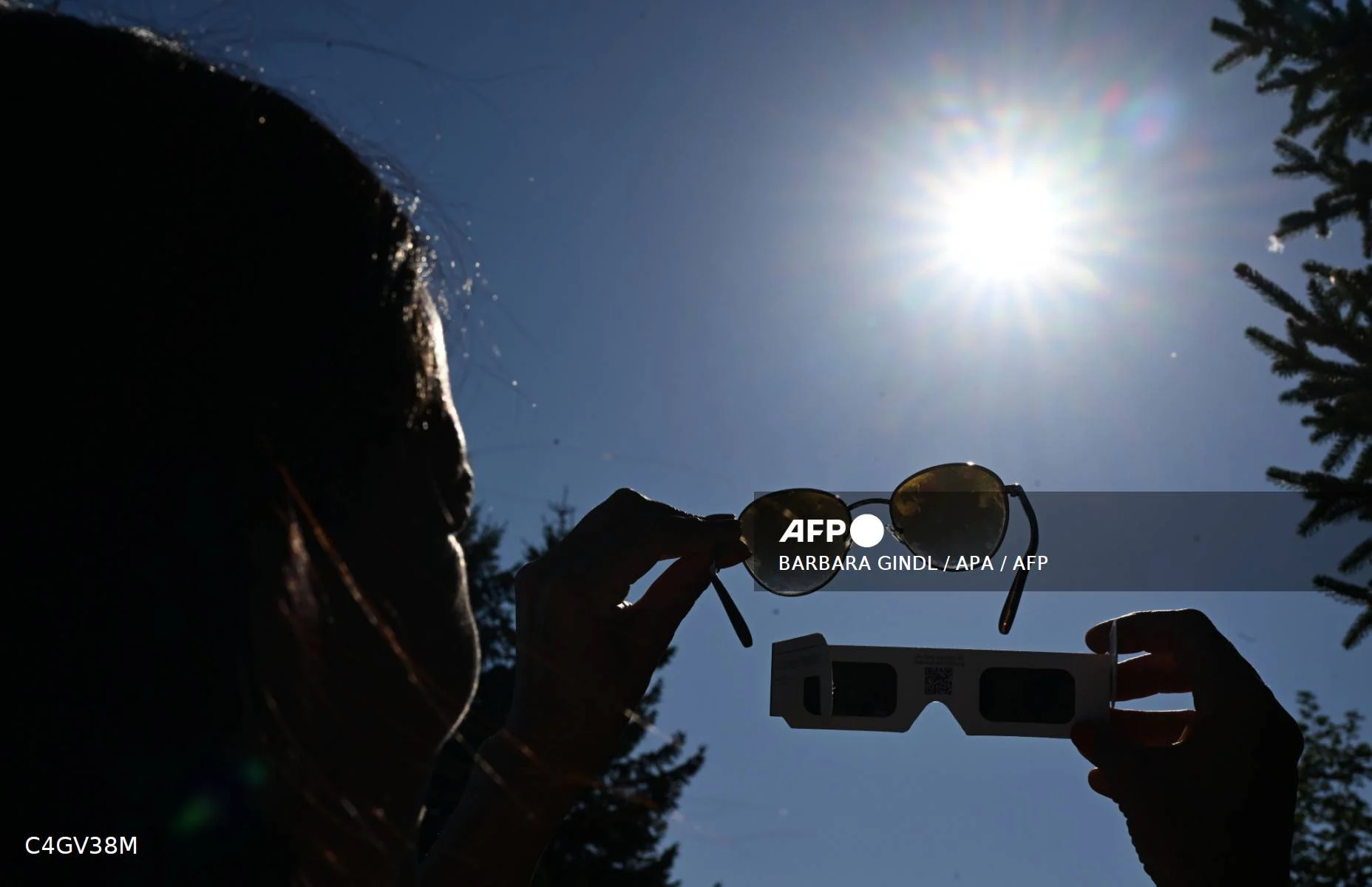
- Experts have warned viewers to use proper eye protection when watching the eclipse
A solar eclipse has begun sweeping across the United Kingdom and parts of Europe, creating a spectacular display as the Moon moves between Earth and the Sun.
Eko Hot Blog gathered that the partial eclipse became visible in Edinburgh at about 6:28 p.m. BST on Wednesday, with the event expected to reach its peak around 7:06 p.m. in the Scottish capital.
Observers at Calton Hill reportedly watched as the Moon gradually covered part of the Sun, while sunspots could also be seen through telescopes.
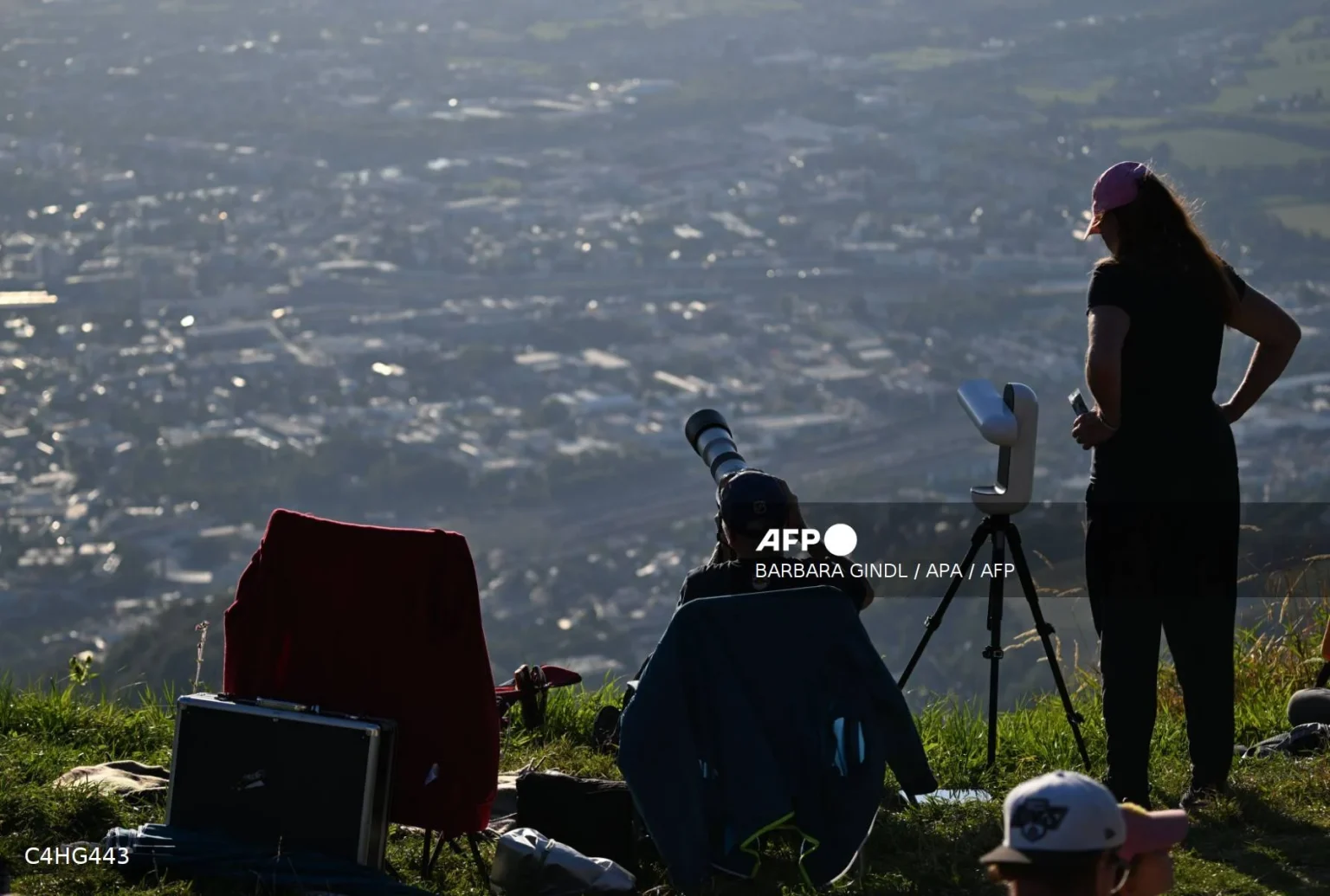
The eclipse was already visible in parts of Iceland and Greenland, while several European countries were positioned along the path of a total eclipse.
Across much of the UK, more than 90 per cent of the Sun was expected to be covered, making the event the most significant solar eclipse visible from the country since 1999.
Large crowds gathered at designated viewing points, with demand for protective eclipse glasses reportedly causing shortages in some locations.
The eclipse first reached the northernmost part of mainland Russia at around 5 p.m. GMT before moving across Greenland and Iceland and towards Europe.
In Spain, the eclipse’s path stretched diagonally from the northwestern Atlantic coast towards the Mediterranean.
Tourists and astronomy enthusiasts travelled to smaller Spanish communities to witness the rare spectacle, as mainland Europe had not experienced a total solar eclipse for about two decades.
For Spain, the event was particularly notable because the country had not witnessed a total solar eclipse for more than 100 years.
A solar eclipse occurs when the Moon passes between Earth and the Sun, temporarily blocking some or all of the Sun’s light. The extent of the eclipse depends on the alignment, with some locations experiencing a partial eclipse while others along the narrow path see the Sun completely covered.
Astronomers and researchers also used the event as an opportunity for scientific observation. A team of Irish researchers planned to travel across the Atlantic to study the Sun’s corona during the eclipse.
Experts, however, warned spectators against looking directly at the Sun without certified protective eyewear, noting that doing so could cause serious and permanent damage to the eyes.