- Tinubu Administration Breathes New Life into Dormant $2.3bn Siemens Electricity Agreement
- The bilateral partnership in Nigeria’s power sector had stalled for several years before regaining momentum under the current government
- The German envoy highlighted that beyond the Presidential Power Initiative (PPI), Germany has expanded its energy cooperation with Nigeria through an Energy Support Programme
Germany’s Deputy Head of Mission in Nigeria, Mr. Johannes Lehne, has confirmed that the $2.3 billion Siemens power deal between Nigeria and Germany remained largely inactive until it was revived under the administration of President Bola Ahmed Tinubu.
Eko Hot Blog reports that Lehne made the disclosure on Wednesday at the Sub-Saharan Africa International Petroleum Exhibition and Conference (SAIPEC) in Lagos, which carried the theme “Celebrating a Decade of Energy, Oil, and Gas Innovation in Sub-Saharan Africa.”
EDITOR’S PICK
- Court Sends Motorist to Jail Over Traffic Violation on Lagos–Ibadan Highway
- Capital Importation Rises to $21bn as Nigeria Records Trade Surplus
- Sanwo-Olu Supports Military Widows, Veterans with Rice, Cash, Education Aid
According to the German envoy, the bilateral partnership in Nigeria’s power sector had stalled for several years before regaining momentum under the current government.
The Siemens agreement, originally initiated during former President Muhammadu Buhari’s administration, is a government-to-government framework designed to overhaul Nigeria’s electricity transmission and distribution infrastructure, enhance grid stability, and gradually increase national power capacity.
Under the deal, Siemens outlined phased targets to raise Nigeria’s power supply to 7,000 megawatts by 2021 and 11,000 megawatts by 2023, with the long-term goal of reaching 25,000 megawatts by 2025, from an average of roughly 4,000 megawatts at the time.
Lehne noted that the initiative failed to gain significant traction in previous years for reasons that were not officially disclosed.
“The strange thing was that this partnership was dormant until the beginning of President Tinubu’s time, when it was actually revived,” Lehne said.
“We are in the power sector. We have a Presidential Power Initiative with President Tinubu for the reactivation of the Nigerian transmission system and electricity access for everybody.”
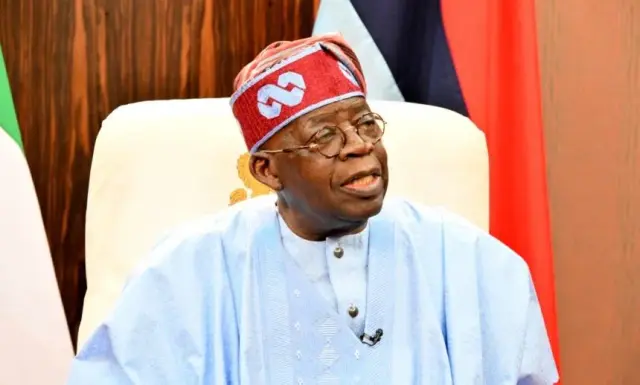
The German envoy further highlighted that beyond the Presidential Power Initiative (PPI), Germany has expanded its energy cooperation with Nigeria through an Energy Support Programme. The initiative leverages Germany’s expertise in energy transition and diversification, aiming to reduce reliance on hydrocarbons and lower carbon emissions.
Lehne explained that between 2021 and 2024, Germany significantly increased investments in renewable energy sources, including solar, wind, and geothermal power. He also stressed that while many refer to the global shift as an “energy transition,” it often represents an “energy addition”—a balanced mix of energy sources rather than a complete move away from fossil fuels.
“There is no real energy transition; there is energy addition and a different mix of energy sources, which every country should consider to have the right energy policy,” he added.
The revival of the Siemens deal under the Tinubu administration signals renewed focus on modernising Nigeria’s electricity infrastructure and improving power access across the country.
FURTHER READING
- Explosion as Fuel Tanker Crashes in Ikeja
- Dr. Alausa Announces Tech-Driven Safe School Initiative Nationwide
- Makoko Communities, Lagos Govt Agree on 10-Man Committee Over Demolitions
Click here to watch the video of the week
https://youtu.be/552knBEVttI