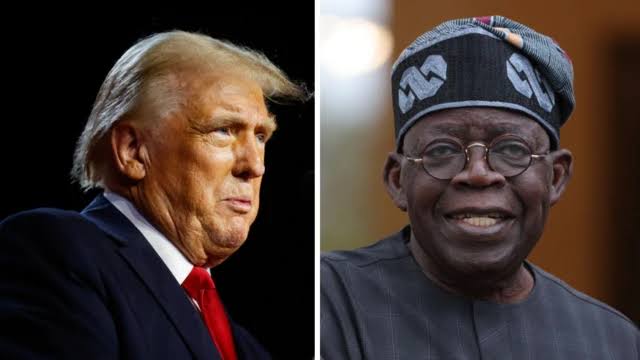
- Trump’s Remittance Tax Bill Threatens Nigeria’s $21bn Inflows.
- Nigeria may lose $215m yearly, pushing senders to informal channels.
- Experts warn of rising forex pressure, reduced transparency.
Nigeria’s foreign exchange earnings may face a major hit following the passage of a U.S. bill proposing a 3.5% tax on international money transfers by non-citizens.
EDITOR’S PICKS
- Natasha Speaks On Her Relationship With Tinubu’s Govt
- Chelsea Sign Portuguese Midfielder Dario Essugo in €22.3m Deal
- Mother of Six Resists Leaving Home After Divorce Ruling
EKO HOT BLOG reports that the bill, titled the One Big Beautiful Bill Act, was introduced by President Donald Trump and recently passed by the U.S. House of Representatives.
If signed into law, the tax would affect remittances sent by green card holders and temporary visa holders, including Nigerians living in the U.S. With over $20.9bn in remittances recorded in 2024, the Central Bank of Nigeria (CBN) ranks these inflows as crucial to the country’s balance of payments.
Experts warn that the tax, which applies to even the smallest transfers, could push senders toward informal and unregulated channels, hurting Nigeria’s reserves and fintech sector. The Centre for Global Development estimates Nigeria could lose up to $215m annually in remittance value if the tax takes effect.
The CBN, which recently launched the Non-Resident Bank Verification Number (NRBVN) to ease diaspora remittances, had targeted $1bn monthly inflows. However, analysts believe the new U.S. policy threatens that goal.
Charles Sanni, CEO of Cowry Treasurers Limited, described the bill as a “double taxation” move that could weaken Nigeria’s forex reserves and increase pressure on households relying on foreign support.
Renowned economist Prof. Akpan Ekpo warned that the bill could drive more Nigerians to unofficial remittance routes, reducing transparency and increasing illicit financial flows. He urged Nigeria to boost internal revenue generation in response.

Migration expert Manuel Orozco added that crypto wallets and unauthorised platforms may become alternatives, raising the risk of money laundering if the remittance space becomes less regulated.