- The United States Government has officially designated a Nigerian national alongside a network of strategic illicit financiers operating across Europe, the Middle East, and West Africa for actively funding the Islamic State of Iraq and Syria (ISIS).
- A statement released by the U.S. Department of State revealed that the targeted Nigerian operative exploited local currency exchange and bureau de change channels to funnel massive operational funds to regional ISIS cells.
- The comprehensive counter-terrorism operation blacklisted three individuals and six corporate entities, exposing sophisticated money-routing pathways cutting across Nigeria, France, Syria, and Türkiye.
The United States Department of State has blacklisted a prominent Nigerian national alongside several international collaborators for systematically mobilizing, moving, and concealing operational funds on behalf of the global terrorist group, Islamic State of Iraq and Syria (ISIS).
Eko Hot Blog reports that the sweeping economic sanctions, formalized under an executive order targeting global terrorism financiers, took aim at a highly sophisticated, multi-layered financial network spanning West Africa, Europe, and the Middle East.
EDITOR’S PICK
- Hamzat Appoints Obanikoro as Campaign DG Ahead of 2027 Lagos Governorship Race
- Tinubu’s State Police Plan Gains Momentum as Amendment Looms
- Residents Raise Alarm After Two Bodies Found in Lagos Waterway
The coordinated intercontinental crackdown exposes how modern terrorist networks continue to exploit conventional informal cash structures and emerging digital economies to bypass global regulatory systems.
According to a press statement released by U.S. Department of State Spokesperson Thomas Pigott, the strategic operation designated three high-value individuals and six corporate entities who served as the primary financial lifelines for ISIS’s global and regional operations.
Pigott emphasized that the administrative actions are a direct continuation of Washington’s aggressive strategy to completely dismantle the group’s capacity to orchestrate attacks, sustain affiliate factions, and terrorize innocent civilian populations.
“We are cutting off the financial lifelines from around the world that enable ISIS to fund attacks, support its regional affiliates, and threaten civilians, including religious minorities,” the official statement read.
The breakdown of the sanctioned network reveals a terrifyingly diversified operational model.
While a France-based facilitator was blacklisted for distributing sensitive technical data on improvised explosive devices (IEDs) to active ISIS supporters, a Syria-based operator was exposed for aggressively using cryptocurrency platforms to transfer large sums of money to radicalized associates globally, including inside the United States.
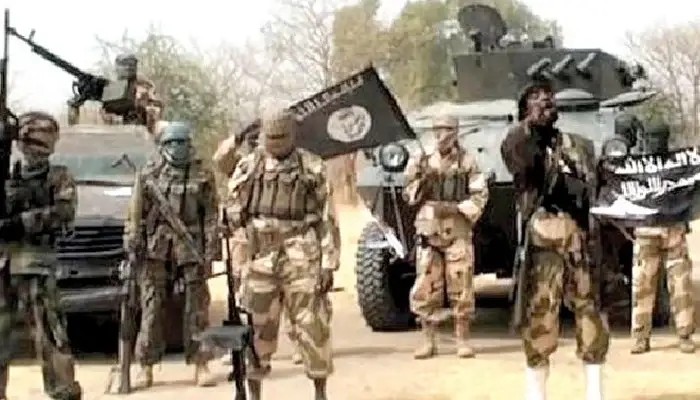
In Nigeria, the network relied on a designated financial facilitator whose localized money exchange networks and bureau de change infrastructure served as direct conduits for clearing and routing terror funds into sub-Saharan Africa.
Security experts note that the inclusion of a Nigerian bureau de change operator highlights the persistent vulnerabilities within the region’s parallel financial markets, which remain a primary target for exploitation by terrorist affiliates like Islamic State West Africa Province (ISWAP).
By blacklisting these conduits, the U.S. government effectively freezes all assets, properties, and bank accounts held by the designated individuals and entities within its jurisdiction, while legally prohibiting international financial institutions from processing transactions linked to them.
The latest geopolitical development comes on the heels of intensified joint counter-terrorism efforts between Washington and Abuja aimed at flushing out insurgent networks across the Lake Chad basin.