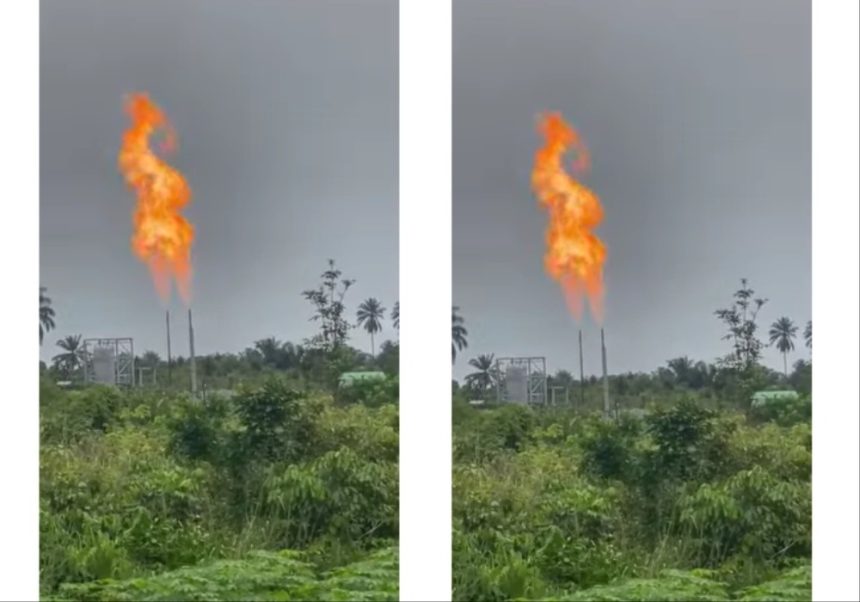
- ‘We Can’t Sleep’: Ikot Ebidang Laments Pollution from Oil Activities
- Demand MoU Renegotiation
- Facilitators advised residents to document environmental degradation in real time
Residents of Ikot Ebidang in Onna Local Government Area of Akwa Ibom State have decried the environmental and health impact of oil and gas exploration activities in their community, saying persistent gas flaring has made life unbearable.
The community, which hosts Natural Oilfield Services (Sterling Global), said the noxious smell of discharged gas and deafening sounds from flare sites have forced some residents to relocate, while others remain sleepless due to the noise and heat.
EDITOR’S PICK
- Nigerian Mother Dies Hours After Arriving in UK for Son’s Graduation
- Dabiri-Erewa Unveils 2026 Diaspora Health Initiative to Strengthen Local Hospitals
- Ogun Police Begin Investigation After TikToker Alleges Assault
Darkened and corroded rooftops caused by combustion residues from flare stacks have become a common sight in the once quiet agrarian settlement.
Speaking during a renewable energy dialogue facilitated by the Health of Mother Earth Foundation (HOMEF) and the Peace Point Development Foundation (PPDF), residents lamented declining crop yields, destruction of aquatic ecosystems, and rising health challenges including skin rashes and respiratory concerns.
One stakeholder said, “If you stay here till around 7–8 pm when everywhere is quiet, the sound alone is like an earthquake. Our soil nutrients are reducing, aquatic life has been altered, and our rivers and forests are polluted. We are dying; we need help.”
The community called for a renegotiation of the Memorandum of Understanding (MoU) between them, the government and the operating company, demanding that associated gas be piped away from residential areas instead of flared within the community. They also urged the state government to halt fossil fuel extraction activities until environmental concerns are addressed.
In a communique, residents demanded compensation for livelihood losses and improved healthcare facilities to mitigate the ongoing impacts of pollution.
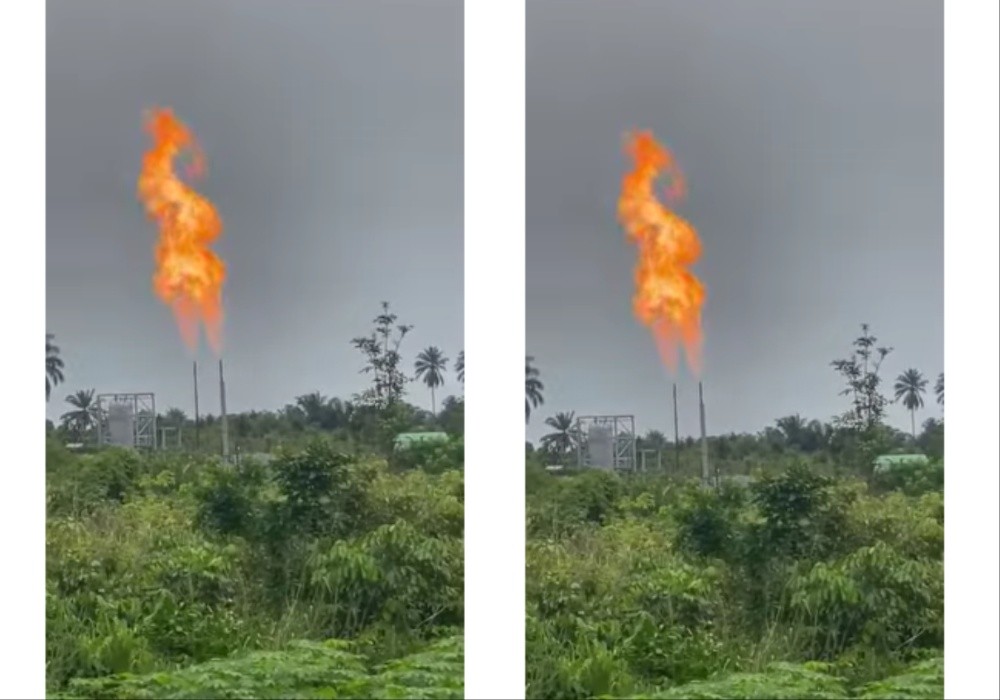
Gas Flaring Illegal – Nnimmo Bassey
Environmental expert Nnimmo Bassey, Executive Director of HOMEF and one of the dialogue facilitators, described gas flaring as illegal and a violation of human rights, particularly when carried out near residential communities.
He warned that beyond the immediate complaints of noise, heat and skin rashes, prolonged exposure to gas flaring could result in severe health conditions including reproductive problems, cancers and blood disorders.
“Gas flaring is central because of its implication for human and environmental health. If it continues this way, they risk far more serious health challenges,” Bassey said, pledging support for the community’s pursuit of environmental justice.
Community Urged to Document Evidence
Facilitators advised residents to document environmental degradation in real time, including oil spills and gas flaring incidents, to strengthen any potential legal action.
They recommended capturing geotagged photographs, collecting labelled samples for laboratory testing, and maintaining records that demonstrate environmental changes over time.
The facilitators stressed the need for routine environmental monitoring, regular air quality inspections, and investment in renewable energy solutions to address energy poverty while reducing the harmful effects of extractive activities.
They concluded that the government must prioritise the wellbeing of host communities rather than focusing solely on increasing oil production targets, calling for stronger safeguards to protect both public health and environmental integrity.
FURTHER READING
- Alausa Unveils 14-Month Education Reform Scorecard Under NESRI Agenda
- Lagos Moves to Establish Sovereign Wealth Fund for Future Generations
- Lagos State Declares Permanent Ban on Unregulated ‘Korope’ Minibuses Along Lekki-Epe Expressway