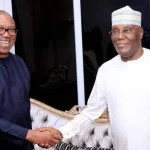
At the inaugural West Africa Economic Summit (WAES) in Abuja on Saturday, Nigeria and the Republic of Benin took a significant step towards reshaping regional cooperation by signing a landmark bilateral integration agreement.
The pact, endorsed by Presidents Bola Tinubu and Patrice Talon, is intended not only to tighten ties between the two neighbours but also to serve as a prototype for deeper economic and political collaboration across West Africa.
- At the inaugural West Africa Economic Summit (WAES) in Abuja on Saturday, Nigeria and the Republic of Benin took a significant step towards reshaping regional cooperation by signing a landmark bilateral integration agreement.
- EDITOR’S PICKS
- Military Sabotage? Inside Factors Fueling Persistent Killings in Benue
- EXPLAINER: With Tinubu Backing State Police, What Will It Take to Amend the Constitution?
- ANALYSIS: Does Dangote Refinery’s Nationwide Fuel Distribution Plan Create a Monopoly?
- Regional Integration Removes ‘Constraints to Economic Growth’
- Rebuke of ECOWAS Paralysis
- Fixing the Basics: Trade, Borders and Trust
- FURTHER READING
- ANALYSIS: What China’s Zero-Tariff Plan Could Mean for Nigeria
- As Lagos Ramps Up Arrests for Illegal Refuse Dumping, Here’s What Residents Risk
- Lagos Is Arresting Street Traders Again. What Law Is Behind It?
EDITOR’S PICKS
EKO HOT BLOG breaks down what the agreement means, and why it matters, in this analysis.
Regional Integration Removes ‘Constraints to Economic Growth’
The agreement marks a formal commitment by Nigeria and Benin to pursue “full integration”, according to President Talon, who described the two countries as “more than twins; we are the same people”.
According to the World Bank, regional integration helps countries overcome divisions that impede the flow of goods, services, capital, people and ideas. These divisions are a constraint to economic growth, especially in developing countries such as Nigeria and the Benin Republic.
The International Monetary Fund (IMF) has also stated that regional integration is essential for self-sustaining growth and development.
While the details of the pact have not yet been publicly released, it is expected to cover cross-border trade, infrastructure harmonisation, and policy alignment.
By presenting the agreement as a model, the two countries aim to inspire other ECOWAS members to embrace practical steps towards regional unity. It represents a symbolic and strategic shift, moving away from continental grandstanding towards focused bilateral actions that could trigger broader momentum.
Rebuke of ECOWAS Paralysis
President Talon did not mince words in describing ECOWAS as an institution in crisis.

Despite being conceived as a vehicle for regional economic integration, ECOWAS has become, in his words, an example of “wasted resources and failed cooperation”. Citing major initiatives such as the West African Gas Pipeline and the West African Power Pool, Talon lamented their stagnation due to bureaucratic bottlenecks and poor execution.
This blunt assessment reflects growing frustration among West African leaders with the pace, and in some cases the viability, of ECOWAS-led infrastructure projects. Talon’s remarks signal a pivot towards more nimble, country-to-country alliances capable of bypassing regional red tape.
Fixing the Basics: Trade, Borders and Trust
Perhaps the most striking aspect of Talon’s speech was his emphasis on practical obstacles that continue to cripple West Africa’s economic potential. He decried the harassment and delays that traders face along the Lagos to Abidjan corridor, calling it incompatible with any serious vision of integration. The physical infrastructure exists, he said, but operational dysfunction remains.
Talon’s most urgent appeal was rooted in economic justice. He argued that without integration, poverty will continue to destabilise democracies and undermine development across West Africa. In framing integration as a means to create wealth and preserve political stability, Talon shifted the debate from ideology to livelihoods.
FURTHER READING
He also addressed global shifts in trade policy, such as the US–China tariff war, as a reminder that African countries must learn to prioritise their own interests rather than wait for global goodwill. In this view, integration is not just a regional project; it is a strategic defence against global volatility.
Philip Ibitoye is a Special Correspondent with EKO HOT BLOG. Click here to find daily analysis and critical insight on trending issues in Lagos and other parts of Nigeria.
Watch the video of the week below: