- WHO noted that the situation does not yet qualify as a pandemic
- Early signs of infection include fever, headache, sore throat, fatigue, and muscle pain
- The WHO confirmed that eight cases have been laboratory-verified so far
The World Health Organization (WHO) has declared the Ebola outbreak in the Democratic Republic of Congo (DRC) a Public Health Emergency of International Concern, citing concerns over its potential spread across borders.
According to the agency, Eko Hot Blog gathered that the outbreak is centred in eastern Ituri province, where health officials have recorded about 246 suspected infections and 80 deaths.
While the WHO noted that the situation does not yet qualify as a pandemic, it warned that the outbreak could be significantly larger than current reports suggest, with a real risk of wider local and regional transmission.
EDITOR’S PICK
- Fani-Kayode, Omokri Oppose Return Of Power To North Before 2031, Endorse Tinubu For 2027
- Putin defends Ukraine war amid NATO aggression claims
- Epe Stakeholders Unite in Massive Endorsement for Wale Raji, Tobun, Tinubu, Others
The virus strain involved has been identified as the Bundibugyo Ebola virus, for which there are currently no approved vaccines or specific antiviral treatments.
Early signs of infection include fever, headache, sore throat, fatigue, and muscle pain. As the disease progresses, it can cause vomiting, diarrhoea, skin rash, and internal or external bleeding.
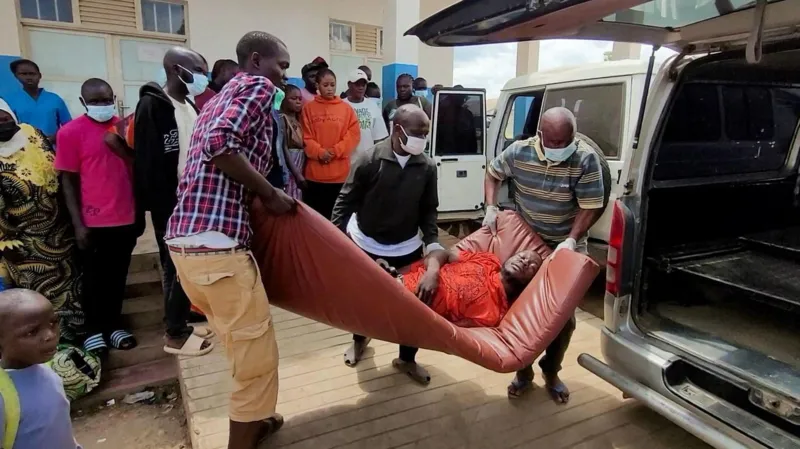
The WHO confirmed that eight cases have been laboratory-verified so far, while additional suspected infections and deaths have been reported across three health zones, including Bunia, the Ituri provincial capital, and the mining towns of Mongwalu and Rwampara. One case has also been detected in Kinshasa in a patient who had travelled from Ituri.
Health authorities further confirmed that the virus has crossed into Uganda, where two cases have been recorded. A 59-year-old man who tested positive in Uganda reportedly died, with officials saying he was originally from DR Congo and his remains were returned there.
WHO Director-General Dr. Tedros Adhanom Ghebreyesus warned that there are still major uncertainties regarding the true scale and spread of the outbreak, stressing that the number of infections may be underreported.
The agency said several factors are increasing the risk of transmission, including ongoing insecurity, humanitarian challenges, high population movement, the urban nature of affected areas, and the presence of numerous informal health facilities.
Because of these risks, the WHO advised affected countries such as DR Congo and Uganda to activate emergency operations centres to strengthen contact tracing, surveillance, and infection prevention measures.
It also recommended immediate isolation and treatment of confirmed cases until two negative tests, taken at least 48 hours apart, are obtained.
Neighbouring countries were urged to strengthen monitoring systems, though the WHO cautioned against border closures or travel bans, stating that such measures are not scientifically justified and are usually driven by fear rather than evidence.
Ebola, first identified in 1976 in what is now DR Congo, is believed to have originated from bats and has since caused multiple outbreaks in Africa. The disease spreads through direct contact with infected bodily fluids or contaminated materials, and can lead to severe organ failure and death.
The fatality rate averages around 50 percent, according to WHO estimates, and the country is currently experiencing its 17th recorded outbreak.
Public health experts, including the Africa Centres for Disease Control and Prevention, have raised concerns about the risk of further spread due to population movement, mining activities, and outbreaks occurring in densely populated or mobile communities.
Over the past five decades, Ebola has killed about 15,000 people across Africa, with DR Congo experiencing some of its deadliest outbreaks, including the 2018–2020 epidemic that claimed nearly 2,300 lives. Last year alone, another outbreak in a remote area resulted in 45 deaths.
FURTHER READING